
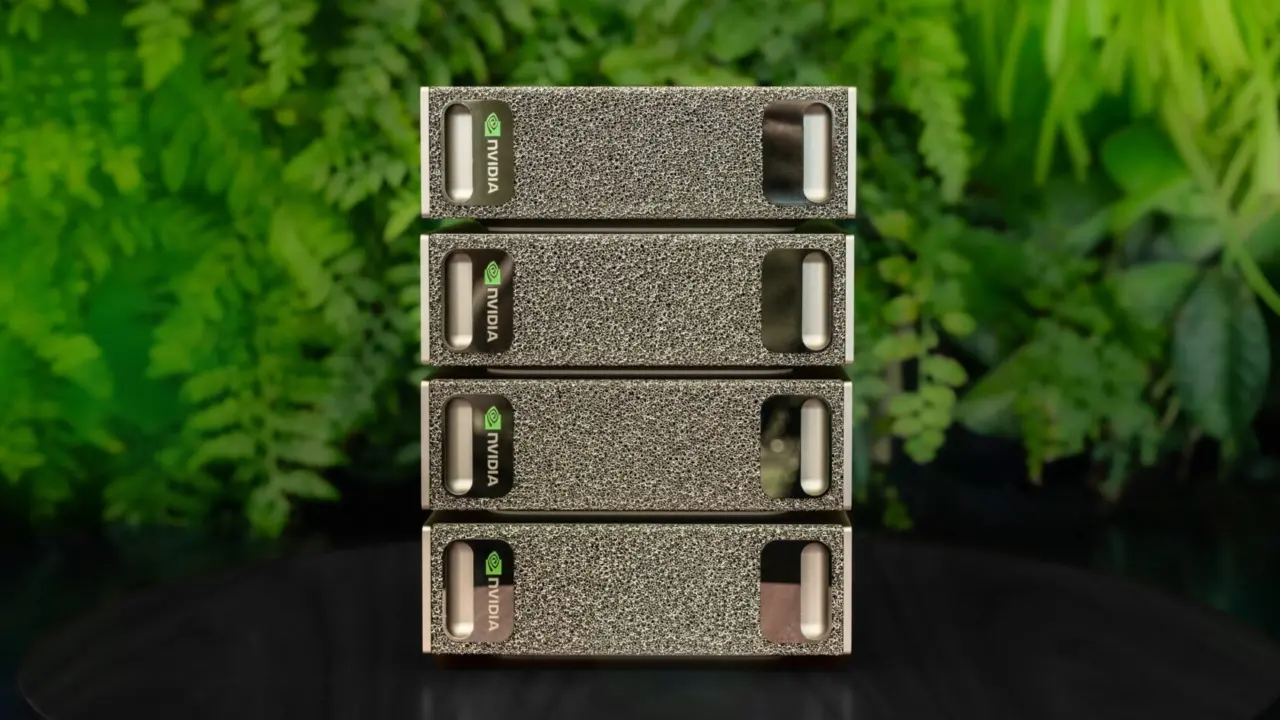
NVIDIA Sync updates let DGX Spark owners link multiple units into a single cluster. This change matters because it doubles performance for local AI workloads without requiring new hardware. We can now run larger models locally by combining the memory and compute of several devices. The update shifts the DGX Spark from a single-node tool to a scalable cluster platform.
Software update enables multi-unit clustering for local AI workloads
The DGX Spark runs on Windows, macOS, and ARM64 Linux. NVIDIA Sync Cluster Assistant handles the networking setup automatically. It configures the ConnectX-7 ports and schedules workloads across the connected units. This automation removes the manual configuration steps that usually slow down cluster deployment.
Cluster mode provides the memory capacity, inference performance, and training throughput needed for larger models. NVIDIA Sync Cluster Assistant doubles DGX Spark performance, according to NVIDIA. The update also includes a new Resource Monitor that shows real-time CPU and GPU usage. This visibility helps users manage resources efficiently during heavy AI tasks.
Tailscale provides private and secure remote access to the cluster. NVIDIA Sync supports Windows and macOS, while a native ARM64 Linux version of Chrome arrives in late August. The cluster can run large-scale open models like GLM 5.2 and DeepSeek V4 Flash locally. We touched on NVIDIA RTX Neural Texture Compression SDK in our earlier Nvidia coverage.
The update is available now for Windows and macOS users. The ARM64 Linux Chrome version launches in late August. The cluster assistant simplifies the process of scaling DGX Spark units for AI development. Users gain access to more memory and compute power for local model training and inference.

Discussion
0 comments
Log in to join the thread with a thoughtful take, question, or correction.