
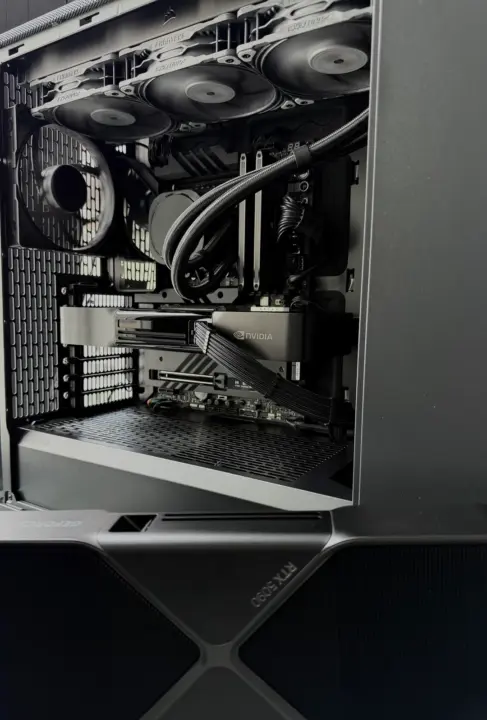
A single NVIDIA RTX PRO 6000 card now replaces the dual RTX 5090 setups that many AI builders planned to assemble. This shift matters because the 32GB VRAM on the consumer flagship card runs out of memory during large language model tasks, while the professional card offers 96GB. Users who need to process long context windows without crashing their systems can finally fit their entire workload onto one PCIe slot.
Professional card offers 96GB VRAM for AI tasks despite modest performance gains
The upgrade path comes with a steep price tag that changes the economics of building an AI workstation. A Reddit user shared that they abandoned their dual RTX 5090 build to purchase one RTX PRO 6000 for 13000 USD. That specific unit cost approximately 92200 CNY (around $13,729) at the time of purchase, reflecting the high premium placed on professional-grade memory capacity.
Specifications
- Memory: 96GB GDDR7
- Memory (RTX 5090): 32GB
- Benchmark Score (RTX 5090 OC): 15227
- Benchmark Score (RTX PRO 6000 Default): 16005
- Benchmark Score (RTX PRO 6000 OC): 16332
Technical benchmarks show that the massive memory jump does not translate into a proportional speed increase for gaming or synthetic tests. The RTX PRO 6000 scored 16005 points in the default Steel Nomad benchmark, while an overclocked RTX 5090 reached 15227 points. The professional card only delivers about a 7.2 percent performance gain over the consumer card even when pushed to its limits.
We looked at NVIDIA RTX 5090 SE Rumored at earlier while tracking these high-end GPU launches. The current market reality for the RTX PRO 6000 is even more expensive, with retail prices estimated between 16000 and 17000 USD. Buyers should expect to pay a significant premium for the 96GB GDDR7 memory, as raw compute performance remains closely tied to the older consumer architecture.
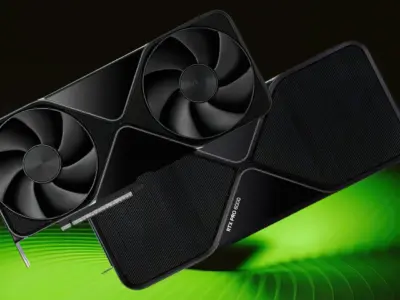
The RTX PRO 6000 ships with 96GB of GDDR7 memory to handle workloads that exceed consumer limits. Its default benchmark score is 16005 points, rising to 16332 points with specific overclocking settings. The card hits a core frequency of 2.8GHz at 925mV with a 1GHz memory overclock to achieve that peak score.
Discussion
0 comments
Log in to join the thread with a thoughtful take, question, or correction.