
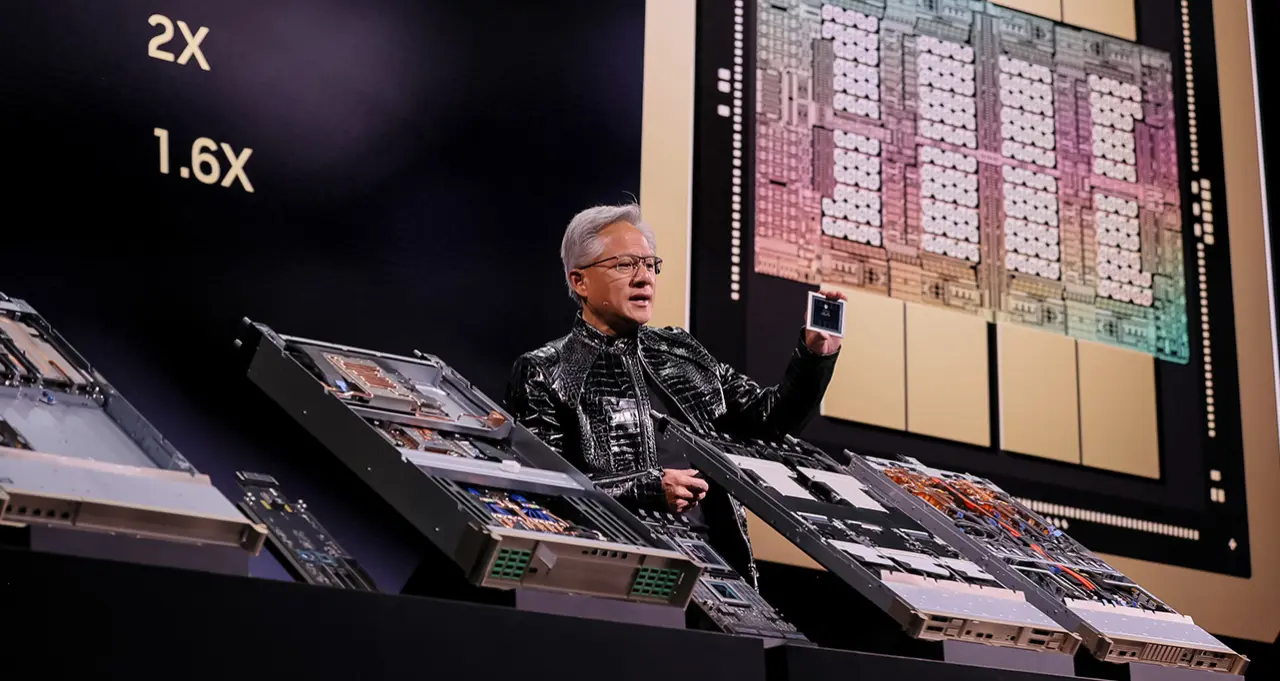
NVIDIA Blackwell AI chips deliver superior computing efficiency compared to custom silicon from competitors, according to a Morgan Stanley report. The analysis highlights that while these chips carry a higher initial cost, their performance advantages justify the investment for large-scale data centers.
Analysis highlights higher initial cost justified by performance advantages for large-scale data centers.
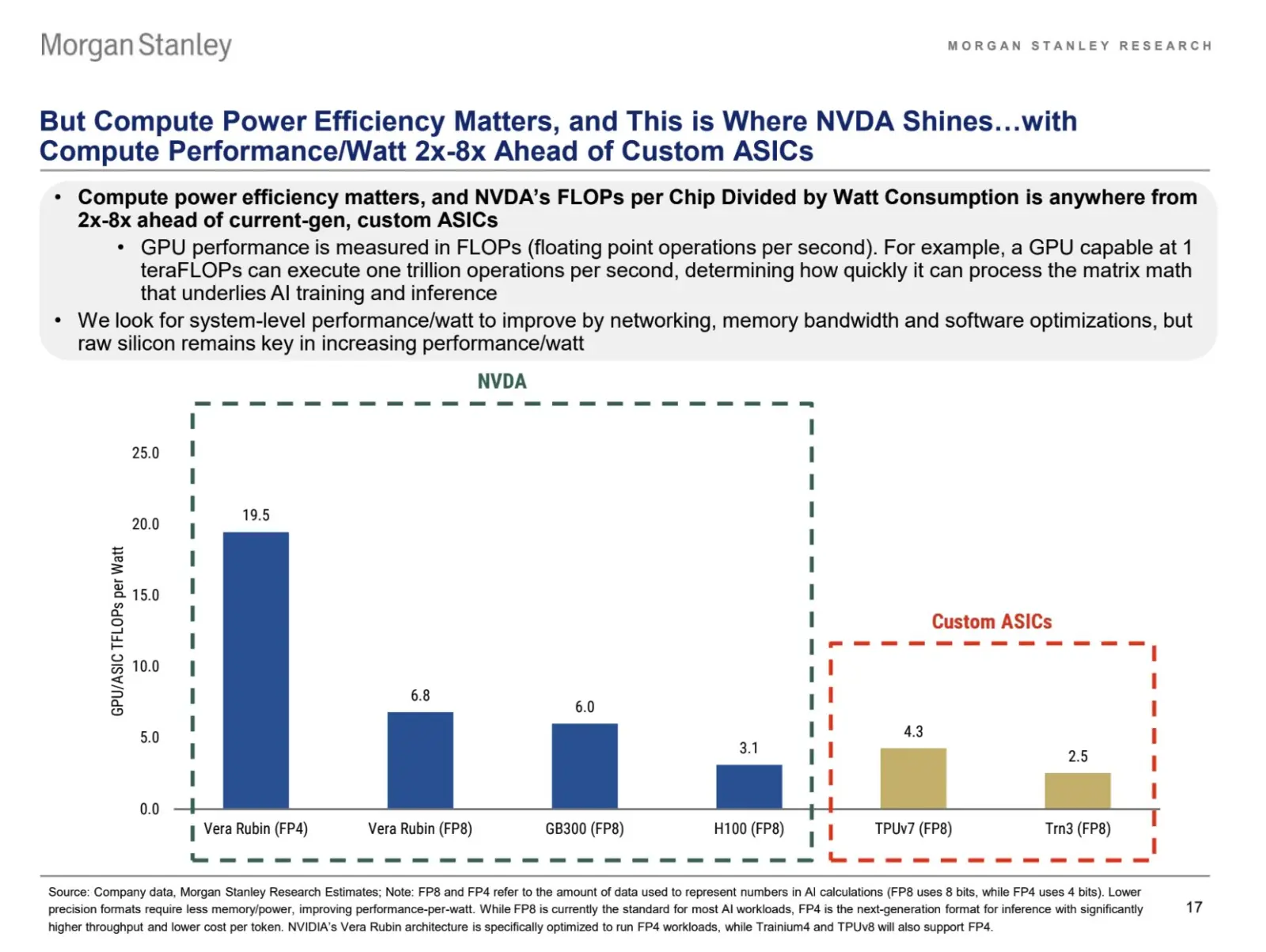
The GB300 variant achieves 6.0 TFLOPS/W on FP8 workloads. This metric outperforms Google TPUv7 at 4.3 TFLOPS/W and Amazon Trainium3 at 2.5 TFLOPS/W. NVIDIA claims its AI chips are two to eight times more efficient than ASICs when considering FP4 performance and the upcoming Vera Rubin architecture.
Spec comparison
| Spec | GB300 | TPUv7 | Trainium3 |
|---|---|---|---|
| FP8 Performance (TFLOPS/W) | 6.0 | 4.3 | 2.5 |
Building a 1GW data center with Blackwell costs twice as much as using Google TPU or Amazon Trainium. Despite the higher capital expenditure, Morgan Stanley argues the investment offers better value due to the efficiency gains. Jensen Huang emphasized that the chips provide greater long-term returns despite their expense.
Groq presents a different value proposition for AI inference tasks. Nebius estimates that Groq incurs only 5 to 10 cents per token compared to 25 cents for Blackwell. Groq also generates up to 800 tokens per second, surpassing Blackwell's 450 tokens per second, making it more effective for specific inference operations.
Discussion
0 comments
Log in to join the thread with a thoughtful take, question, or correction.