
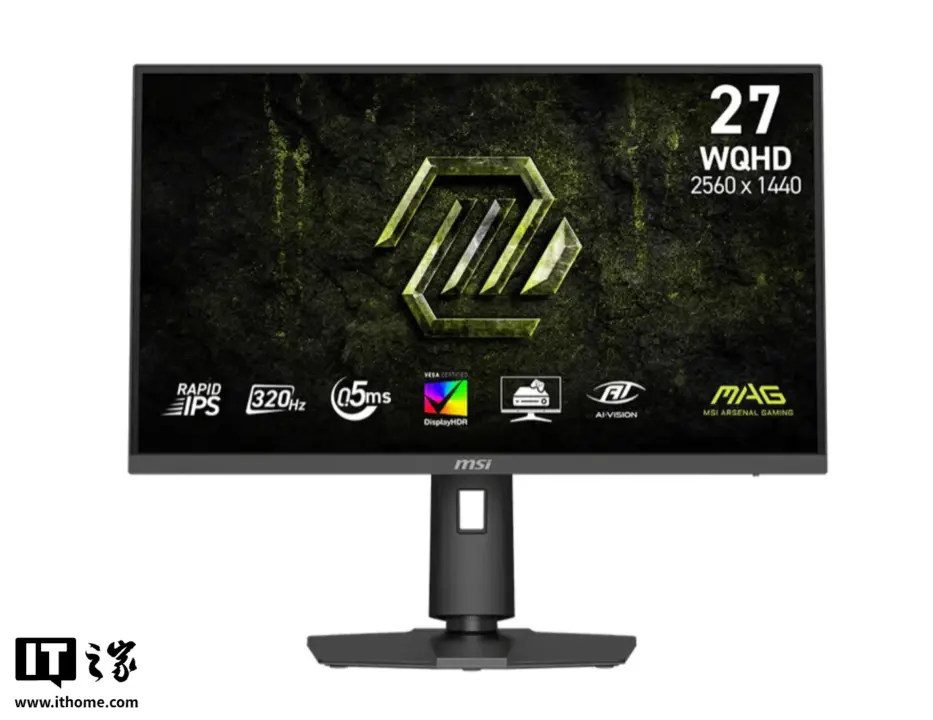
MSI added two new gaming monitors to its MAG lineup, giving buyers fresh options for high-refresh-rate displays. The new models target users who prioritize fast response times and specific panel technologies for competitive gaming or color-critical work. We can now see how the company balances speed and image quality across different screen sizes.
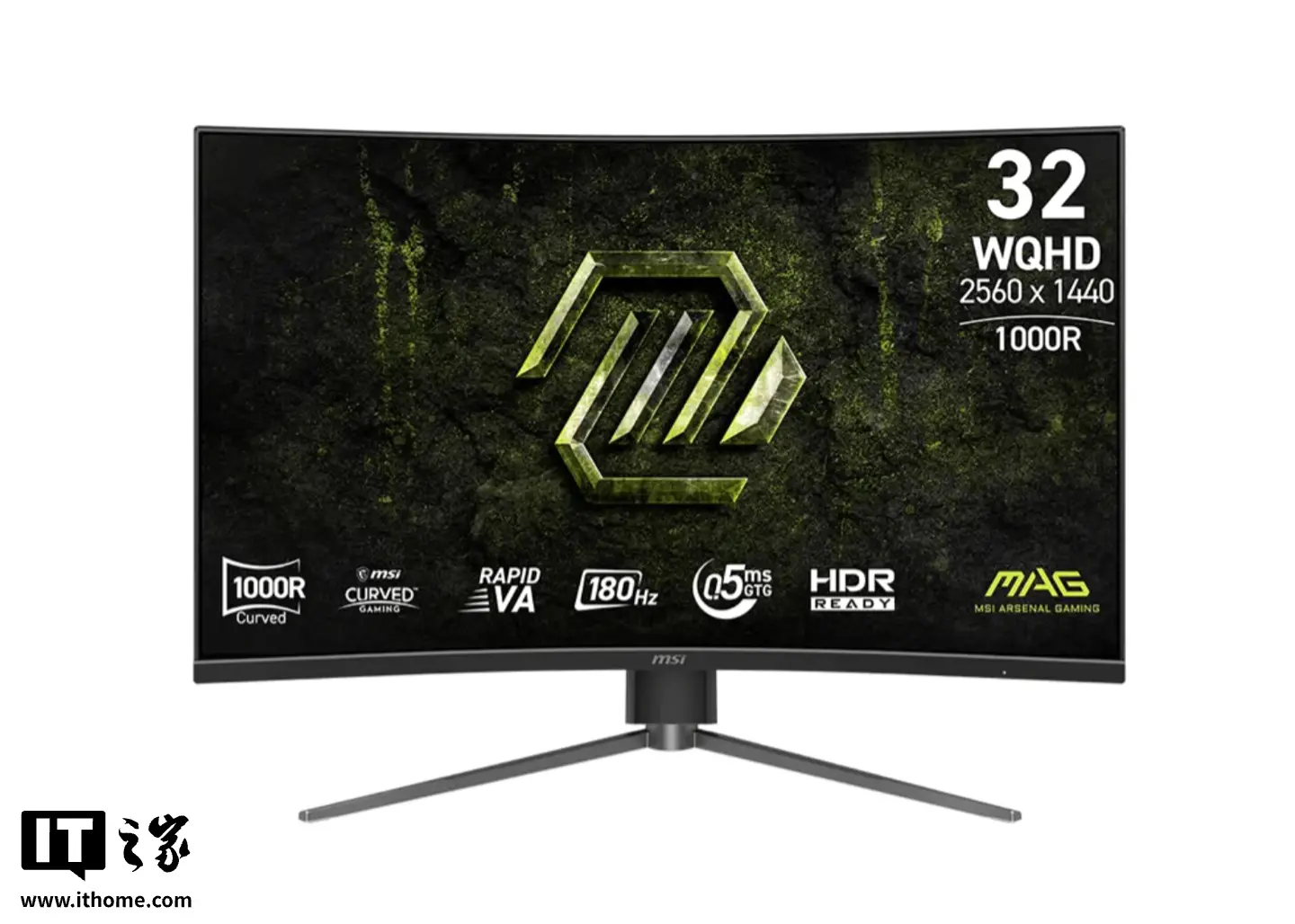
New MAG displays offer 320Hz IPS and 180Hz VA options for gamers
The MAG 274QPF X32 features a 27-inch Rapid IPS panel with a 2560×1440 resolution and a 320Hz refresh rate. This flat screen delivers a 0.5ms gray-to-gray response time to minimize motion blur during fast-paced action. It supports 10-bit color depth through 8-bit plus Frame Rate Control, covering 95% of the Adobe RGB and 97% of the DCI-P3 color gamuts.
Spec comparison
| Spec | MAG 274QPF X32 | MAG 325CQPF E18 |
|---|---|---|
| Panel Size | 27-inch | 31.5-inch |
| Resolution | 2560×1440 | 2560×1440 |
| Refresh Rate | 320Hz | 180Hz |
| Panel Type | Rapid IPS | Rapid VA (1000R) |
| Response Time | 0.5ms GtG | 0.5ms GtG |
The MAG 325CQPF E18 takes a different approach with a 31.5-inch Rapid VA panel that curves at 1000R for better immersion. It runs at 180Hz with the same 2560×1440 resolution and 0.5ms response time found in its sibling. This curved model covers 85% of both the Adobe RGB and DCI-P3 color spaces, prioritizing contrast and speed over wide color volume.
Connectivity differs between the two models to match their intended use cases. The 27-inch MAG 274QPF X32 includes two HDMI 2.1 ports alongside a DisplayPort 1.4a interface, allowing for next-generation console support. The 31.5-inch MAG 325CQPF E18 uses HDMI 2.0b ports instead, which may limit bandwidth for future high-end graphics cards.
Both monitors support VESA 100x100mm wall mounting and include a standard 3.5mm headphone jack for audio output. We looked at MSI MAG 274CQPDF X32 Launches as in our earlier Msi coverage, which offers a comparison point for previous design choices. These additions expand the MAG series without changing the core mounting or audio standards.

Discussion
0 comments
Log in to join the thread with a thoughtful take, question, or correction.