
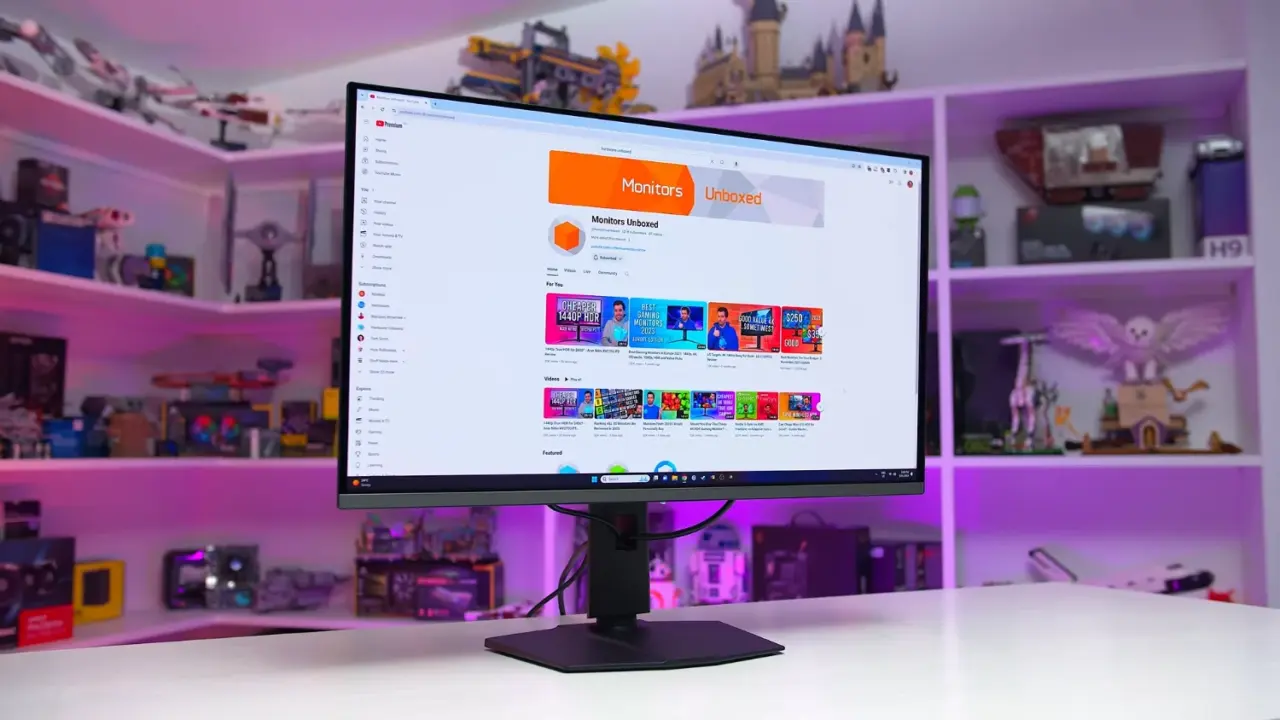
The MSI 321URX QD-OLED monitor shows clear signs of wear after a rigorous 30-month test, which matters to anyone planning to use this display for heavy office work or static content. Monitors Unboxed tracked the panel through 8,000 hours of continuous operation to document how QD-OLED technology handles long-term stress. Buyers who rely on fixed interface elements should note that this specific usage pattern accelerates visible degradation. The findings provide a realistic baseline for longevity expectations in modern OLED panels.
Test confirms brightness drop and green diode wear after 30 months
The test focused on a productivity workflow that mimics demanding daily computer use rather than varied gaming sessions. The monitor displayed a static taskbar at the top of the screen alongside two split-screen windows in the center. This setup kept identical pixels active for thousands of hours, creating the conditions for permanent image retention. The panel type remained a QD-OLED display throughout the entire testing period.
Specifications
- Panel Type: QD-OLED
- Test Duration: 8000 hours (30 months)
- Brightness Drop: 243 nits to 231 nits
- Color Temperature Shift: 6441K to 6292K
- Usage Pattern: Productivity, static taskbar, split-screen windows
Brightness levels dropped from an initial 243 nits to 231 nits after the full 8,000-hour duration. The color temperature also shifted from 6441K down to 6292K, indicating a warmer tone over time. Green diodes showed uneven wear compared to the red and blue subpixels. These metrics confirm that the panel does not maintain its original output under constant static load.
Burn-in artifacts appeared most prominently in the taskbar area and along the center lines of the split-screen windows. Monitors Unboxed noted that the display exhibited lower brightness and uneven diode wear during this daily use scenario. The source explicitly stated that the MSI 321URX QD-OLED showed burn-in artifacts visible during daily use. This confirms that static UI elements leave a lasting mark on the panel surface.
The test conditions involved intentional abuse with static elements, which may not reflect typical mixed gaming and productivity usage. Monitors Unboxed acknowledged that the panel was used aggressively for productivity tasks. Users who vary their content and avoid static interfaces for extended periods may see different results. The data highlights the vulnerability of QD-OLED panels to fixed graphical elements.

Discussion
0 comments
Log in to join the thread with a thoughtful take, question, or correction.