
Microsoft is refreshing its Surface Mouse lineup for the first time in a decade, bringing a decade of peripheral design evolution to a familiar form factor. This update matters because it introduces tactile feedback and dedicated software controls that were previously absent from the line, changing how users interact with Windows features. Buyers who rely on window management or frequent Copilot access will find these additions immediately useful in their daily workflow.
New Surface Mouse adds haptic feedback and dedicated Copilot button
The new Surface Mouse retains the compact, ambidextrous shape that has defined the series since its 2016 debut. Microsoft added a built-in vibration motor to provide haptic feedback during specific actions. The device also features a dedicated programmable button on the top surface, which the company demonstrates launching the Copilot AI assistant. The dedicated programmable button allows for direct access to Copilot, streamlining interaction with AI features.
Specifications
- Connectivity: Bluetooth 6.0
- Battery Life: Up to 6 months
- Colors: Black, Platinum
- Price: $79.99 USD
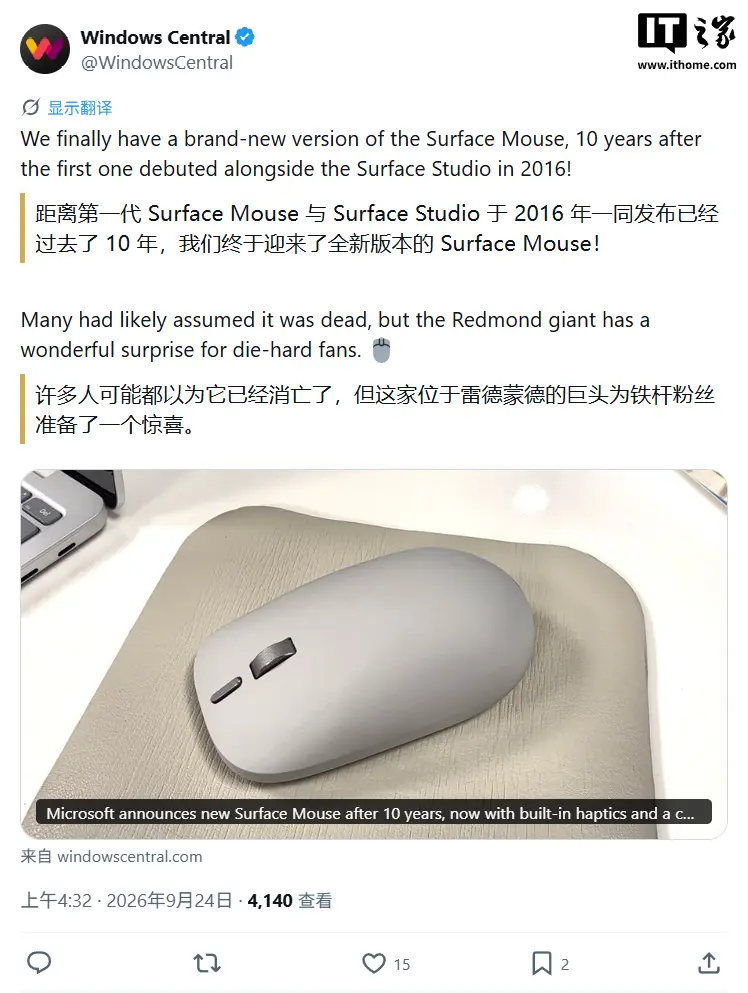
Connectivity relies on Bluetooth 6.0, allowing users to pair the mouse with multiple devices and switch between them. The internal battery is rated for up to six months of typical use on a single charge. Microsoft will offer the device in two color options: Black and Platinum. The design remains focused on portability, keeping the footprint small enough for travel cases.
The Surface Mouse ships globally on October 13, 2024. Microsoft lists the starting price at $79.99 USD for both color variants. Priced at $79.99 USD (around $79.99), the updated peripheral is positioned for business and casual users. The update marks the first major revision to the product line in ten years since the 2016 original.
This Microsoft update stands apart due to its focus on software-hardware integration. The new Surface Mouse confirms that Microsoft is prioritizing tactile interaction and AI accessibility in its hardware ecosystem. Users can expect these features to become standard in future peripheral designs.


Discussion
0 comments
Log in to join the thread with a thoughtful take, question, or correction.