
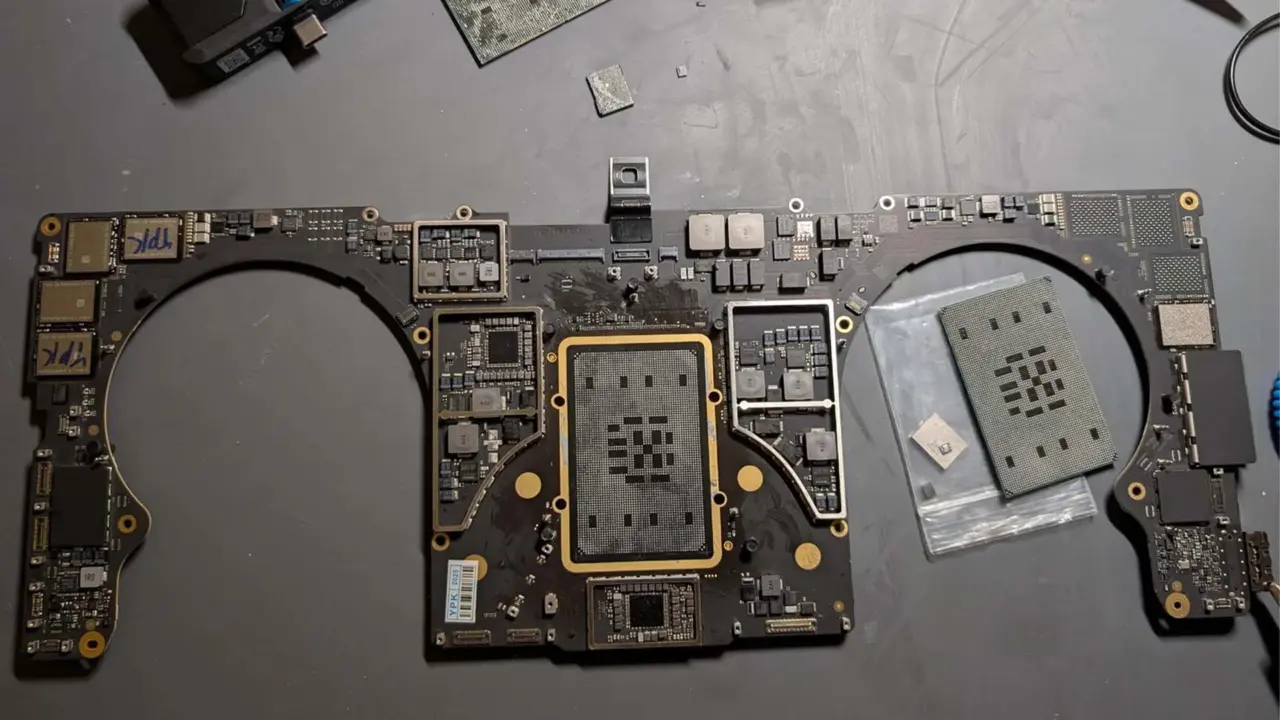
A MacBook Pro logic board with an M1 Max chip was successfully repaired after suffering water damage and a burn hole near the trackpad connector. The repair involved transplanting key components from the damaged board to a donor unit, restoring full functionality without replacing the entire motherboard.
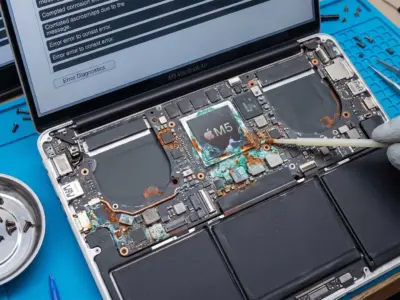
Technician moves critical chips to donor board after water damage and burn hole
The device in question is a MacBook Pro featuring Apple's M1 Max system-on-chip. The M1 Max chipset is permanently locked to its original motherboard, which means standard replacement procedures cannot simply swap logic boards. Instead, critical components must be moved to preserve hardware recognition and security features.
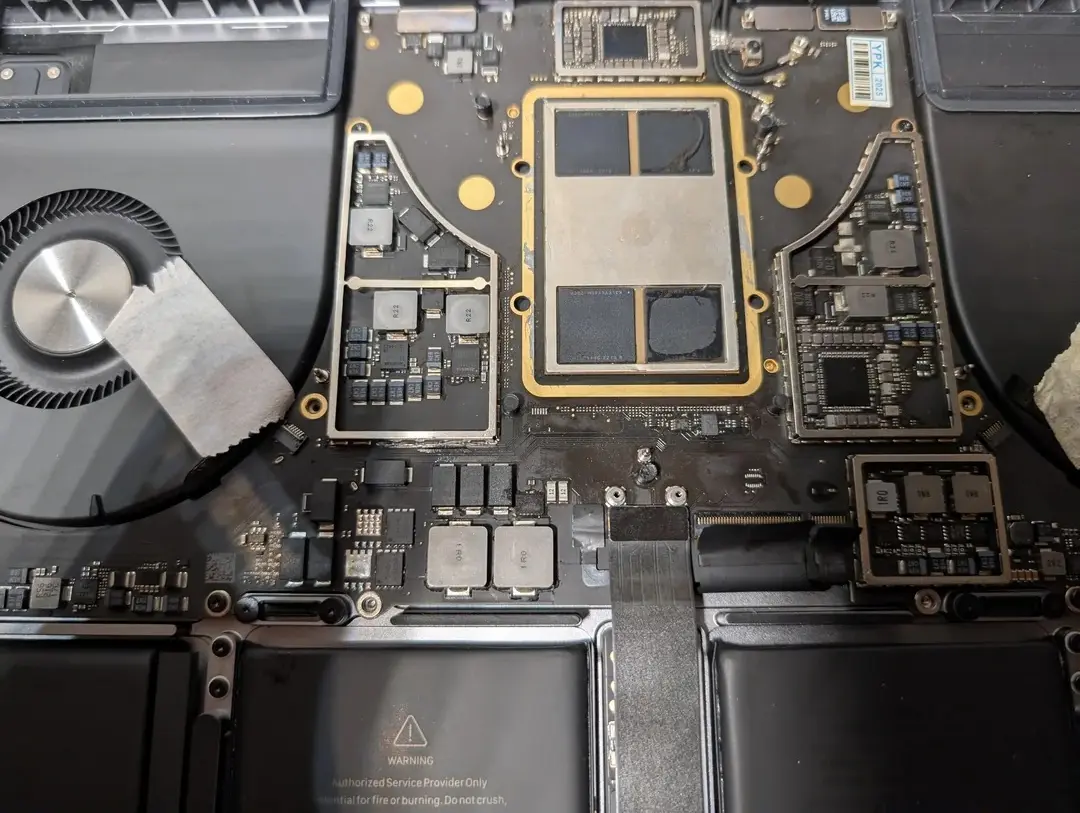
The repair process required transplanting the M1 Max SoC, SEP EEPROM, Wi-Fi module, and Touch ID controller onto a donor board with part number A2485. This complex operation took 8 hours of stress testing under full CPU, GPU, and memory load to verify stability and functionality after the component transfer.
The successful transplant demonstrates that even severe physical damage like burn holes does not necessarily destroy the core computing components of Apple Silicon laptops. The repair technique preserves all original hardware identifiers while restoring the device to operational status through meticulous component-level work.
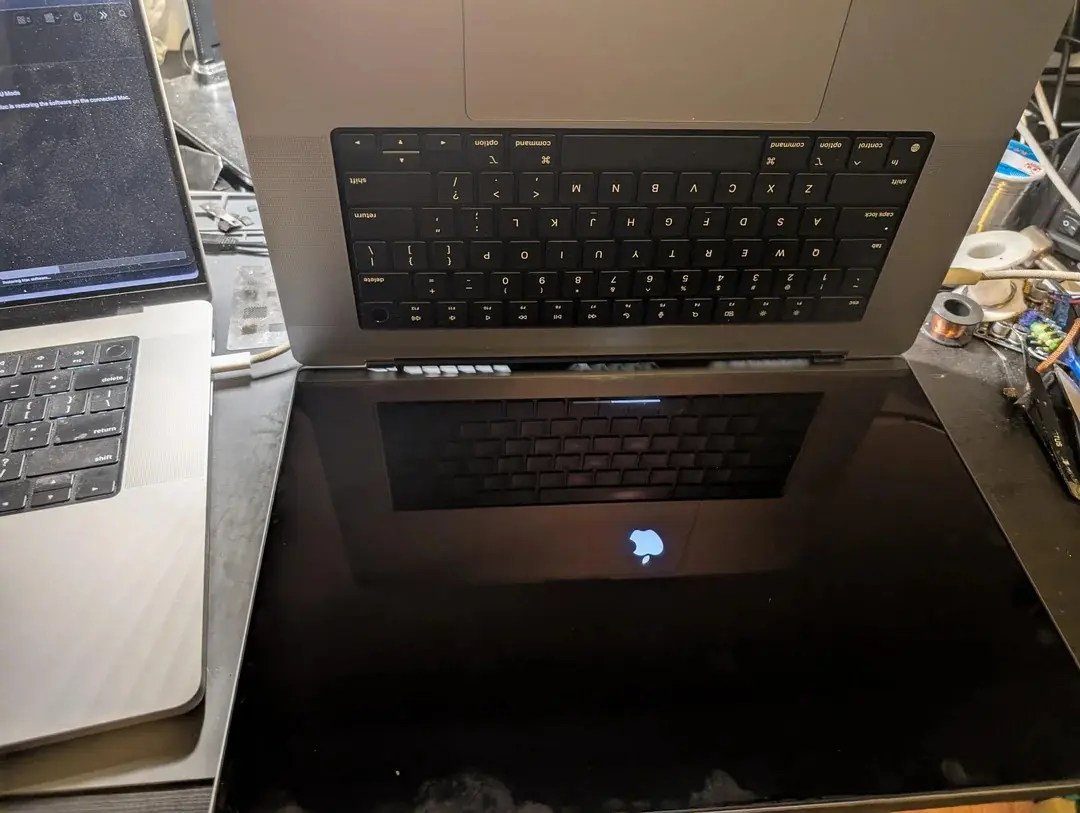
The technique provides a practical option for users needing to avoid the high cost of replacing an entire logic board after out-of-warranty damage. Transferring key components allows for the restoration of damaged MacBook Pro models that might otherwise need expensive board-level repairs.

Discussion
0 comments
Log in to join the thread with a thoughtful take, question, or correction.