
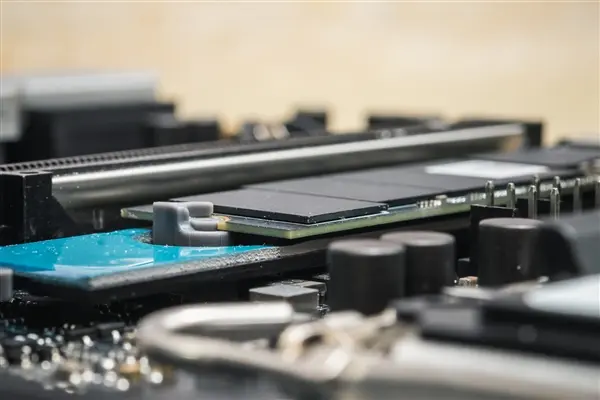
Kioxia has introduced its tenth-generation BiCS NAND flash, expanding the stack to 332 layers. This marks a significant jump from the previous generation's 218 layers and aims to improve storage density without relying on higher layer counts.
New architecture delivers significant storage density and power efficiency improvements over previous generation chips while challenging industry layer count norms.
The new Gen10 architecture delivers measurable gains over Kioxia's eighth-generation (Gen8) chips. Storage density increases by 59%, while read speeds rise by 15% and write speeds jump by 25%. These improvements position the flash as a competitive option for high-capacity storage drives.
Spec comparison
| Spec | Gen8 BiCS NAND | Gen10 BiCS NAND |
|---|---|---|
| Stack Layers | 218 layers | 332 layers |
| Storage Density Improvement | Baseline | +59% |
| Read Speed Improvement | Baseline | +15% |
| Write Speed Improvement | Baseline | +25% |
Power efficiency sees substantial reductions compared to Gen8, with read power consumption dropping by 40% and write power falling by 30%. Kioxia claims these gains make its 332-layer design more efficient than industry competitors using over 400 layers. The company also reports a reliability increase of over 35% versus those alternatives.
Cost efficiency remains a key focus, with Kioxia stating that GB costs are less than 10% lower than comparable 400+ layer chips from other manufacturers. Energy efficiency improves by more than 10%, supporting the company's argument for a balanced approach to NAND development rather than maximizing layers alone.
Looking ahead, Kioxia plans to leverage CMOS direct bonding (CBA) technology to reach interface speeds of 4.8 Gbps by 2029. This target would place it ahead of competitors expected to remain at 3.6 Gbps during the same period. The company's strategy emphasizes efficiency and cost control over sheer layer counts.
Kioxia's Gen10 BiCS NAND flash offers a refined balance of density, speed, and power savings compared to its previous generation. The company positions its 332-layer design as superior to higher-layer competitors in key areas like reliability and cost. Future developments will focus on CBA technology to boost interface speeds.
Discussion
0 comments
Log in to join the thread with a thoughtful take, question, or correction.