
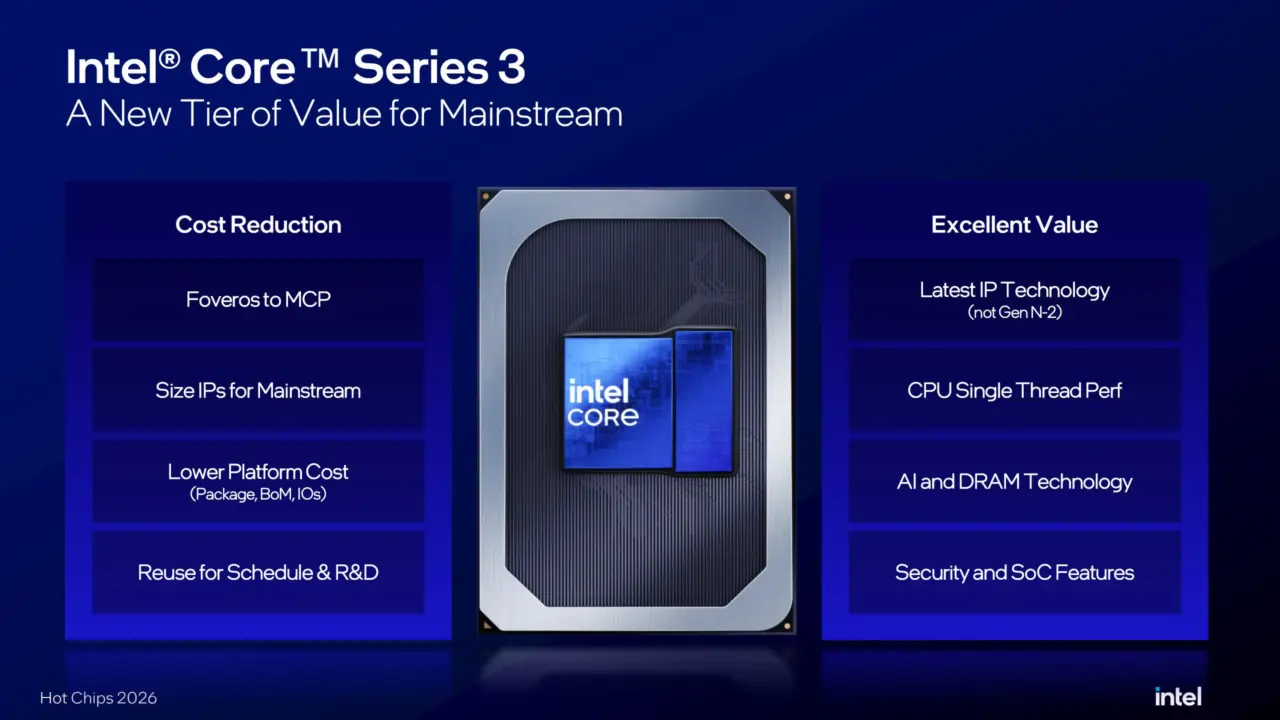
Intel is reshaping its mainstream laptop strategy by stripping down its upcoming Wildcat Lake processors to cut costs and shrink physical footprints. This shift matters because it signals a move toward affordable, efficient silicon that prioritizes battery life and basic AI tasks over raw gaming power. Buyers looking for thin, light devices with all-day endurance will find this architecture relevant, while enthusiasts seeking high-end graphics may need to look elsewhere.
Intel swaps Foveros for UCIe to shrink footprint and lower costs
The Wildcat Lake chips, also known as Core Series 3, rely on a Multi-Chip Package (MCP) using UCIe interconnects instead of the Foveros 3D stacking used in Panther Lake. Intel places the compute die on its own 18A process node while routing input/output functions through a separate tile built on TSMC N6. This modular approach allows the company to optimize manufacturing costs for different components without sacrificing the core processing speed.
Specifications
- Package Type: Multi-Chip Package (Organic) with UCIe
- Compute Die Process: Intel 18A
- IO Tile Process: TSMC N6
- iGPU Cores: Up to 2 Xe iGPU Cores
- NPU Performance: 17 TOPS
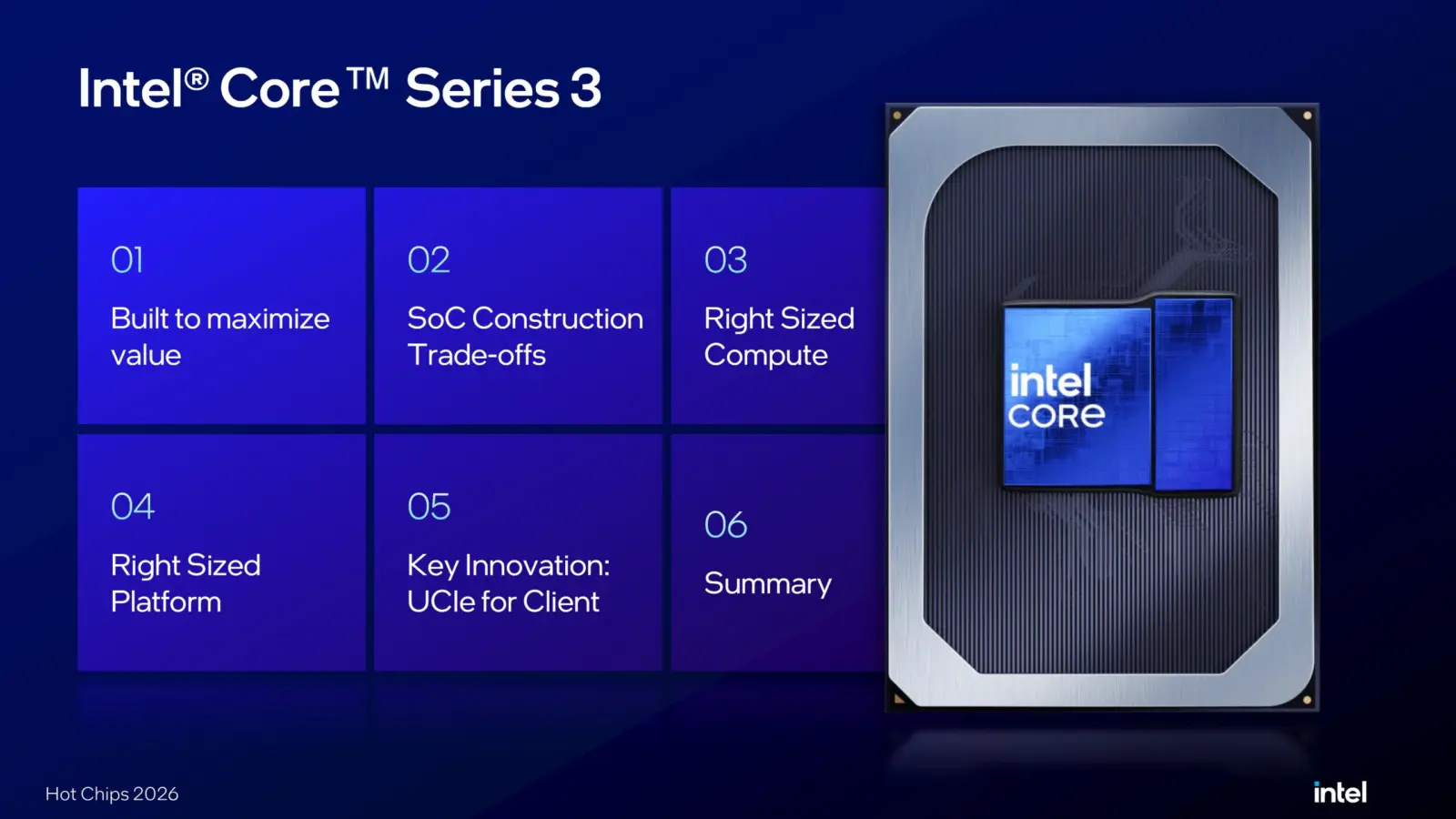
Performance specifications show significant reductions compared to previous generations to achieve these efficiency gains. The processor includes up to two P-Cores and two Xe iGPU cores, dropping the ray tracing capabilities found in higher-end models. The neural processing unit delivers 17 TOPS, bringing the total platform AI performance to 40 TOPS. Intel claims this configuration offers 2.1x faster creation and productivity speeds while consuming 64% less power than Core 100 series chips.
The physical design benefits greatly from the new packaging strategy, with the MCP measuring just 35x25x1.23mm compared to the 50x25x1.5mm footprint of Panther Lake parts. Memory support is limited to a 64-bit LP5 interface, which further reduces bandwidth but lowers power consumption. Modern connectivity features like Thunderbolt 4, Wi-Fi 7, and Bluetooth 6 are integrated directly into the platform. We've been tracking Wildcat Lake closely — see our earlier coverage on Intel Wildcat Lake Refresh Rumored to.
Intel positions these chips to compete in the segment defined by devices like the MacBook Neo, targeting users who value efficiency over peak performance. The company confirmed these architectural details at Hot Chips, emphasizing the cost and size advantages of the UCIe-based design. There is currently no pricing or availability information available for these processors. The focus remains on delivering a compact, power-efficient solution for the mainstream laptop market.
Discussion
0 comments
Log in to join the thread with a thoughtful take, question, or correction.