
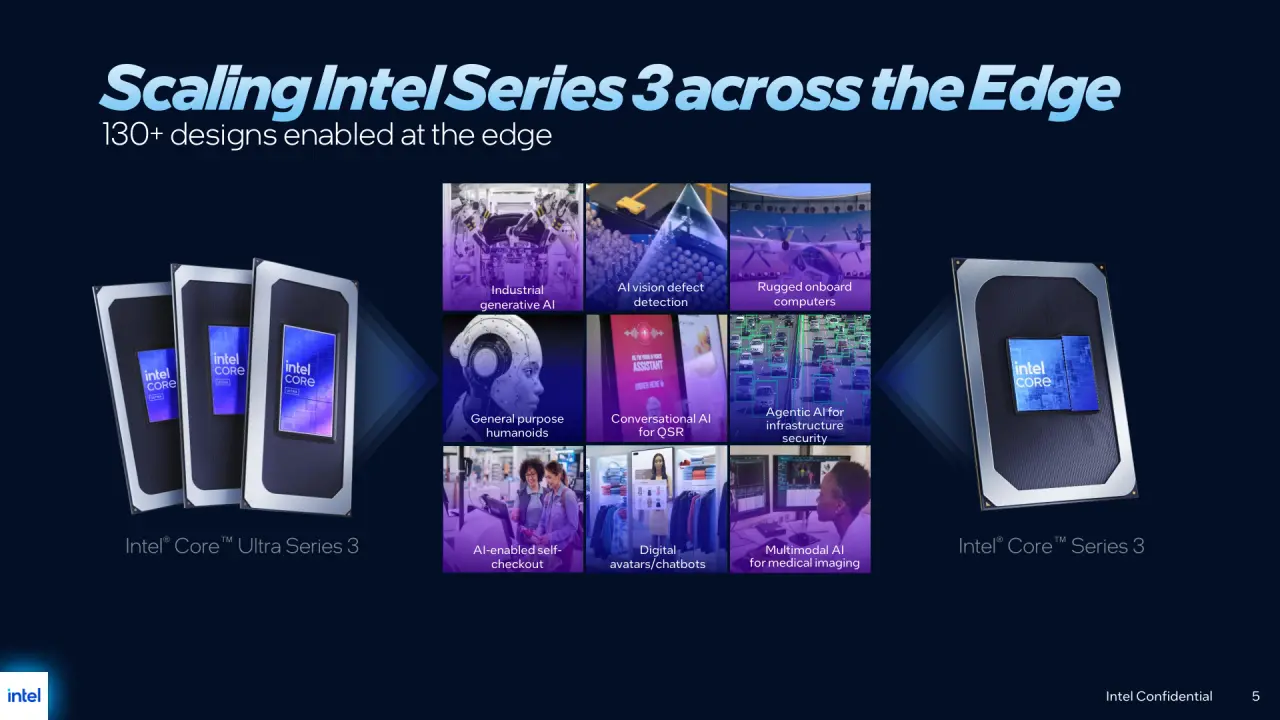
Intel has introduced the OpenVINO Physical AI framework at Computex 2026 to streamline edge robotics deployment. The new software suite pairs with Core Ultra Series 3 processors built on the Panther Lake architecture. This combination creates a unified hardware-software stack for vision-language-action models in physical systems.
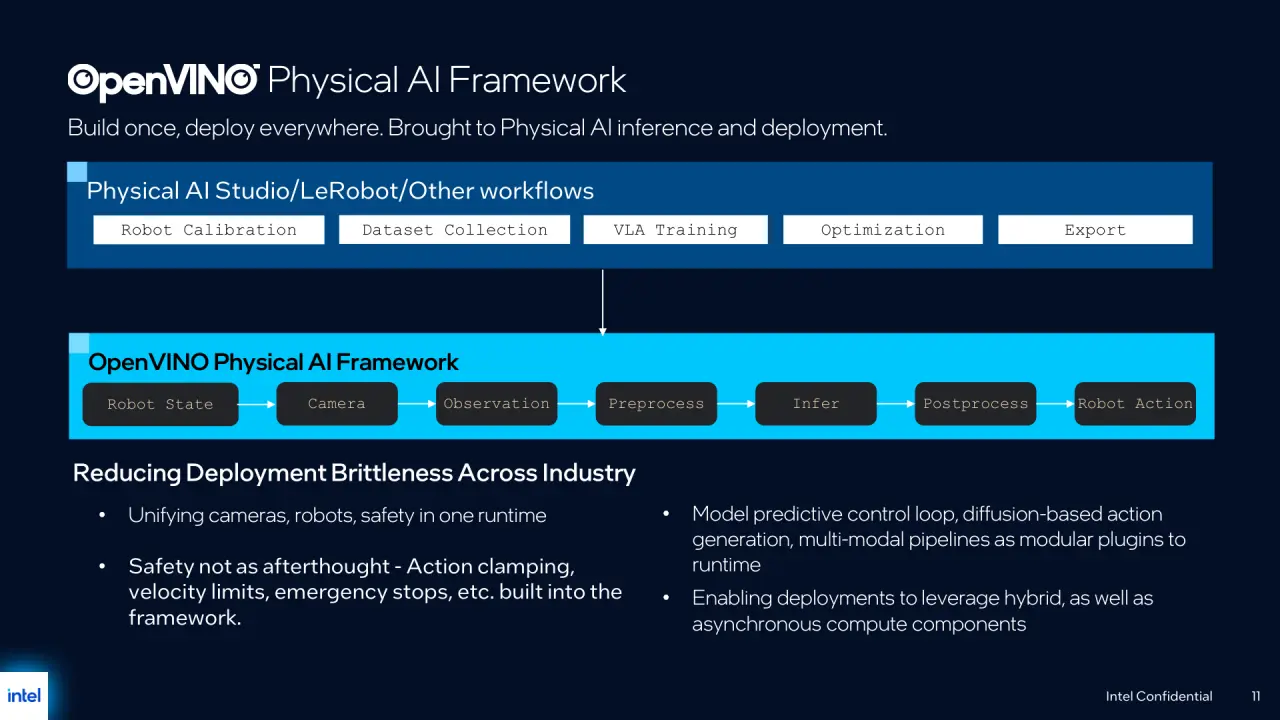
Streamlining edge robotics deployment through a unified hardware-software stack for vision-language-action models
The framework targets edge robotics, autonomous vehicles, drones, and industrial machines. It connects VLA models directly to sensors and actuators for real-time decision-making at the edge. Intel aims to eliminate custom pipelines that previously handled sensor data, codecs, and inferencing loops separately.
Intel claims the unified stack lowers total cost of ownership compared to dual-compute solutions. The company also states it improves code efficiency for developers building physical AI applications. Intel attributes these advantages to a simplified hardware design and more efficient software integration throughout the robotics development process.
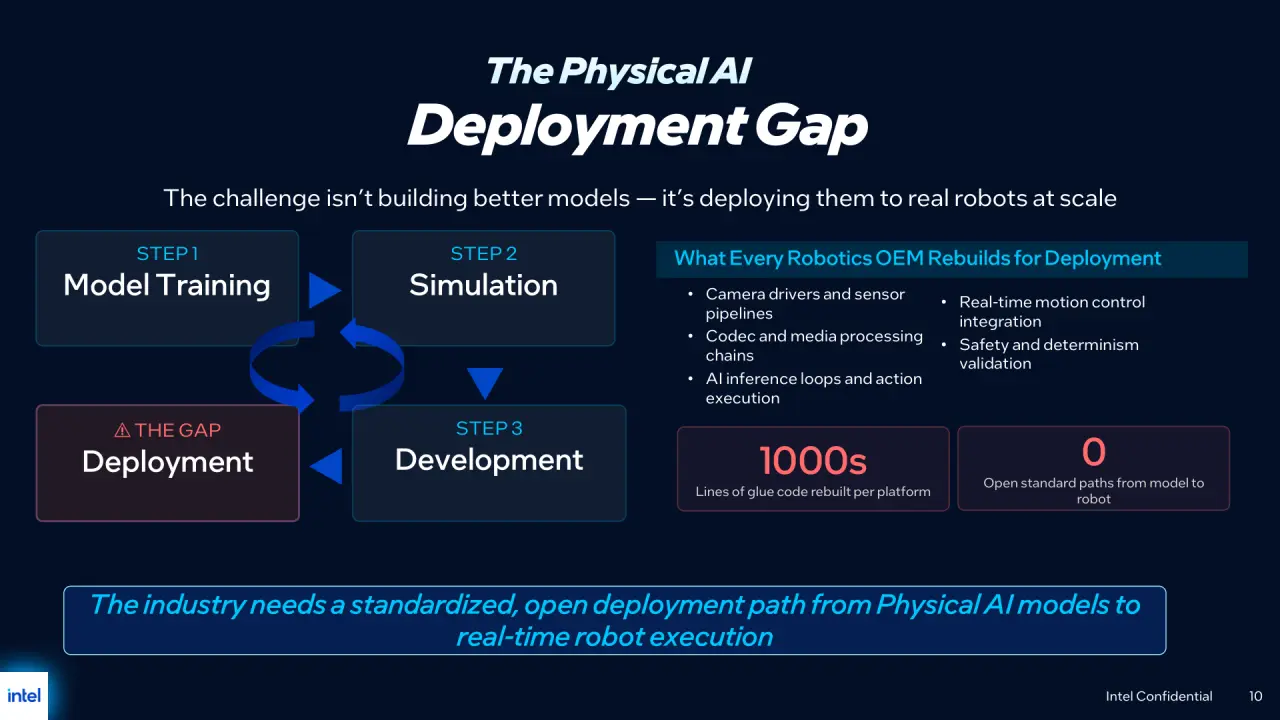
Intel positions its solution against Nvidia's Jetson AGX Orin and Jetson Thor T5000 platforms. The company claims cost, performance, or value advantages for medium-sized VLA workloads in these comparisons. Panther Lake mobile processors for enterprise systems launched earlier this year to support such deployments.
Intel introduced this framework during a period when manufacturers are actively looking for dependable solutions to deploy physical artificial intelligence systems in remote locations. Intel says its approach fills a gap in current robotics infrastructure. Real-world enterprise adoption and maintenance ease remain unverified beyond vendor claims.

Discussion
0 comments
Log in to join the thread with a thoughtful take, question, or correction.