
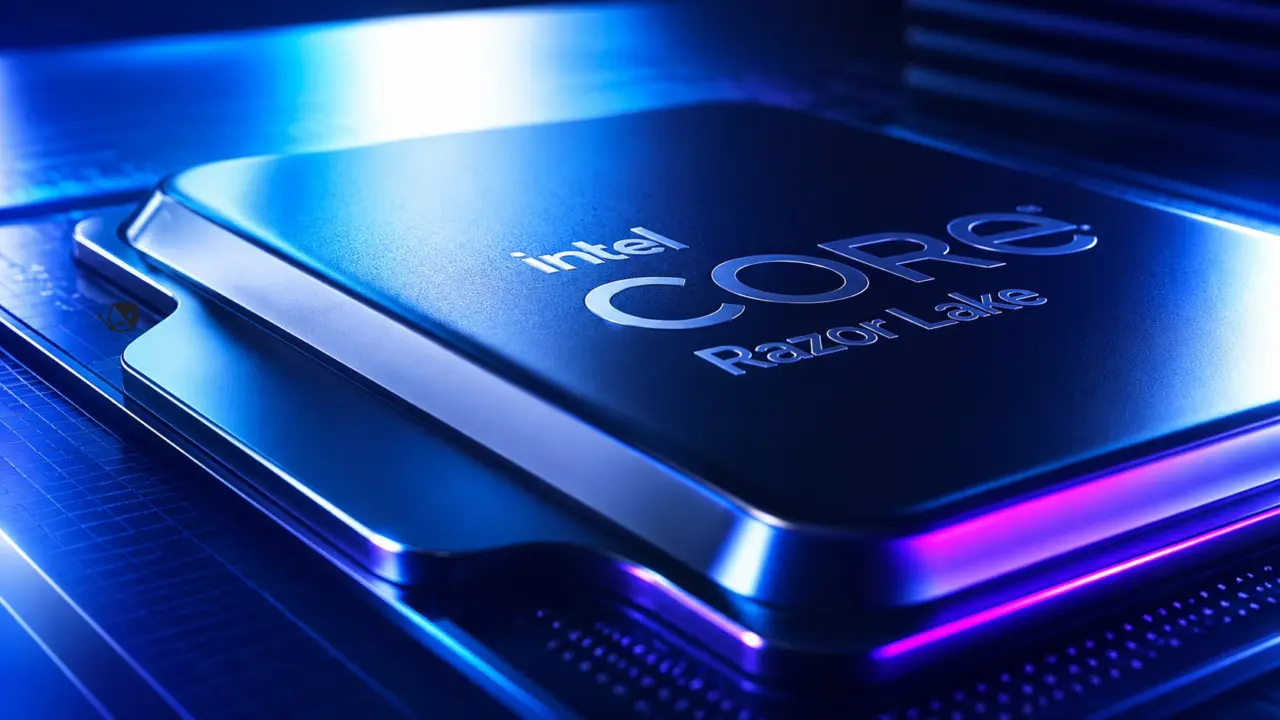
Intel is reshaping its high-end desktop roadmap with the upcoming Razor Lake platform, a move that directly impacts buyers looking for the next generation of gaming rigs. This architecture shift matters because it introduces a unique split in core designs between the enthusiast Halo segment and the standard desktop lines. You will need to plan your motherboard and memory choices carefully since the platform retains the LGA 1954 socket but changes how memory is integrated.
Halo chips use on-package memory while standard models keep overclocking
The Razor Lake-AX variant targets the Halo enthusiast market and reportedly resurrects the cancelled Nova Lake-AX architecture. This chip combines Coyote Cove performance cores with Arctic Wolf efficiency cores to handle heavy workloads. It also integrates Xe3P integrated graphics for basic display output without a discrete GPU. The design prioritizes efficiency and stability over manual tuning for this specific segment.
Specifications
- Razor Lake-AX P-Core: Coyote Cove
- Razor Lake-AX E-Core: Arctic Wolf
- Razor Lake-AX iGPU: Xe3P
- Razor Lake-AX Memory: On-package
- Razor Lake-AX Overclocking: Not supported
Memory handling changes significantly for the Halo segment with the adoption of on-package memory. This approach integrates memory directly onto the processor package rather than using traditional DIMM slots. Intel has confirmed that these chips will not support any kind of overclocking, locking performance to factory settings. This restriction ensures consistent performance but removes the ability for enthusiasts to push the silicon further.
In contrast, the Razor Lake-S and Razor Lake-H variants leverage the newer Griffin Cove performance cores and Golden Eagle efficiency cores. These models retain support for overclocking, allowing users to adjust clock speeds for higher performance. The platform is expected to launch globally in late 2027 or early 2028. We touched on Intel Nova Lake-S Specs in our earlier Intel coverage, which provides context for the architectural jump these new cores represent.
The confirmed details outline a clear divide in Intel's strategy between the fixed-performance Halo segment and the tunable standard desktop segment. Buyers in the Halo market will get a compact, efficient design with no overclocking options. Standard desktop users will retain the flexibility to overclock their Griffin Cove and Golden Eagle based processors. The late 2027 to early 2028 release window gives system builders time to prepare their LGA 1954 compatible motherboards.

Discussion
0 comments
Log in to join the thread with a thoughtful take, question, or correction.