
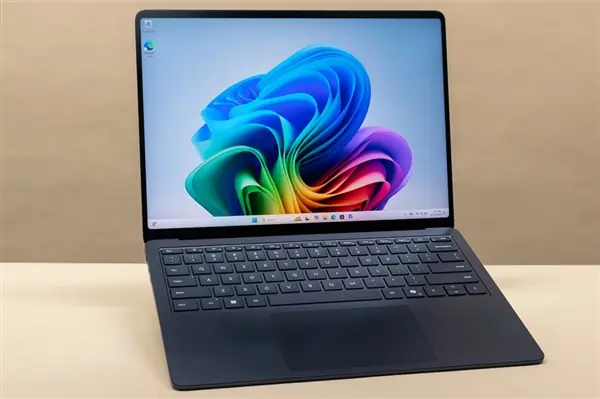
Intel’s Panther Lake architecture marks a shift in laptop performance, bringing desktop-class power to thin-and-light designs through its 18A manufacturing process and Core Ultra branding. AMD, Qualcomm, and Apple join the competition with their latest silicon, creating a market where high-end capabilities are no longer confined to bulky gaming rigs.
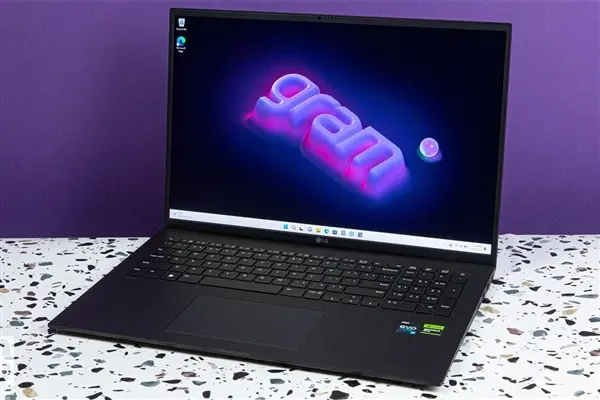
New processors enable thin-and-light designs with desktop-class power.
The landscape now features Intel’s Panther Lake paired with Arc Pro integrated graphics, AMD’s Ryzen AI 400 series, Qualcomm’s Snapdragon X2 Elite, and Apple’s M5 chip. These processors target different segments but share a focus on efficiency and raw computational throughput for modern workloads.
- CPU Architecture/Process: Intel Panther Lake (Core Ultra) on 18A; AMD Ryzen AI 400; Qualcomm Snapdragon X2 Elite; Apple M5
- GPU Capabilities: Intel Arc Pro iGPU supports ray tracing, stable 100+ FPS at 1080P medium settings for AAA games; AMD strong multi-core performance; Qualcomm shared memory architecture improves AI/graphics efficiency
- Battery Life: Windows laptops achieve 12-15 hours real-world usage (up to 20+ hours for high-end) at 50% brightness mixed workload; no longer a MacBook exclusive
- AI/NPU: High-performance NPUs integrated across all price segments; local AI is a bonus, cloud AI remains mainstream
- Display Resolution/Refresh Rate: 1080P phased out; 2.5K entry standard; 3K/4K high-end; 60Hz phased out, 120Hz mainstream, gaming laptops up to 240Hz
Performance metrics show Intel’s Arc Pro iGPU supporting ray tracing to deliver over 100 FPS in AAA titles at 1080p medium settings. AMD’s Ryzen AI 400 offers significant single-core and multi-core gains, while Qualcomm leverages a shared memory architecture to boost AI and graphics efficiency. Apple maintains its position with low-power leadership for creative professionals.
Battery endurance has reached a new baseline for Windows laptops, achieving 12 to 15 hours of real-world usage at 50% brightness under mixed workloads. High-end models push past the 20-hour mark, eliminating the historical gap between Windows and macOS devices in terms of daily portability without charging.
Artificial intelligence capabilities are now standard across all price points through integrated high-performance NPUs. Local AI processing serves as a supplementary feature rather than the primary execution method, with cloud-based AI remaining the dominant approach for demanding tasks.
Display standards have shifted decisively away from 1080p and 60Hz panels toward 2.5K resolution and 120Hz refresh rates as entry-level norms. High-end models utilize 3K or 4K screens, with OLED technology gaining popularity for its contrast despite burn-in risks that require careful mitigation strategies.
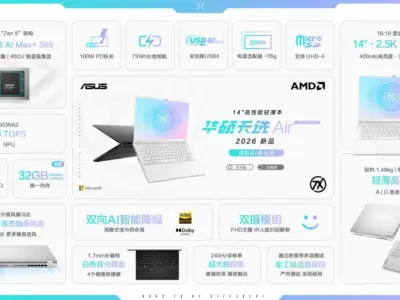
Connectivity has unified around full-function USB-C ports supporting Thunderbolt 4 and USB4 standards with up to 40Gbps data transfer speeds. Fast charging via 65W to 100W GaN chargers allows devices to reach 50% capacity in just 30 minutes, reducing reliance on proprietary power bricks.
The convergence of these technologies means consumers no longer need to compromise between portability and performance. Real-world testing confirms that modern Windows laptops match or exceed the endurance and capability previously associated exclusively with premium macOS alternatives.
Discussion
0 comments
Log in to join the thread with a thoughtful take, question, or correction.