
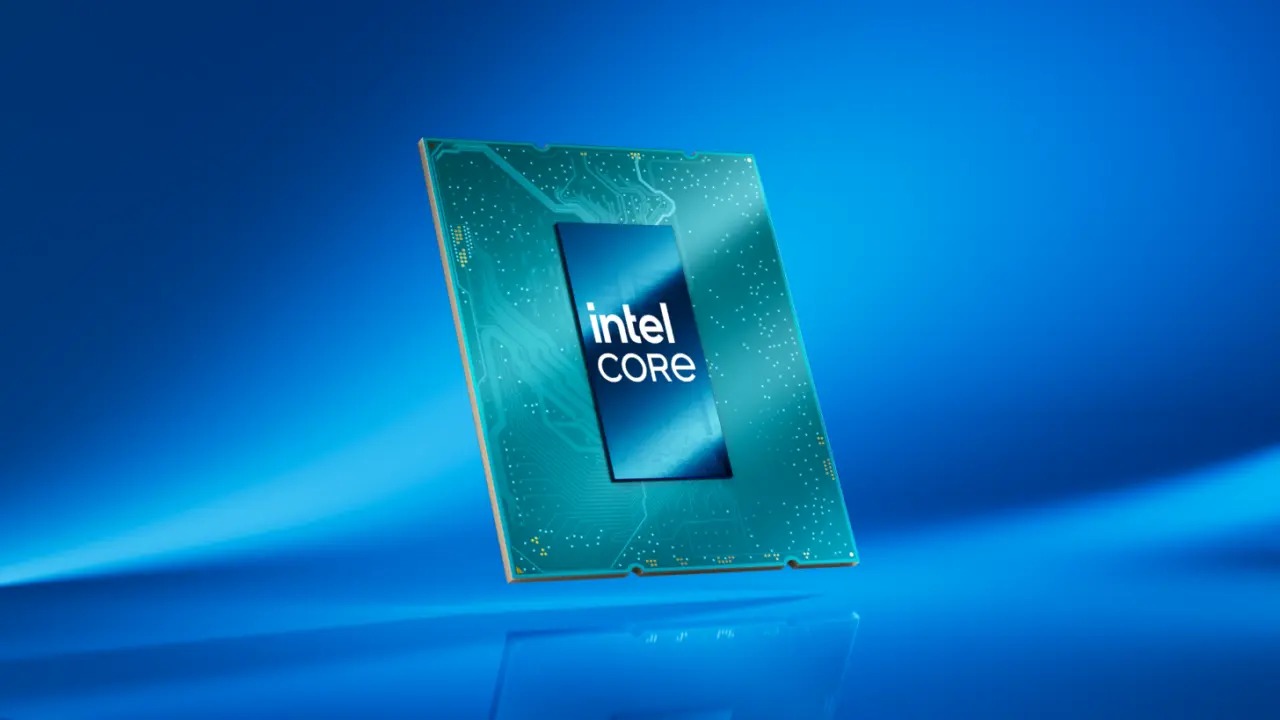
Intel has released a new flagship processor, the Core 9 273PQE, built on its Bartlett Lake platform. This chip features a unique architecture with only performance cores and no efficiency cores. In gaming benchmarks against an older competitor, it failed to outperform Intel's own four-year-old Core i9-13900K.
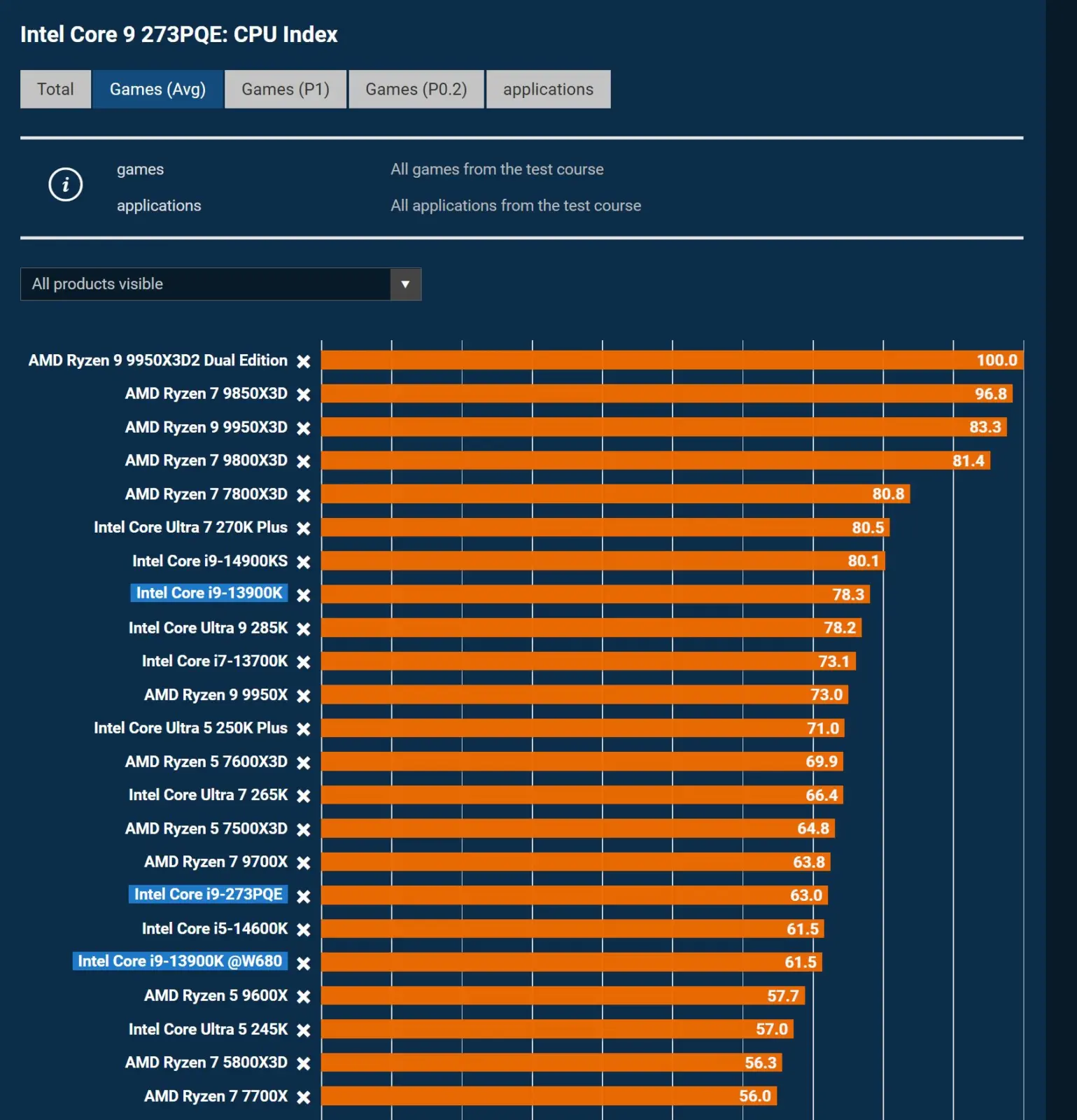
Twelve P-cores fail to beat older competitor in gaming tests
The Core 9 273PQE is the top-tier model in the Bartlett Lake lineup. It contains twelve P-cores and completely lacks E-cores. This design choice marks a departure from the hybrid architecture found in recent consumer processors like the i9-13900K, which uses eight performance cores and sixteen efficiency cores.
Testing for this processor utilized a GeForce RTX 5090 graphics card to ensure consistent gaming conditions. The chip achieved boost clocks up to approximately 5.30GHz during these tests. Official specifications indicate it can reach higher speeds of up to 5.9GHz, though real-world performance in the tested scenario did not reflect that maximum potential.
Despite having four more P-cores than the Core i9-13900K, the new flagship either tied or slightly underperformed its predecessor in gaming benchmarks. This result suggests that eight performance cores are sufficient for current gaming workloads. Adding extra P-cores does not yield significant performance gains in these specific scenarios.
Bartlett Lake may be positioned more toward specialized industrial applications instead of competing directly with high-end desktop CPUs. This conclusion is inferred from benchmark performance data and broader platform strategy considerations. Bartlett Lake may be intended for specialized applications rather than direct competition in the consumer desktop segment.
This processor suggests a potential change in how Intel approaches high-end CPU architecture for specific use cases. The design choice to include only performance cores may indicate a focus on specialized workloads rather than general consumer gaming needs. Gaming benchmarks confirm that extra P-cores do not improve performance in current applications.
Discussion
0 comments
Log in to join the thread with a thoughtful take, question, or correction.