
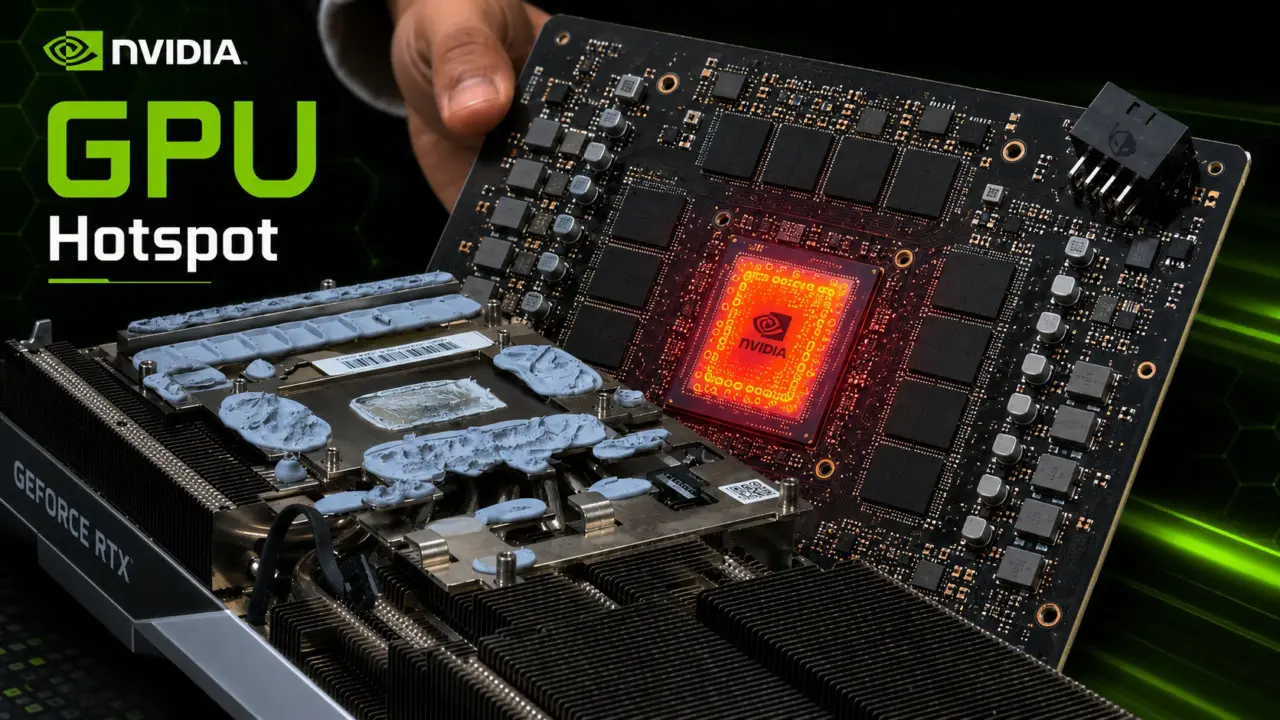
Hardware enthusiasts who monitor GPU thermals have a reason to update their tools. CPUID released version 1.65 of the HWMonitor utility, restoring a key feature that NVIDIA had previously removed from official software. This change allows users to track critical thermal data for the new GeForce RTX 50 series cards again. Buyers and builders who rely on hotspot readings for cooling adjustments can now access this information through the standard utility.
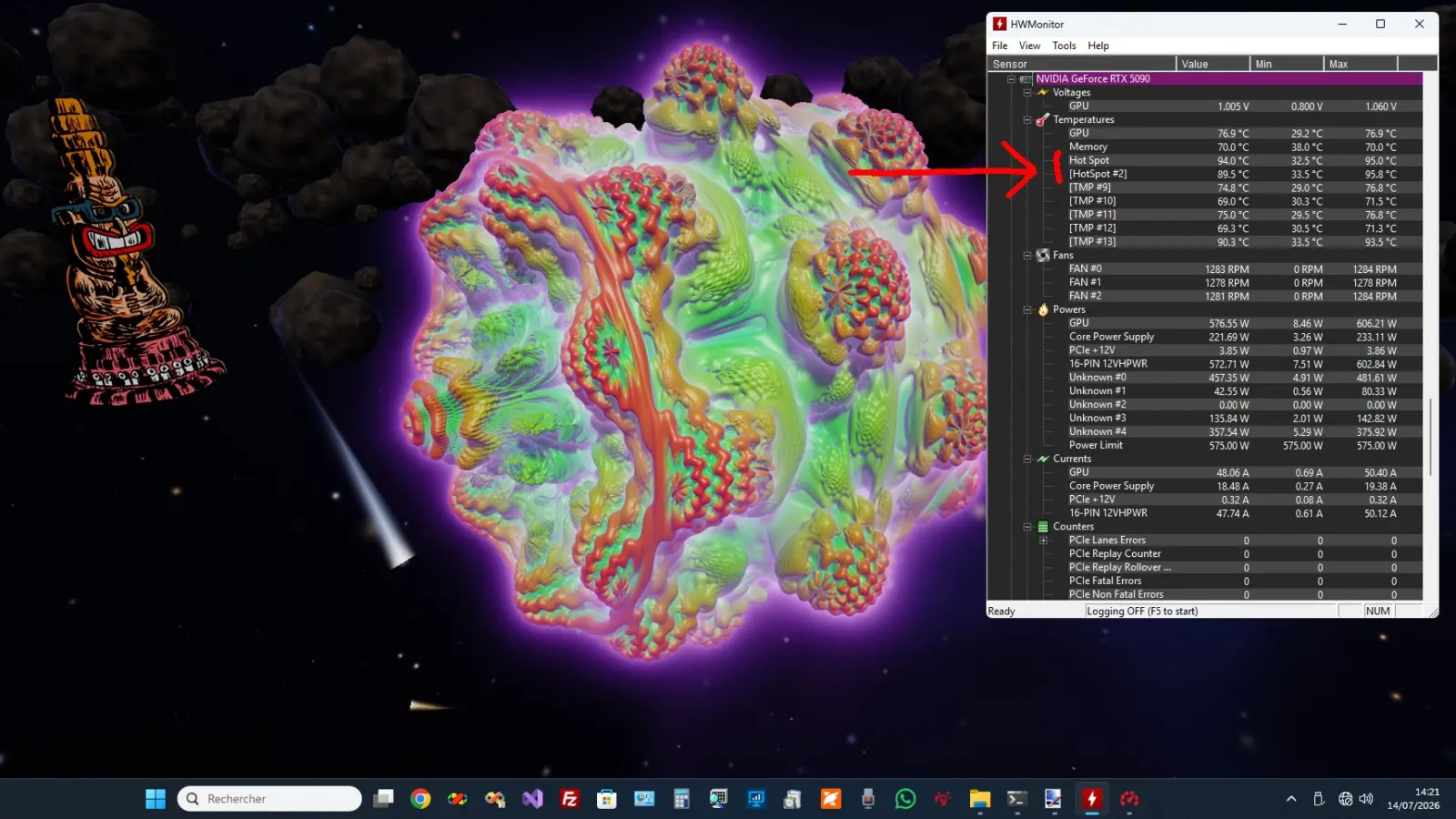
Utility update exposes distinct GPU core and VRM thermal sensors
The update specifically targets the GeForce RTX 50 series graphics cards. It brings back hotspot temperature monitoring, a capability that was absent in recent official releases. The utility now exposes two distinct sensor readings for these GPUs. One reading tracks the hotspot temperature of the GPU core itself. The other reading tracks the hotspot temperature of the power delivery module, known as the VRM.
NVIDIA had disabled these specific hotspot measurements in official drivers and utilities for unknown reasons. This removal left a gap in thermal monitoring for the RTX 50 series. Modders had previously found ways to unlock these readings, but the official path was closed. CPUID has now reintegrated this data into the official HWMonitor 1.65 release. The utility provides a clean, supported method to view these temperatures without third-party patches.
This restoration of data helps users better understand the thermal behavior of their graphics cards. Monitoring the VRM hotspot is particularly useful for assessing power delivery stability under load. The update applies to the standard HWMonitor software available to the public. Users can now verify core and power delivery temperatures directly from the vendor-supported tool. This completes the return of essential monitoring capabilities for the RTX 50 series.


Discussion
0 comments
Log in to join the thread with a thoughtful take, question, or correction.