
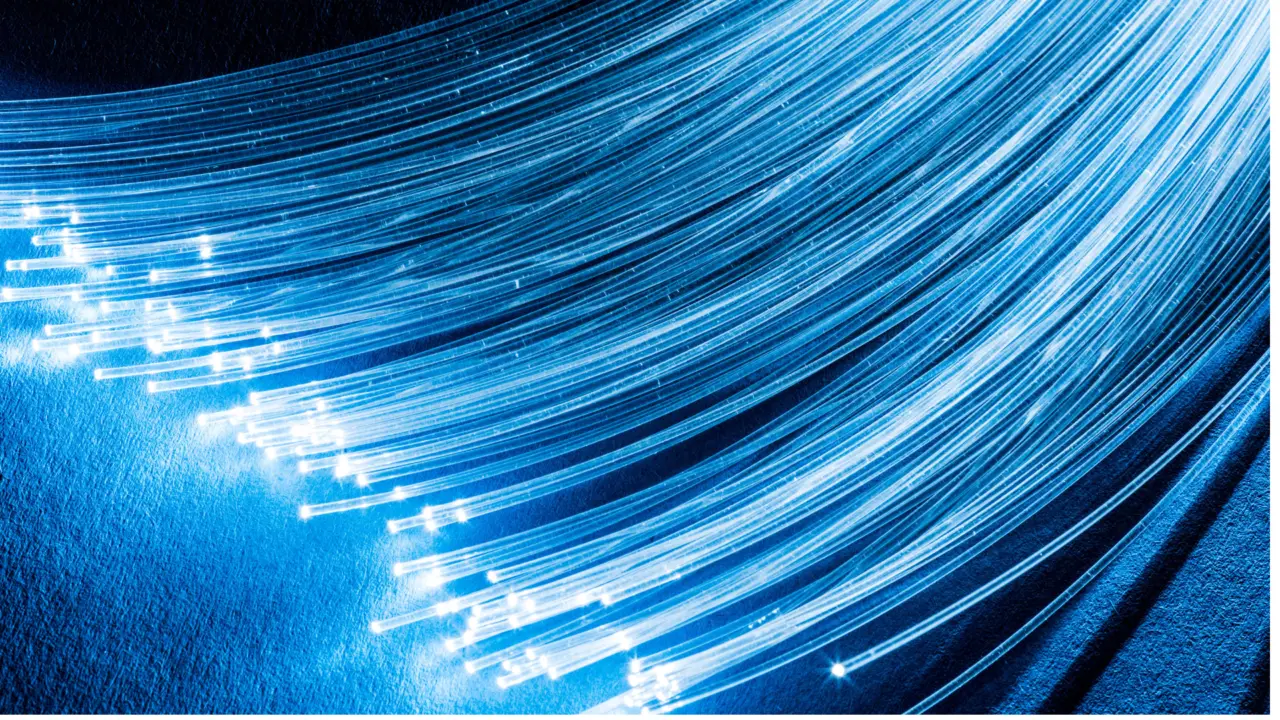
Data centers building AI clusters face a physical limit in how fast they can move data between GPUs, a bottleneck that hollow-core fiber aims to break. Yangtze Optical Fiber and Cable Joint Stock Limited Company, China Telecom, and Dekoli completed a field trial in China that proves this technology can move massive amounts of data without traditional signal regeneration. This milestone matters because it offers a path to lower latency and higher capacity for the high-speed interconnects that modern artificial intelligence workloads demand. The trial demonstrates that optical networking can evolve beyond the constraints of conventional glass fibers.
Chinese firms achieve world record for unrepeatered WDM capacity
The field trial utilized hollow-core fiber, a cable design that guides light through air rather than solid glass. This structural difference allows signals to travel faster and with less distortion than in standard solid-core fibers. The participating companies tested the system over a distance of roughly 128 miles, which equals 206.5 kilometers. They achieved this range without using repeaters to boost the signal along the way, a significant engineering hurdle for long-distance optical transmission.
Trial Specifications
- Aggregate Capacity: 51.3 Tb/s
- Per-Wavelength Capacity: 1.2 Tb/s
- Transmission Distance: 128 miles (206.5 km)
- Amplifier Output: 33.5 dBm (2.24 W)
- Latency Improvement: 31% lower
The system delivered an aggregate transmission capacity of 51.3 terabits per second across the tested distance. Each individual wavelength carried 1.2 terabits per second, a density that supports high-bandwidth applications. The team achieved these rates using only erbium-doped fiber amplifiers, which are standard components in optical networks. They avoided the need for remote-pumped amplifiers, simplifying the infrastructure required to maintain signal strength over the long haul.
A key technical achievement was the amplifier output power, which reached 33.5 dBm, or roughly 2.24 watts. The team built a high-power amplifier with a cascaded dual-gain-unit architecture to ensure flat gain across the spectrum. They also implemented a self-developed optimization scheme to manage per-wavelength rates and channel power. This optimization specifically mitigated gas-absorption peaks that can degrade signal quality in hollow-core designs. The company claims this technology can deliver 31% lower latency and 47% faster transmission speeds compared to conventional solid-core fiber.
This field trial represents a new world record for unrepeatered wavelength-division multiplexing capacity-distance performance without remote-pumped amplifiers. The results confirm that hollow-core fiber can address the networking bottlenecks that currently constrain AI-era data centers. The technology provides near-zero optical nonlinearity, which further enhances signal integrity for dense data transmission. This development offers a concrete solution for network operators seeking to upgrade their physical layer infrastructure.


Discussion
0 comments
Log in to join the thread with a thoughtful take, question, or correction.