
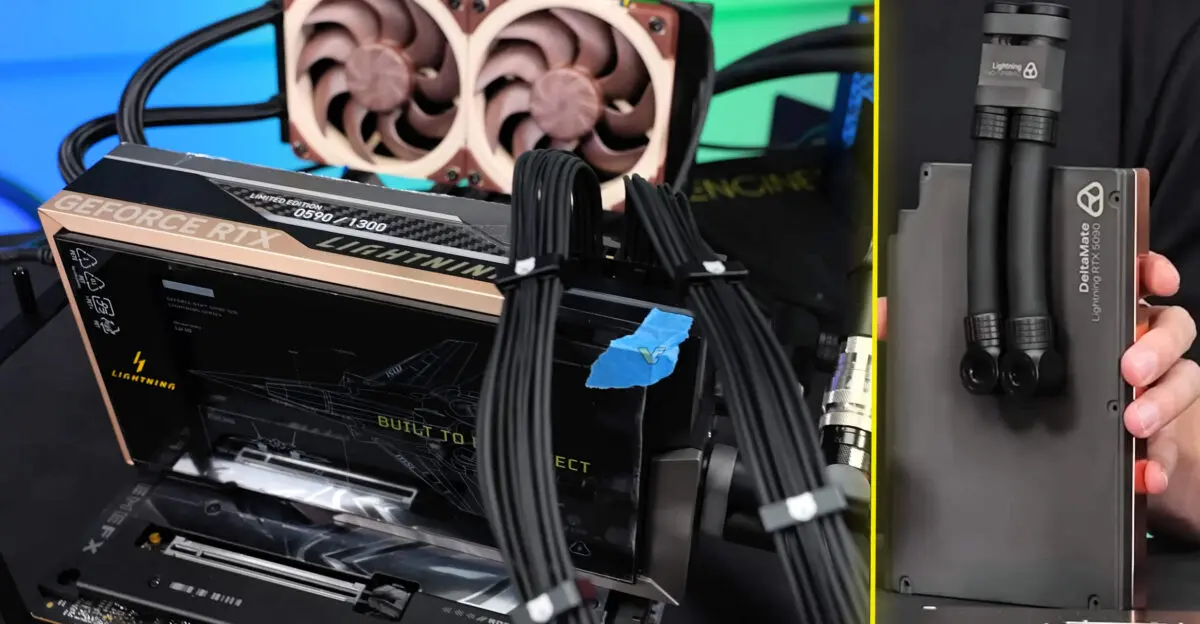
Der8auer has converted an MSI RTX 5090 LIGHTNING Z from its factory all-in-one cooler to a custom water cooling loop, demonstrating that extreme thermal management is possible for this high-end card. This modification matters because it reveals the thermal limits of the GPU under heavy loads and highlights the risks involved in modifying sealed factory components. Buyers interested in extreme overclocking should note that such conversions require significant technical effort and carry inherent corrosion risks.
Der8auer converts limited edition card to custom loop
The MSI RTX 5090 LIGHTNING Z is a limited edition graphics card with a production run of only 1,300 units. VideoCardz reported that these cards have appeared on the secondary market for around $7,000. Der8auer selected one of these expensive units for his modification project, retaining the original LIGHTNING enclosure and its integrated display panel.
- GPU Load: 800W
- Initial GPU Temperature: 54°C
- Stable GPU Temperature: 52°C to 53°C
- Coolant Temperature: 32°C
- Flow Rate: almost 190 liters per hour
The conversion process involved replacing the factory cooling block with a custom solution using a PVD-coated stainless-steel plate and new thermal pads. The original AIO component featured an aluminum plate with a thin electroless nickel coating, which can cause corrosion in open loops if the coating has pores or damage. The new setup includes three D5 pumps and an external MO-RA radiator to manage the heat output.
Under an 800W GPU load, the custom cooling loop stabilized the GPU temperature at 52°C to 53°C, down from an initial 54°C. The coolant temperature reached approximately 32°C with a flow rate of almost 190 liters per hour. These thermal results show that the custom loop effectively manages the heat generated by the RTX 5090 under extreme conditions.
This modification highlights the trade-offs between factory reliability and custom cooling performance for high-end GPUs. While the custom loop achieved stable temperatures, the potential for corrosion from mixing aluminum and copper in an open loop remains a concern. The project serves as a technical demonstration of what is possible with extensive hardware modification.


Discussion
0 comments
Log in to join the thread with a thoughtful take, question, or correction.