
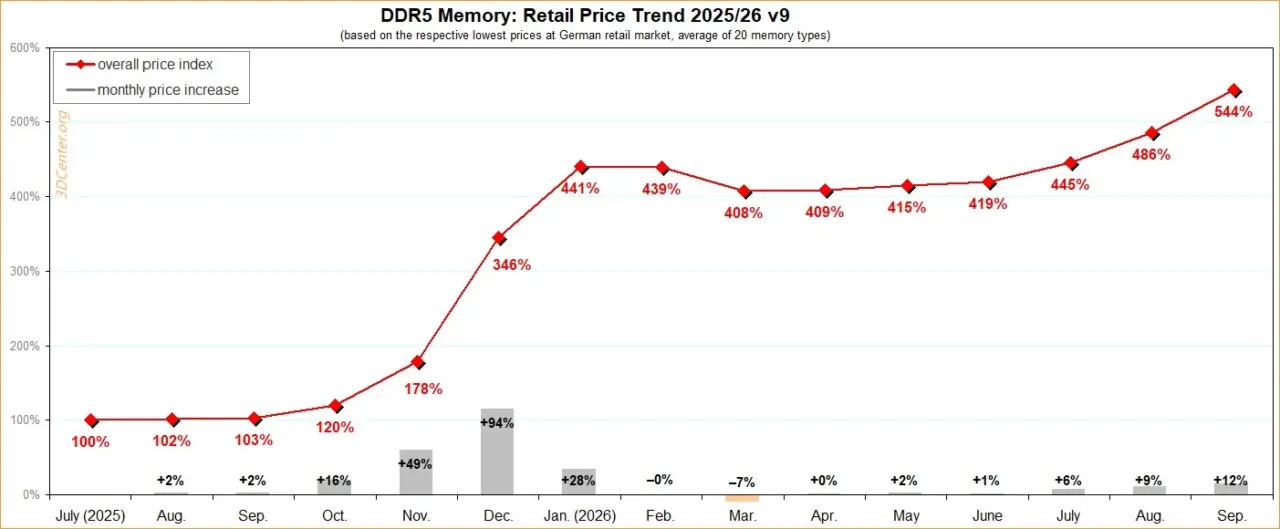
Memory buyers in Germany are facing a sudden and severe spike in costs for DDR5 modules, with the market index hitting a record 544 percent relative to the July 2025 baseline. This surge directly impacts anyone planning to build or upgrade a PC this month, as the price of high-performance RAM has effectively quadrupled. The volatility forces consumers to choose between paying premium prices for new memory or sticking with older, cheaper technologies.
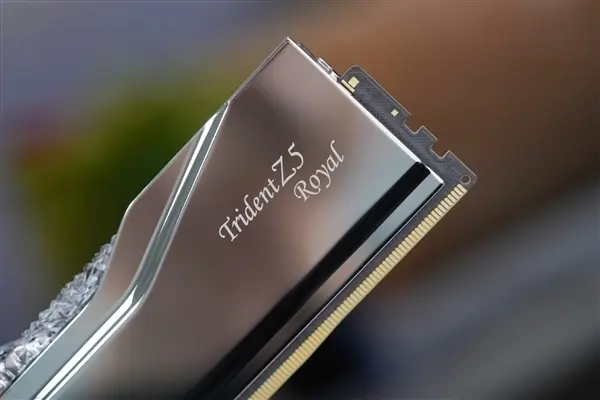
German market data shows high-end kits doubling in cost while DDR4 stays flat
The data comes from 3DCenter and Geizhals, tracking retail prices across the German market in September 2025. The average retail price for DDR5 memory rose by 12 percent month-over-month, signaling a broad market shift rather than an isolated incident. This trend affects all tiers of DDR5 kits, though the impact varies significantly by configuration and capacity.
- DDR5 Price Index (Germany): 544% (relative to July 2025 baseline)
- DDR5 Average Retail Price MoM Change: +12%
- 2x16GB DDR5-6400 CL30 Kit MoM Change: +103%
- 2x32GB DDR5-6400 Kit MoM Change: +33%
- DDR4 Price Trend: Stable / No significant growth
High-performance kits are bearing the brunt of the inflation. A popular 2x16GB DDR5-6400 CL30 kit from G.Skill saw its price jump by 103 percent in a single month. Larger capacity options are also rising, with 2x32GB DDR5-6400 kits increasing by 33 percent month-over-month. These specific models represent the current sweet spot for many enthusiasts, making the price hike particularly painful for builders.
In contrast, DDR4 prices have remained stable, showing no significant growth during this period. This stability makes DDR4 a viable budget alternative for users who do not require the highest memory speeds. Meanwhile, entry-level mini PCs equipped with 16GB of DDR5 are now approaching the $1000 price point, further squeezing the value proposition for new hardware purchases.
We looked at the last DDR5 Memory update, where several of the same balance and stability themes came up, as the market continues to fluctuate. The underlying cause for this high-frequency DDR5 price surge remains unknown, leaving buyers without a clear timeline for when costs might normalize.
Consumers should expect continued volatility in the DDR5 market as the month progresses. The current data confirms a sharp upward trend in component costs, requiring careful budgeting for any upcoming hardware projects.
Discussion
0 comments
Log in to join the thread with a thoughtful take, question, or correction.