
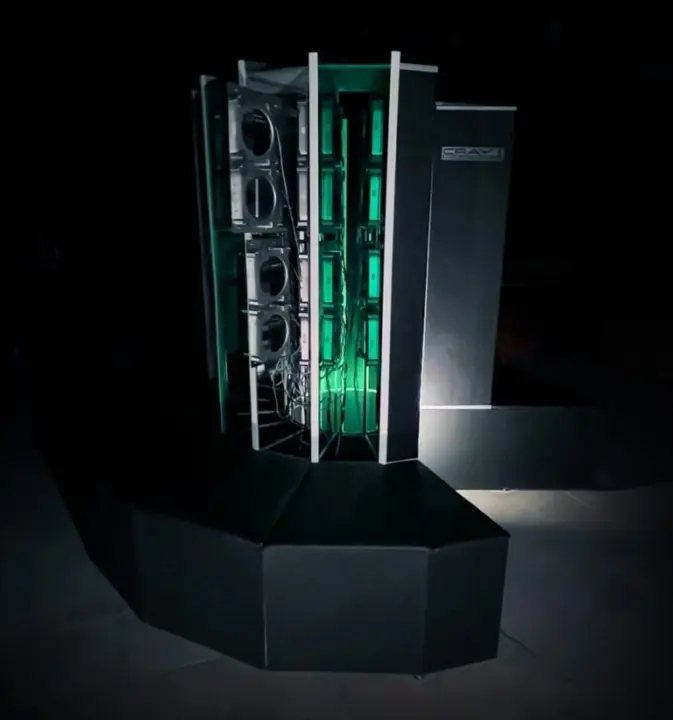
The Spanish Computer History Museum has created a functional replica of the 1976 Cray-1 supercomputer, and it matters because it proves that retired consumer hardware can still handle serious parallel computing tasks. The team assembled this 1:1 scale model using 30 obsolete Apple Mac Mini units, effectively turning e-waste into a historical engineering tribute. This project demonstrates that legacy mini PCs retain enough processing power to replicate the architecture of early supercomputers when linked together correctly.
Spanish museum repurposes 30 obsolete Mac Minis into a 1.5 TFLOPS supercomputer
The cluster relies on a mix of 2012 and 2014 Mac Mini models to distribute its workload. Five of the units feature quad-core Intel Core i7 processors, while the remaining 25 use dual-core Core i5 chips. The system schedules 64 active cores to work in unison, leaving six cores idle from the total pool of 70 available threads. This configuration allows the museum to run the specific software requirements of the era without needing modern server-grade components.
Specifications
- Compute Performance: 1.5 TFLOPS (peak), 1.3 TFLOPS (tested)
- Hardware Composition: 30x Apple Mac Mini (5x Core i7 Quad-core, 25x Core i5 Dual-core)
- Production Years: 2012 and 2014 models
- Active Cores: 64 cores (70 total available)
- Operating System: macOS Mojave
Thermal management in the replica uses a passive chimney effect rather than active fans. The engineers placed the Mac Minis vertically on aluminum trays inside a steel chassis to encourage natural heat rising. This design eliminates mechanical noise from the computer itself, relying only on the quiet hum of two Ethernet switches for any audible sound. The system runs on macOS Mojave, which the team determined was sufficient for the necessary Message Passing Interface (MPI) task distribution.
Performance testing shows the cluster hits a peak of 1.5 TFLOPS and sustains 1.3 TFLOPS in practical tests. This output vastly exceeds the original Cray-1's theoretical peak of 160 megaflops, highlighting how much computing density has improved in just forty years. The replica is now on permanent display in Spain, offering visitors a tangible look at how supercomputing architecture has evolved from vacuum tubes to clustered mini PCs.

Discussion
0 comments
Log in to join the thread with a thoughtful take, question, or correction.