
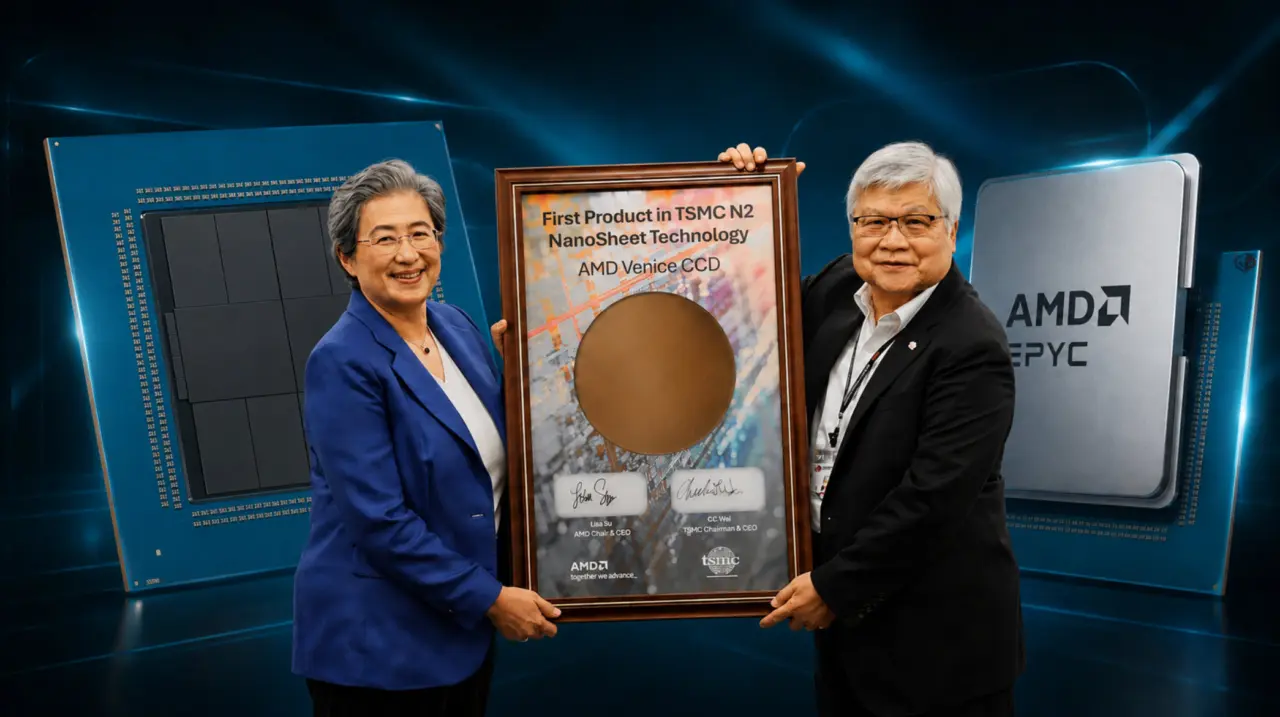
AMD has advanced its EPYC Venice server processors to volume production on TSMC's 2nm process technology. This milestone marks the first high-performance computing product to achieve mass manufacturing at this node. The company plans to ramp up production volumes for these chips at its Arizona facility.
First HPC CPU to achieve mass manufacturing at the 2nm node with Zen 6 architecture.
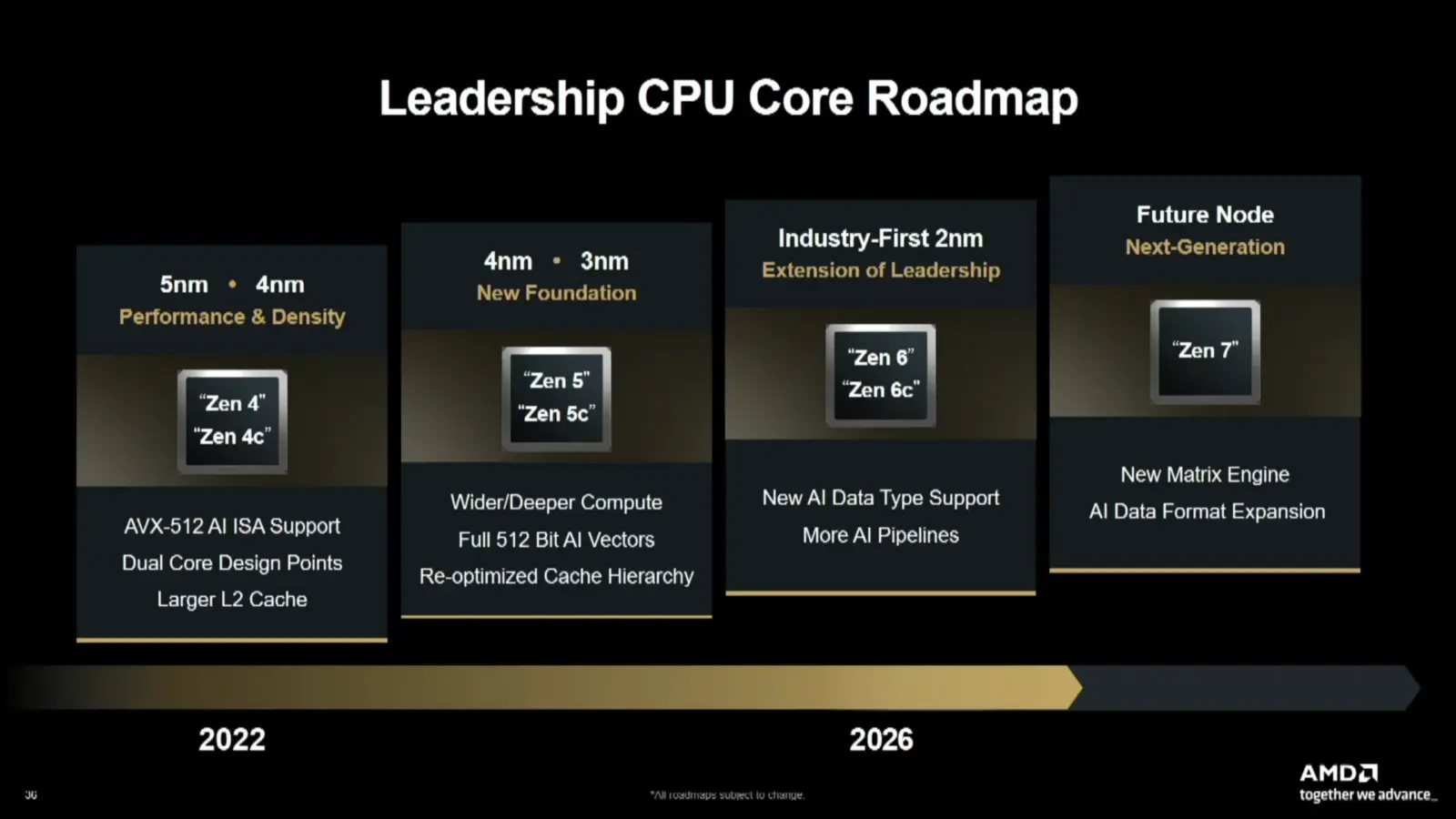
The Venice CPUs utilize the Zen 6 core architecture and deliver over a 70 percent improvement in performance and efficiency compared to previous generations. AMD offers two distinct models: a standard 96-core variant and a denser 256-core option that increases thread density by more than 30 percent relative to existing Turin processors.
Spec comparison
| Spec | AMD EPYC Venice (96-core) | AMD EPYC Venice (256-core) |
|---|---|---|
| Process Technology | TSMC 2nm (GAA Nanosheet) | TSMC 2nm (GAA Nanosheet) |
| Core Architecture | Zen 6 | Zen 6 |
| Performance Improvement | Over 70% improvement in performance and efficiency | Over 70% improvement in performance and efficiency |
| Thread Density Improvement | N/A | Over 30% improvement in thread density vs Turin |
| Core Options | 96-core variant | 256-core variant |

Transistor density improves by up to 15 percent on the new silicon design. The architecture aims to provide 10 to 15 percent higher performance at identical power levels or reduce power consumption by 25 to 30 percent when maintaining current performance benchmarks.
The broader data center strategy relies heavily on TSMC's advanced packaging solutions like SoIC-X and CoWoS-L for integrated compute platforms. AMD positions Venice as the foundational CPU infrastructure for upcoming agentic AI workloads while continuing its partnership with TSMC for next-generation manufacturing capabilities.



Discussion
0 comments
Log in to join the thread with a thoughtful take, question, or correction.