
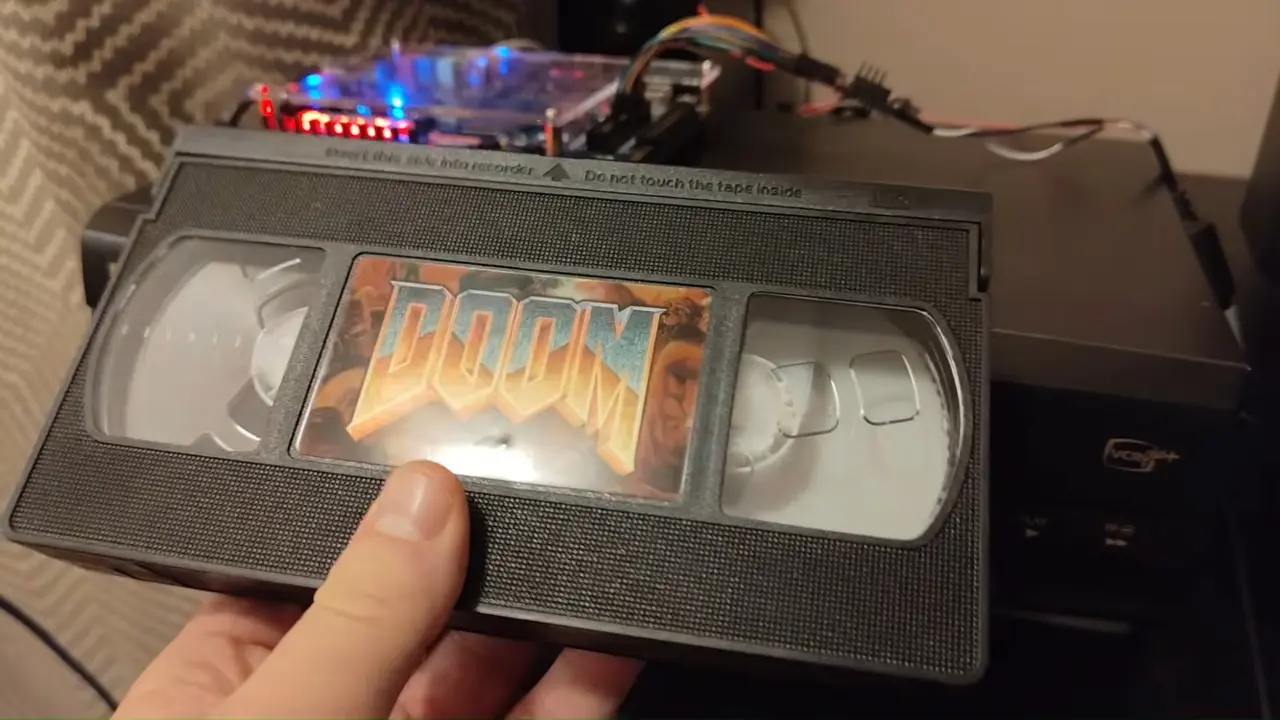
Retro gaming enthusiasts looking to relive the quirkiest era of home consoles now have a working blueprint for the ActionMax. This project proves that the frustrating VHS-based interaction model of the late 1980s can be rebuilt with modern precision. TechTuber Throaty Mumbo has successfully engineered a system that replaces the original disappointing hardware with reliable digital components.
Custom DE1-SoC and RP2350 hardware recreates 1980s VHS console interaction model
The core of this custom build relies on a DE1-SoC FPGA board paired with a Raspberry Pi RP2350 microcontroller. The FPGA handles the complex video switching required to manage multiple tape streams, while the MCU processes player inputs. This combination allows the system to react to controller presses by jumping between different video segments instantly.
The system currently supports FMV versions of Doom and Super Mario Bros. In the Doom implementation, the game functions as an on-rails shooter that mimics the original audio and visual style. It lacks the deep gameplay mechanics of the source code but captures the aesthetic accurately. The Super Mario Bros. version overlays VHS-taped imagery onto the classic Nintendo gameplay loop.
A key technical feature is the ability to handle eight simultaneous video streams for player selection. This setup replicates the original ActionMax's mechanic where inputs dictate which video tape plays next. The result is a faithful recreation of the hardware's unique interaction model without the mechanical wear of physical tapes.
Throaty Mumbo previously attempted to run Sega Genesis games off vinyl records in a similar hardware hack. This new project demonstrates a more refined approach to retro emulation using dedicated logic boards. The ActionMax clone stands as a functional alternative to the original commercial console.
Discussion
0 comments
Log in to join the thread with a thoughtful take, question, or correction.