

Discord has released a native Windows on ARM client, ending reliance on emulation for users with modern ARM-based processors. The update delivers measurable performance gains and reduced energy consumption compared to the previous x86 emulation layer.
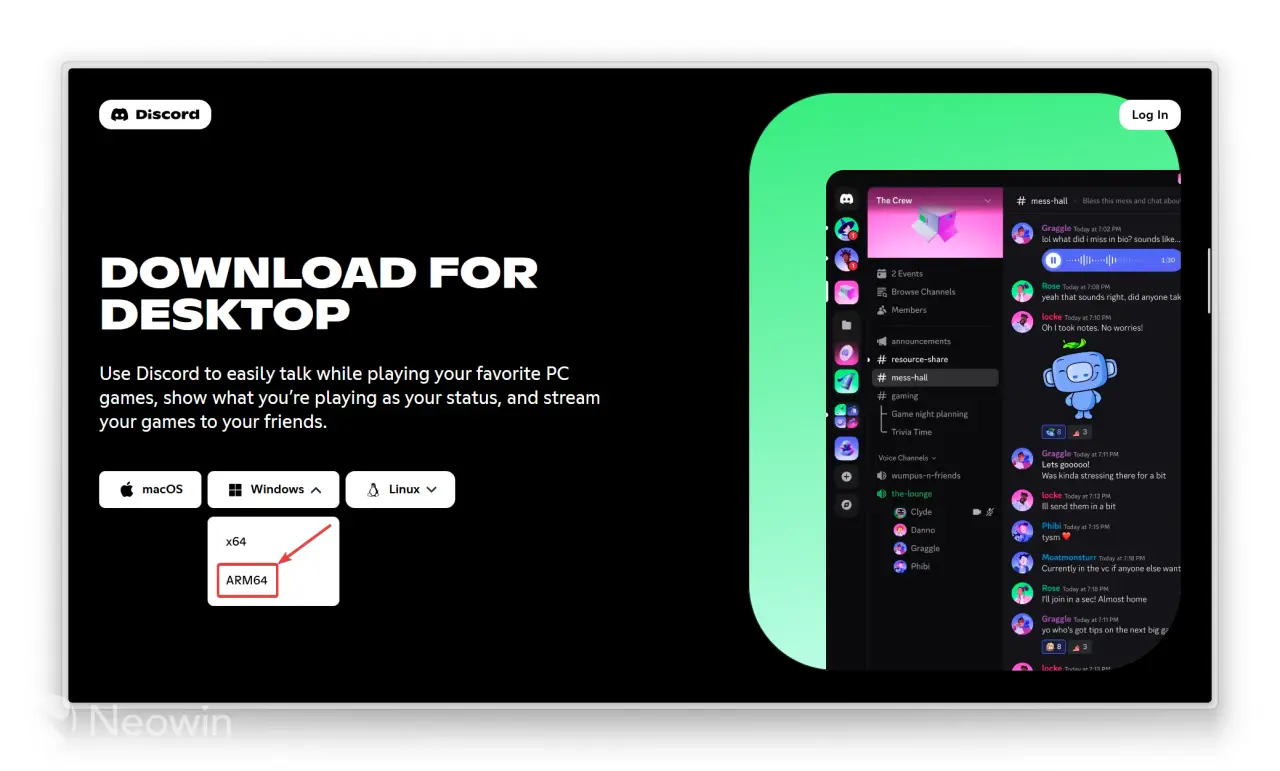
Native build eliminates emulation overhead for improved performance and battery life.
While the application can run on Apple Silicon Macs through third-party virtualization solutions, this update is designed for Windows computers using Qualcomm Snapdragon chips and other ARM-based processors. It replaces the legacy translation layer that previously forced these chips to emulate an Intel instruction set for every Discord operation.
Discord provides both x86 and ARM64 installation packages through its official website. The native build eliminates the CPU overhead associated with binary translation, allowing the application to utilize hardware acceleration features natively available on Windows on ARM devices.
Users can download the client directly from discord.com without requiring third-party launchers or modified installers. The software maintains full compatibility with existing Discord servers, voice channels, and screen-sharing protocols while operating at a lower power state during idle periods.
The update supports the industry trend of improving application performance and compatibility on modern ARM-based Windows systems. The native version allows users on ARM-based Windows laptops to enjoy improved call quality and messaging speed while preserving battery power compared to running the app through emulation.
Discord previously relied on an x86 emulation mode to support Windows on ARM, which introduced latency during voice processing and increased thermal output. The native client resolves these issues by compiling the application directly for the ARM64 instruction set, removing the need for real-time translation between processor architectures.
Discussion
0 comments
Log in to join the thread with a thoughtful take, question, or correction.