
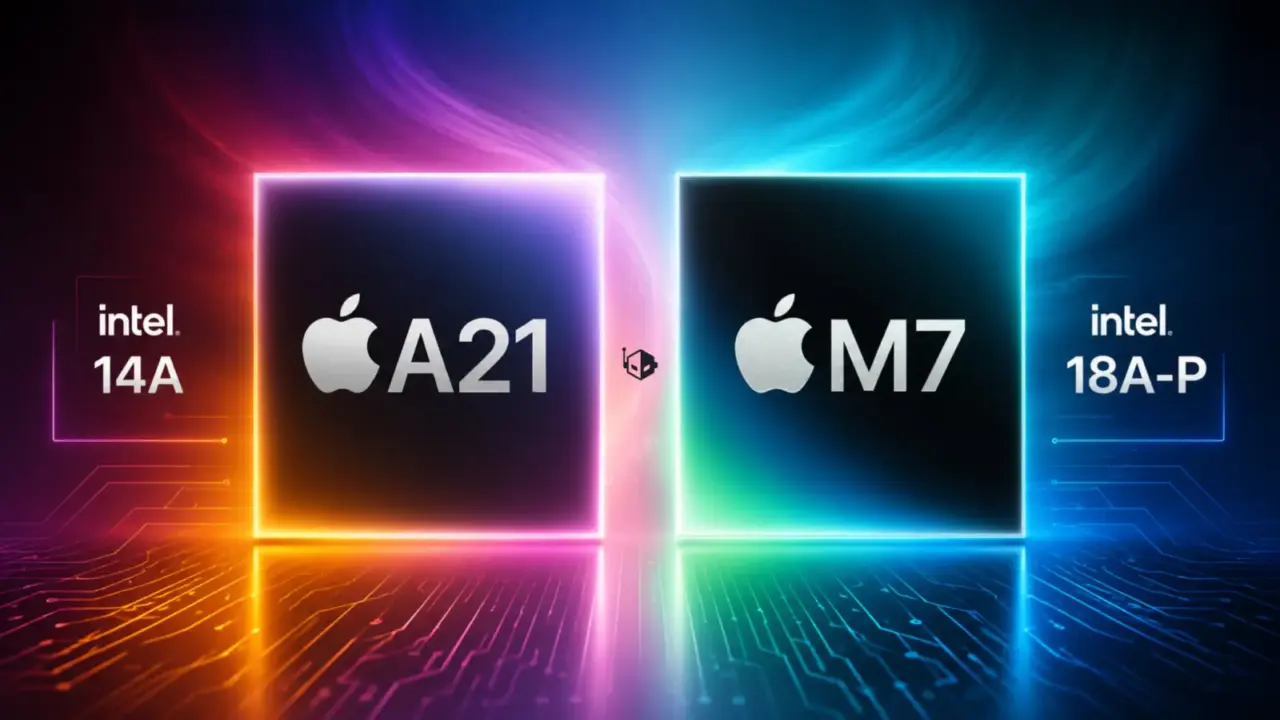
Apple plans to shift its chip manufacturing to Intel for its next-generation M7 and A21 processors. The company reportedly signed a preliminary agreement with Intel in December 2025 to secure this supply chain partnership. This move marks a significant change in Apple's hardware strategy, as it moves away from its long-standing reliance on a single foundry for its custom silicon.
Industry observers attribute this shift to supply constraints at TSMC
The M7 chip, intended for Mac computers, will utilize Intel's 18A-P process technology. Production for this chip is expected to begin by the end of 2027. Meanwhile, the A21 chip for smartphones will use Intel's 14A process technology. Manufacturing for the A21 is scheduled to start by the end of 2028.

Industry observers attribute this shift to supply constraints at TSMC, which has been heavily impacted by demand for AI chips. This capacity issue has reportedly forced Apple to seek alternative manufacturing partners. The partnership with Intel allows Apple to diversify its supply chain and ensure continued production of its high-performance silicon.
Political factors may also be influencing this decision. Reports indicate that US President Donald Trump advocated for Apple to choose Intel during a White House meeting. The administration highlighted the financial benefits of the Intel deal and noted that government support had attracted important partners to the semiconductor manufacturer.
Apple and Intel have not independently confirmed the details of this agreement. The information stems from rumors attributed to GF Holdings and reports from The Wall Street Journal. The timeline for production remains subject to change as both companies navigate the complexities of semiconductor manufacturing.

Discussion
0 comments
Log in to join the thread with a thoughtful take, question, or correction.