
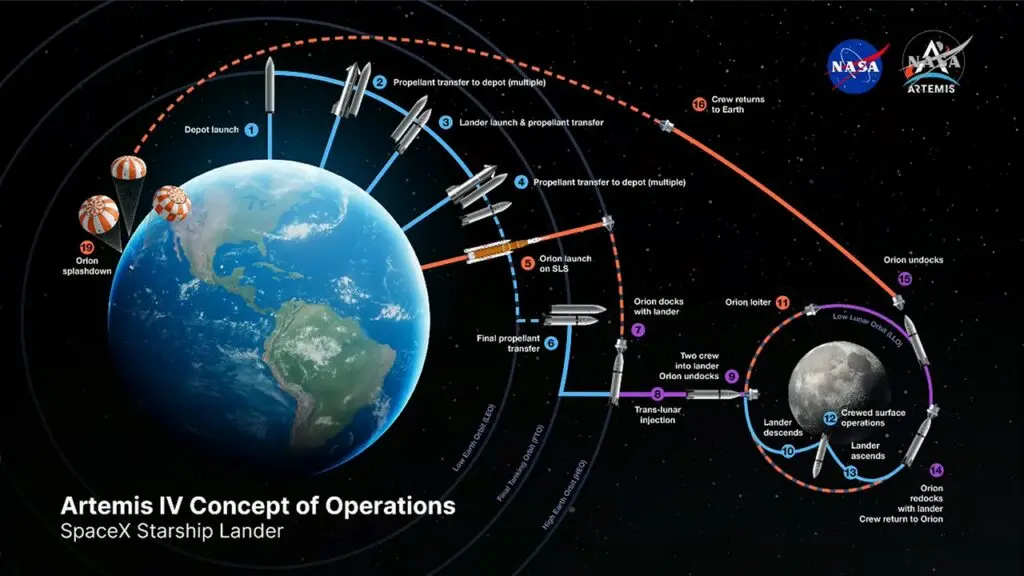
NASA is reworking its human lunar landings plan to make it less burdensome to the engineering of its commercial partners. The new plan changes the way SpaceX and Blue Origin will need to design their spacecraft for the Artemis plans. It means a change of time frame for purchasers and engineers and a new set of engineering specifications for the next generation of space vehicles.
NASA changes docking location for Starship and Blue Moon landers to reduce engineering complexity
The changes relate to the Artemis program, which includes three key spacecraft; the Orion capsule, SpaceX's Starship lander, and Blue Origin's Blue Moon lander. NASA is also working with United Launch Alliance to develop a stretched out Centaur V upper stage for the Orion. These all now fit together a bit differently than planned.
For example, the Starship will now dock to the Orion at a high Earth orbit as opposed to the near rectilinear halo orbit as before. This makes the docking easier and removes some of the fuel burden from the lander. The Blue Moon will change its strategy which includes four launches of the New Glenn and no in-space fuel transfers. It also affects the launch schedule and the cargo load for each company.
Artemis 3 is now slated to perform an Earth orbit test in 2027 (not a lunar landing). The goal of the Artemis program is to land humans on the moon with Artemis 4 in 2028 but NASA says this is a goal not a guarantee. The changes emphasize test in orbit over immediate surface work.
NASA did confirm these changes to lighten the load on SpaceX and Blue Origin. The changes make sense as a way to deal with the complex problems of putting all this space flight stuff together. NASA will press ahead to develop the hardware needed to achieve these new mission profiles.



Discussion
0 comments
Log in to join the thread with a thoughtful take, question, or correction.