
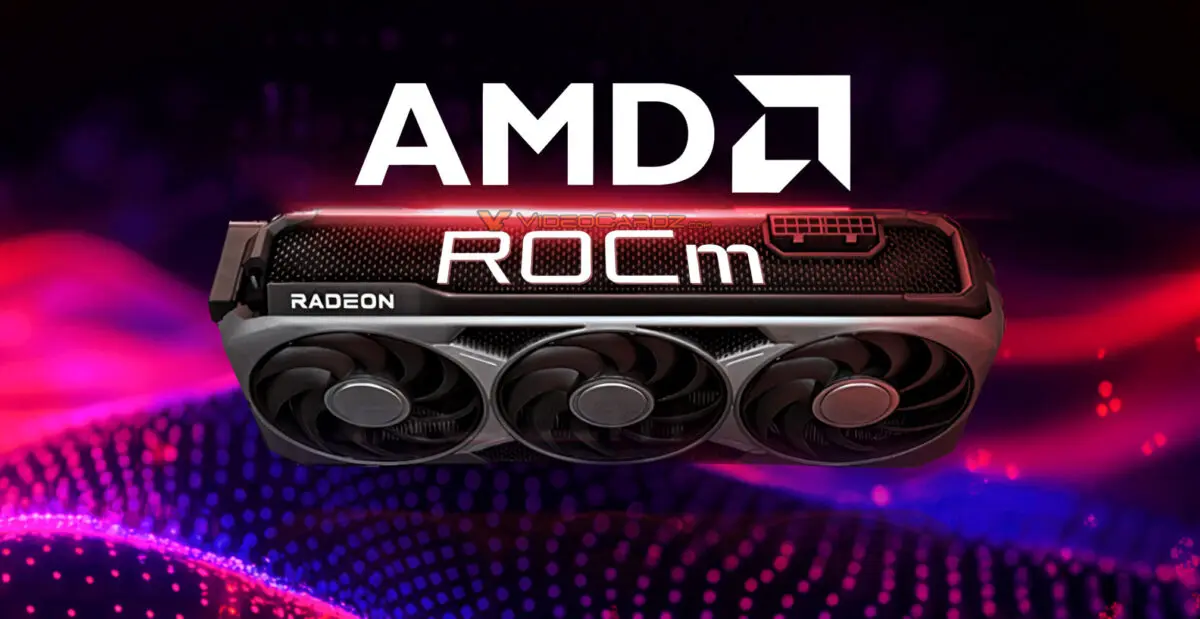
AMD has released a dedicated driver update for Windows that brings ROCm 10.1 support to its latest Radeon graphics cards. This release matters because it allows users to run AI and machine learning workloads on consumer-grade hardware without relying on Linux. The update specifically targets the newest RDNA 4 architecture and the previous RDNA 3 generation, filling a gap for developers who need compute capabilities on Windows.
New driver brings ROCm 10.1 compute support to RDNA 4 and RDNA 3 Radeon graphics cards
The software package is built on the AMD Software: Adrenalin Edition platform and carries the driver version 26.10.41.05. For Windows systems, this corresponds to the Driver Store version 32.0.31041.5005. The update is designed for specific GPU series, including the Radeon RX 9000 Series and the Radeon AI PRO R9700 Series. It also extends support to the Radeon RX 7900, 7800, 7700, and 7600 Series graphics cards.
AMD explicitly excludes the older Radeon RX 6000 Series from this compatibility list. The driver focuses entirely on RDNA 4 and RDNA 3 architectures, meaning older hardware cannot use this specific ROCm 10.1 implementation. This is a compute-focused driver intended for AI workloads rather than gaming performance. Users should note that installing this driver does not automatically provide the full ROCm environment.
After installing the driver, users must separately install the ROCm components to enable the software stack. This separate installation method maintains graphics driver stability while enabling users to add compute libraries as required. The update provides a clear path for Windows users to access ROCm 10.1 on supported Radeon hardware. This release demonstrates AMD's effort to extend ROCm support to Windows systems.
Discussion
0 comments
Log in to join the thread with a thoughtful take, question, or correction.