
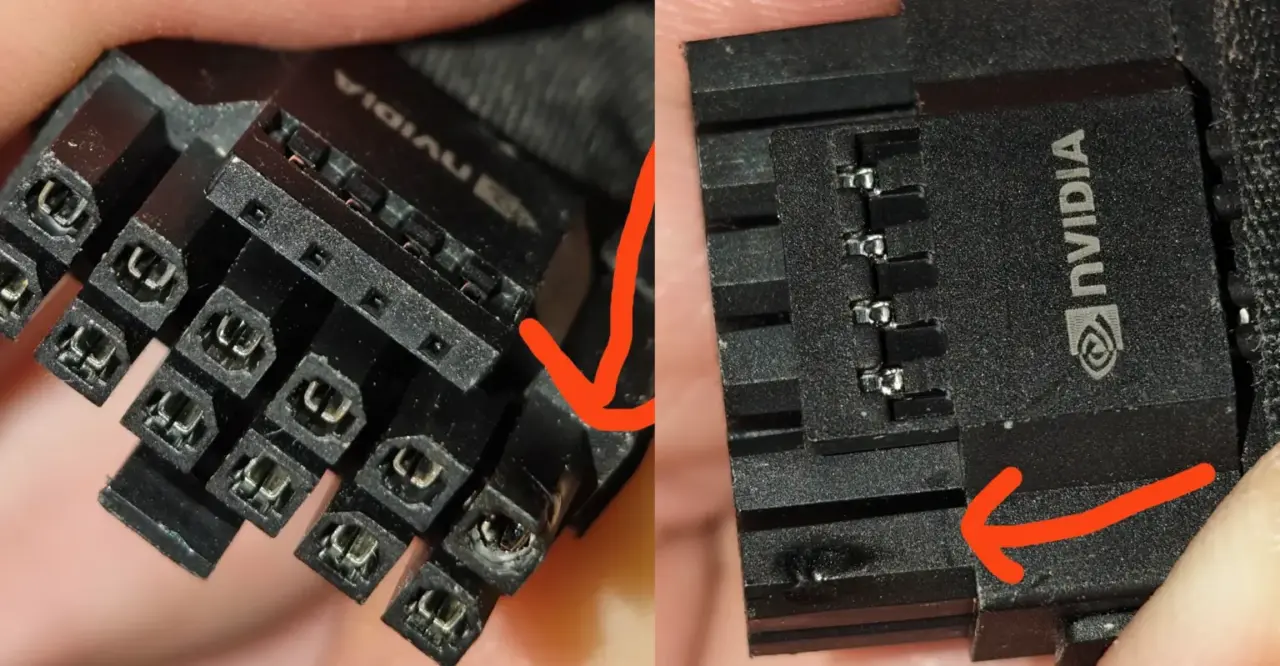
An NVIDIA RTX 4090 owner reported a melted power adapter, highlighting a persistent reliability risk for high-end graphics cards. This incident matters because it shows that even power-limited configurations can suffer hardware damage when using legacy power connections. The failure occurred despite the GPU running well below its maximum design specifications.
Melted OEM adapter highlights legacy connector risks on high-end GPUs
The affected card was an RTX 4090, which NVIDIA defaults to a 450W power target. In this specific case, the graphics card was restricted to an 80% power limit, which equals approximately 360W. The user connected the GPU to a 2021 Corsair RM1000x power supply that lacks native 12VHPWR support.
- Power Limit: 80% (approx. 360W)
- Default Power Target: 450W
- Power Supply: Corsair RM1000x (2021)
- Adapter Type: OEM 8-pin to 16-pin adapter
To bridge the connection, the user relied on the OEM 8-pin to 16-pin adapter included with the graphics card rather than third-party cables. The adapter suffered significant plastic melting around one contact point. Early symptoms included intermittent black screens while audio continued, a classic indicator of connector instability.
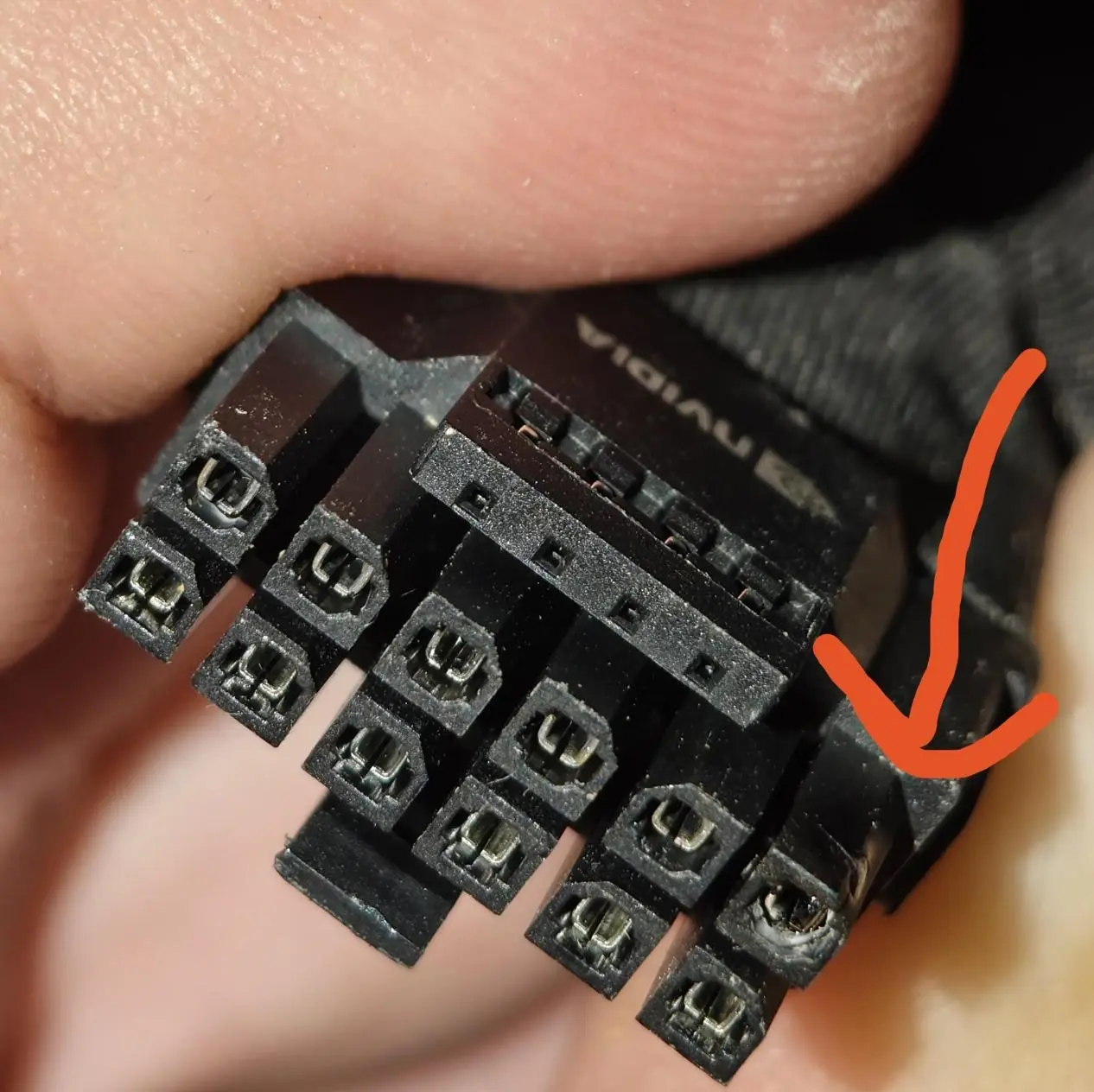
A player from UNIKO's Hardware confirmed the setup details, stating the card ran at the 80% limit using the original adapter. The user noted that early detection likely saved the graphics card itself from damage. Our earlier coverage on RTX 4090 Undervolt Cuts DLSS 5 tracked power efficiency for this same model.
The exact root cause remains unconfirmed, as sources describe the damage without providing a forensic analysis of manufacturing defects versus contact resistance. The incident underscores the fragility of adapter-based connections for high-power GPUs. Buyers using legacy power supplies should inspect their adapters regularly for signs of heat stress.
Discussion
0 comments
Log in to join the thread with a thoughtful take, question, or correction.