
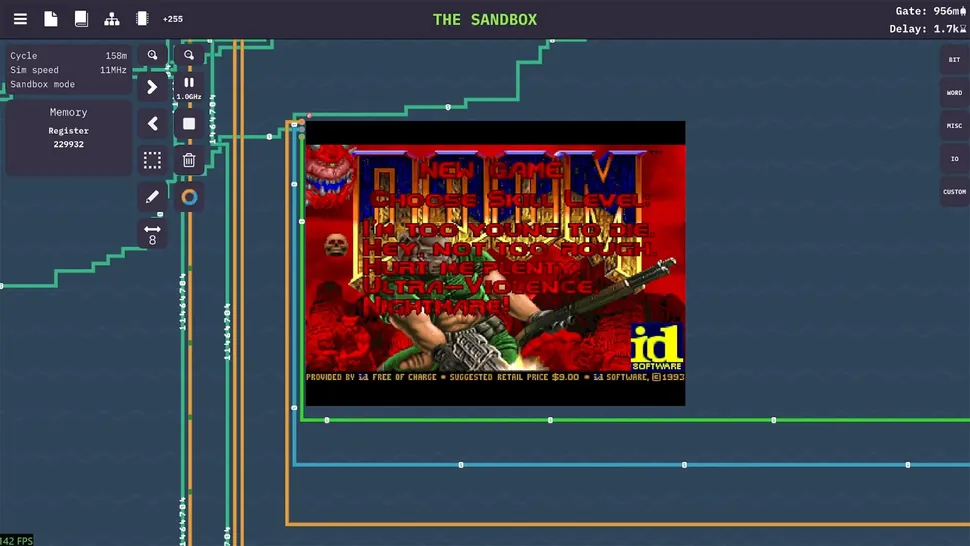
An AI agent has designed a virtual processor that runs a classic game from scratch, proving that large language models can handle hardware architecture tasks. This demonstration shows that automated systems can now generate functional instruction sets without human coding intervention. Readers interested in AI capabilities or retro computing should note that this is not a physical chip but a fully simulated environment.
AI agent designs custom processor to run retro game in sandbox
The processor, named Codex-R32, was created by an AI agent identified as GPT-5.6 Sol. It operates within the sandbox game Turing Complete, which allows players to build computers using basic logic gates. The system uses a C-based port of Doom called PureDOOM to demonstrate its processing power. This setup confirms that the AI can translate high-level code into machine instructions for a custom architecture.
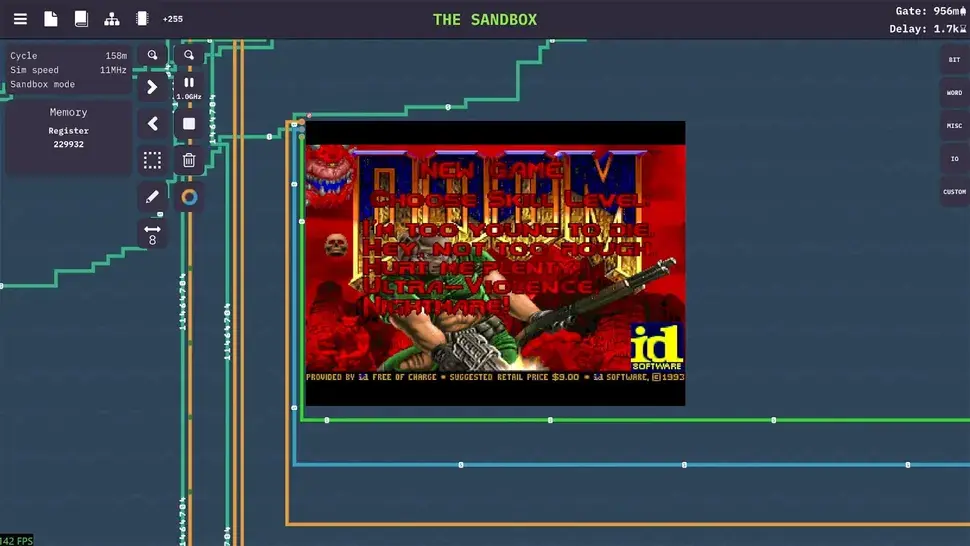
The Codex-R32 implements the RV32IM architecture, which defines how the processor handles instructions and memory. It is constructed entirely from primitive logic components available in the game, including registers, memory units, and an arithmetic logic unit. The PureDOOM software is compiled into native RV32IM machine code before running on the virtual CPU. This compilation step ensures the game code matches the specific instruction set designed by the AI.
The demonstration was shared on social media by an AI computing enthusiast named Angel. The AI agent stated that it built the CPU from basic logic elements to respond to requests for Doom on custom hardware. The system successfully executed the game code directly on the virtual processor. This event marks a specific instance of AI-driven hardware design within a gaming simulation.



Discussion
0 comments
Log in to join the thread with a thoughtful take, question, or correction.