
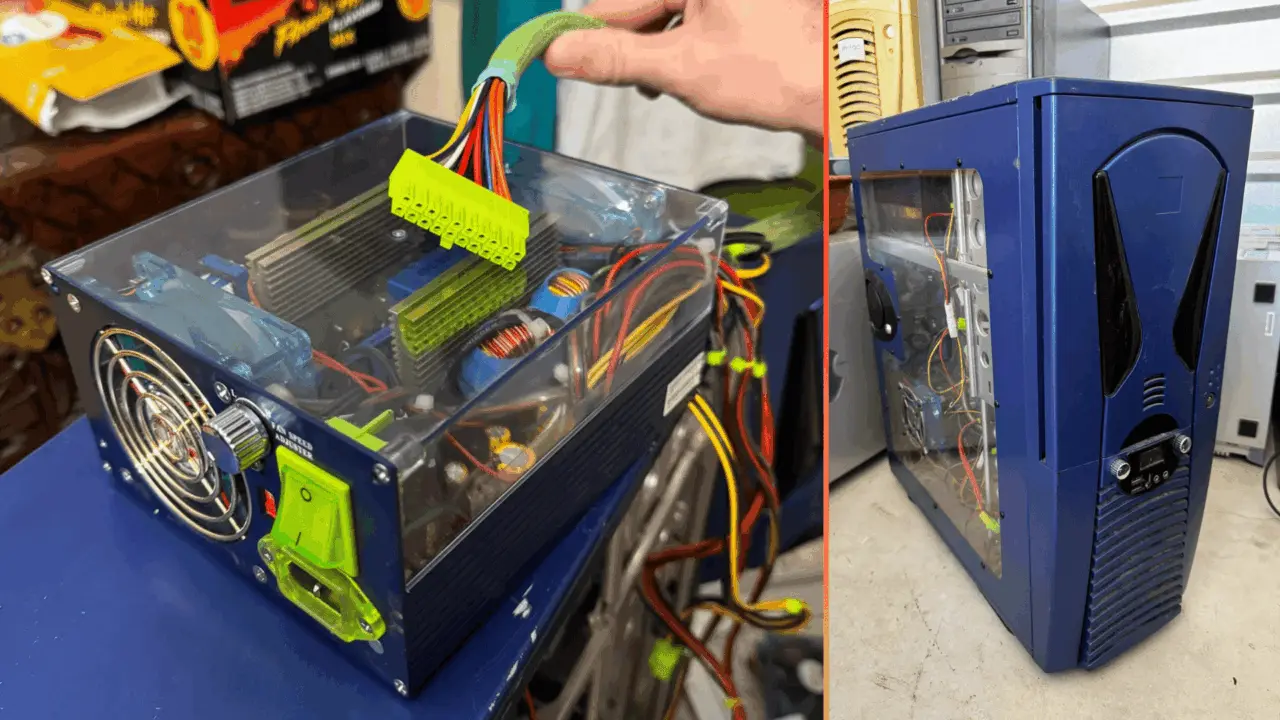
A storage unit auction winner recently uncovered a complete Pentium 4 system that serves as a vivid time capsule of Y2K PC aesthetics. This discovery matters to retro computing enthusiasts because it preserves a specific era of hardware design that rarely survives in working condition. The unit offers a rare look at how budget cases and power supplies marketed themselves during the early 2000s.
Reddit user uncovers complete vintage system with aluminum chassis and UV-reactive power supply
The desktop computer sits inside an Apevia X-SuperAlien case constructed entirely from aluminum. This specific chassis model featured five external 5.25-inch drive bays on the front panel. The front I/O cluster includes two USB 2.0 ports, two 3.5mm audio jacks, and a Firewire port. A small LCD screen sits directly above these connectivity options.
Specifications
- Case Model: Apevia X-SuperAlien
- Case Material: Aluminum
- Drive Bays: 5 external 5.25" drive bays
- Front I/O: 2x USB 2.0, 2x 3.5mm audio jacks, Firewire, small LCD
- PSU Model: Apevia ATX-AS500W
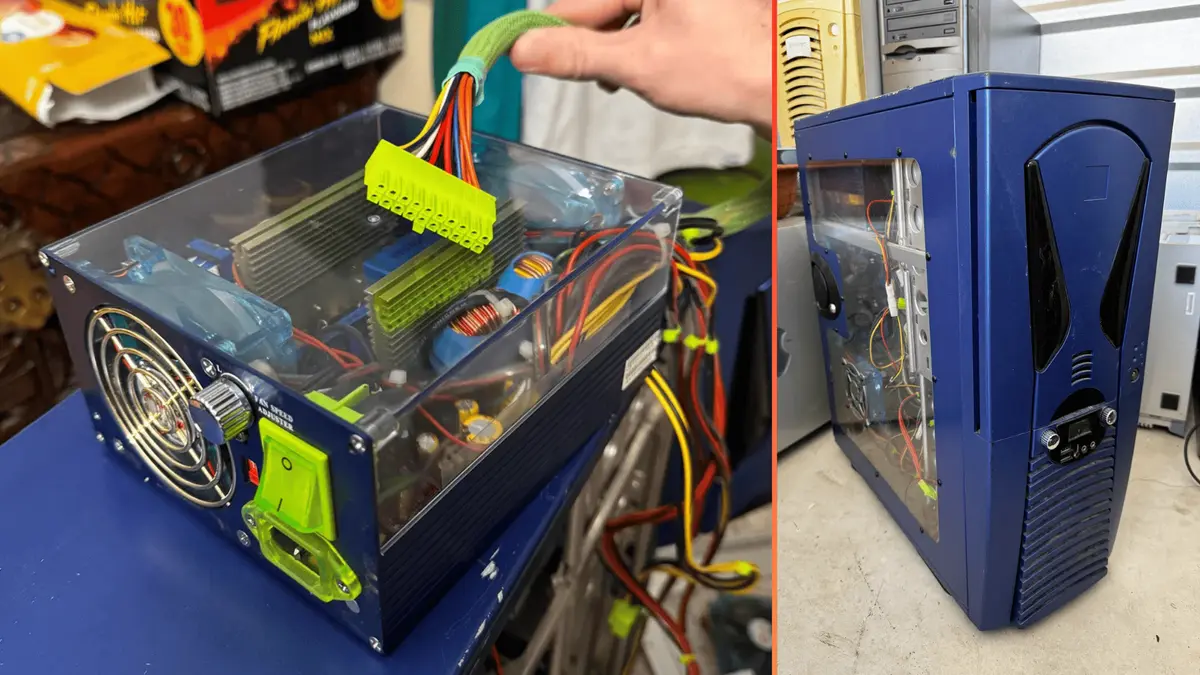
The system runs on an Intel Pentium 4 processor, which defines the performance ceiling of this vintage build. The power supply is an Apevia ATX-AS500W unit with a distinctive transparent acrylic top. Blue LEDs illuminate the internal components, while UV-reactive neon green accents highlight the metal bottom. The internal parts are color-coated to match the external styling.
The power supply carries a reputation for poor efficiency that complicates its use in modern or revived builds. A comment from Tom's Hardware suggests the 650W rated unit may only support a maximum output of 250W. The exact manufacturer remains difficult to confirm because the unit was sold under many different brands. It is believed to be a rebranded YoungYear YP-AB built by Sun Pro.
The discovery began when a Reddit user won an auction they initially believed contained only 35 laptops. The unit actually held around 100 laptops, 20 desktop PCs, and thousands of random CDs. The user noted the PC was labeled as Alienware but was actually an Apevia Aspire model. This find highlights the growing interest in retro hardware aesthetics and unique sleeper builds.

Discussion
0 comments
Log in to join the thread with a thoughtful take, question, or correction.