
Valve has released kernel optimizations that allow Linux gamers to run graphically demanding titles on hardware with limited video memory. This update matters because it extends the usable life of 8GB graphics cards, which are common in budget builds and Steam Deck devices, by shifting excess data to system RAM. Players who previously faced crashes or unplayable framerates on these cards can now expect smoother performance in new releases.
Kernel updates migrate excess memory to system RAM for playable framerates
The changes target the open-source AMDGPU driver, which powers Radeon graphics cards on Linux systems. Valve developer Natalie Vock detailed the improvements in a blog post, focusing on how the kernel manages memory eviction when VRAM runs low. The optimization does not apply to NVIDIA GeForce cards or Windows operating systems, limiting its scope to AMD users on Linux.
- VRAM Management Optimization: Linux kernel driver eviction improvements for insufficient VRAM
- Test Game: Indiana Jones and the Great Circle
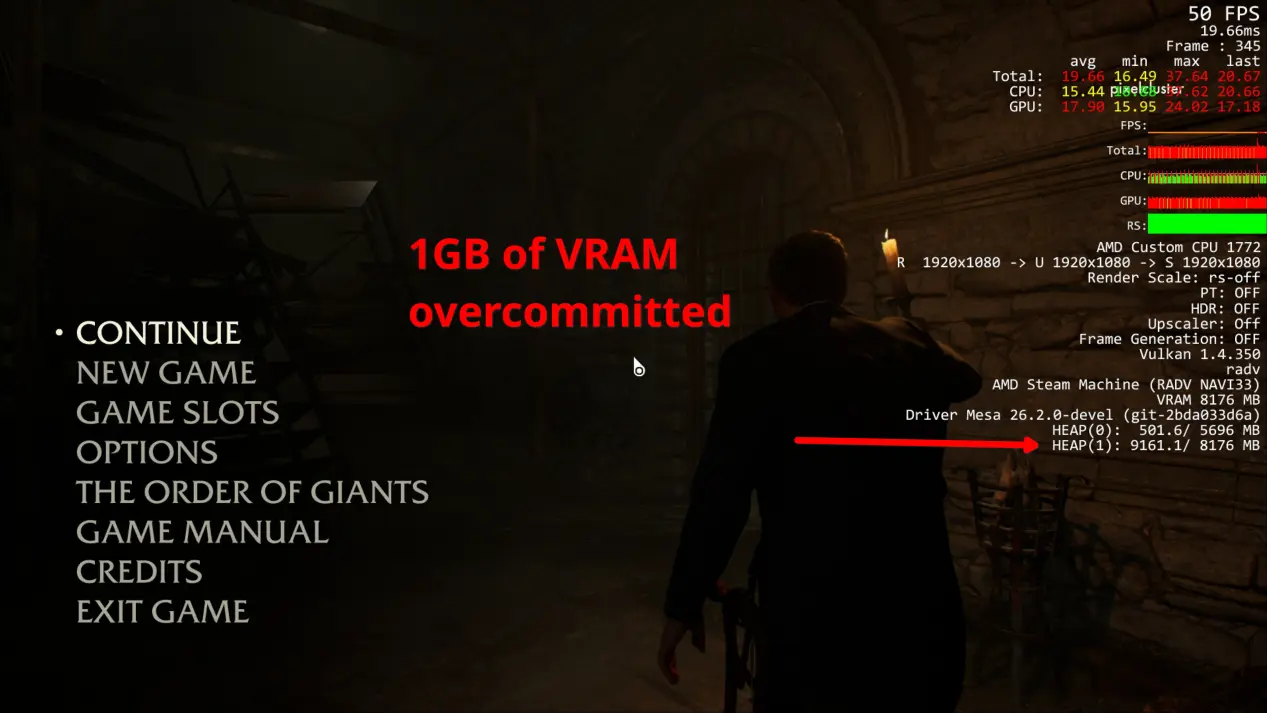
- Test Configuration: 8GB VRAM GPU running 9GB VRAM workload
- Performance Result: Average frame time 19.6ms (~50 FPS)
- Affected Driver: Open-source AMDGPU driver only
To demonstrate the effect, the team tested the game Indiana Jones and the Great Circle, which requires 9GB of VRAM. They ran the title on an 8GB GPU, forcing the kernel to migrate approximately 1GB of resources to system memory. This process relies on updates to the TTM memory manager and the DMEM Cgroup Controller to prioritize essential graphics data.
The test results showed an average frame time of 19.6 milliseconds, which translates to roughly 50 frames per second. Vock described this performance as still playable and smooth despite the memory mismatch. However, the team noted that performance loss depends on the type of resource being migrated, with frequent access to moved buffers potentially causing significant frame rate drops.
These patches are currently in the DRM-Next branch and are scheduled for inclusion in the Linux 7.3 kernel release. SteamOS 3.8 users will receive the improvements automatically without needing to manually update their systems. This ensures that handheld and desktop Linux gamers get the fix as soon as the OS updates roll out.


Discussion
0 comments
Log in to join the thread with a thoughtful take, question, or correction.