
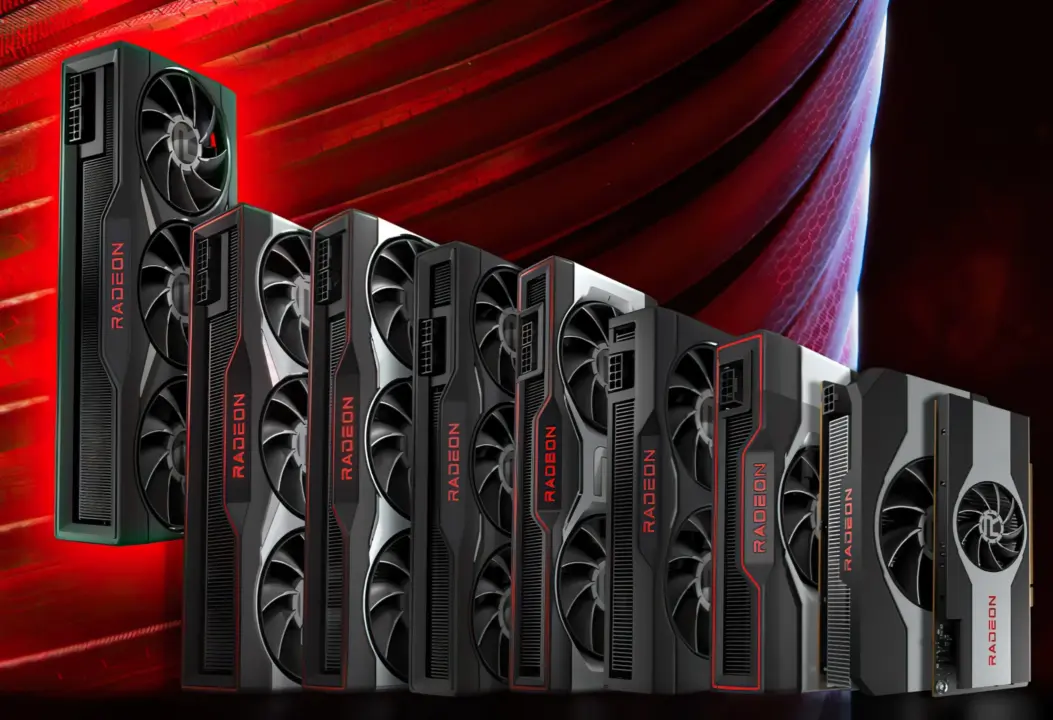
AMD reported a sharp drop in its gaming revenue during the second quarter of 2024, marking a significant shift for the Radeon business. The company posted a 31 percent year-over-year decline in gaming sales, bringing total revenue in that segment down to $779 million. This downturn matters to PC builders and gamers because it reflects a broader market correction where affordability has become a major hurdle. Rising component costs have forced AMD to raise prices on its graphics cards, which has directly suppressed consumer demand in a price-sensitive segment.
Rising component costs force price hikes that suppress consumer demand
The financial results reveal a company in transition, with its AI and data center operations offsetting the weakness in consumer graphics. AMD's data center and AI business drove the overall company results, contributing to a 50 percent increase in total revenue and a 163 percent jump in net profit. Client computing also showed resilience, with revenue rising 23 percent year-over-year to $3.1 billion, largely supported by mobile processor sales. This divergence highlights how the high-end AI market is currently carrying the company while the traditional gaming GPU market struggles with economic headwinds.
AMD explicitly linked the decline in Radeon GPU sales to the impact of higher component costs and subsequent price increases. The company stated that these cost pressures made it necessary to adjust pricing, which in turn reduced the volume of cards sold to consumers. This admission confirms that the current market environment is punishing manufacturers who cannot absorb rising manufacturing expenses. The situation illustrates a direct correlation between hardware production costs and retail pricing, leaving fewer affordable options for mainstream gamers.
Investors reacted negatively to the report despite the strong earnings figures from the AI sector, causing AMD stock to drop 9 percent in after-hours trading. The market disappointment stemmed from missed expectations regarding artificial intelligence capital expenditure and concerns about future production capacity. This stock decline suggests that investors are looking beyond current profits and are worried about the sustainability of AMD's growth trajectory in the AI space. The mixed reaction underscores the tension between strong quarterly earnings and cautious long-term outlooks.
We have been tracking Radeon closely — see our earlier coverage on AMD Radeon GPU Prices Rise 10%. This earlier price adjustment aligns with the broader trend of rising costs that AMD cited in its earnings report. The company continues to navigate a challenging landscape where high-end AI demand coexists with a softened consumer graphics market. These financial results provide a clear picture of the economic forces shaping the current generation of PC hardware.

Discussion
0 comments
Log in to join the thread with a thoughtful take, question, or correction.