
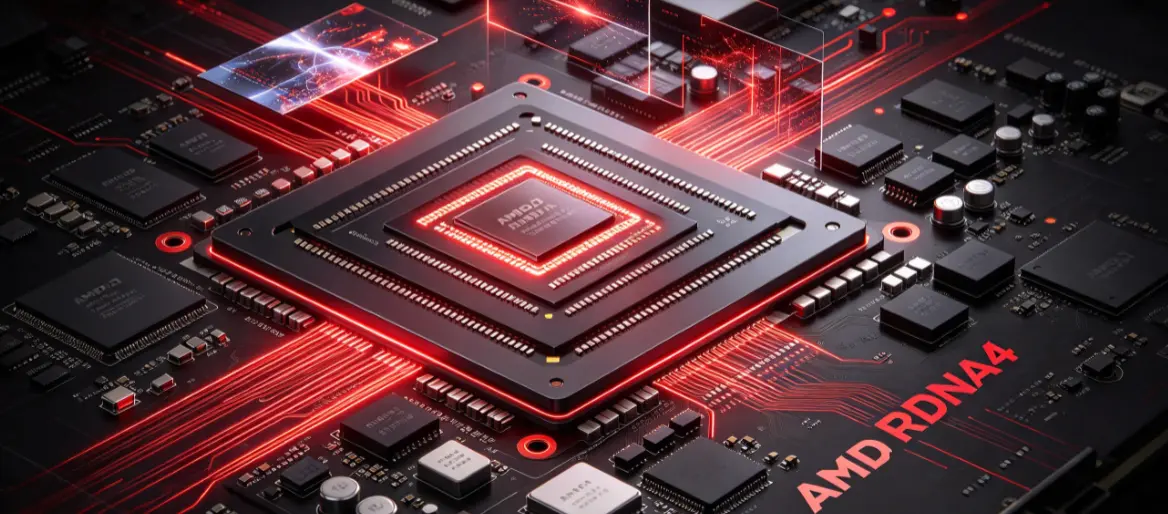
AMD has released the core specifications for its next-generation RDNA 4 graphics architecture, signaling a major shift in how consumer GPUs handle artificial intelligence workloads. This update matters because the new architecture targets local large language model inference, aiming to remove the lag that currently frustrates users running AI models on their own hardware. The Radeon RX 9000 series represents the first consumer hardware to implement these changes, moving AI acceleration from a niche enterprise feature to a standard desktop capability.
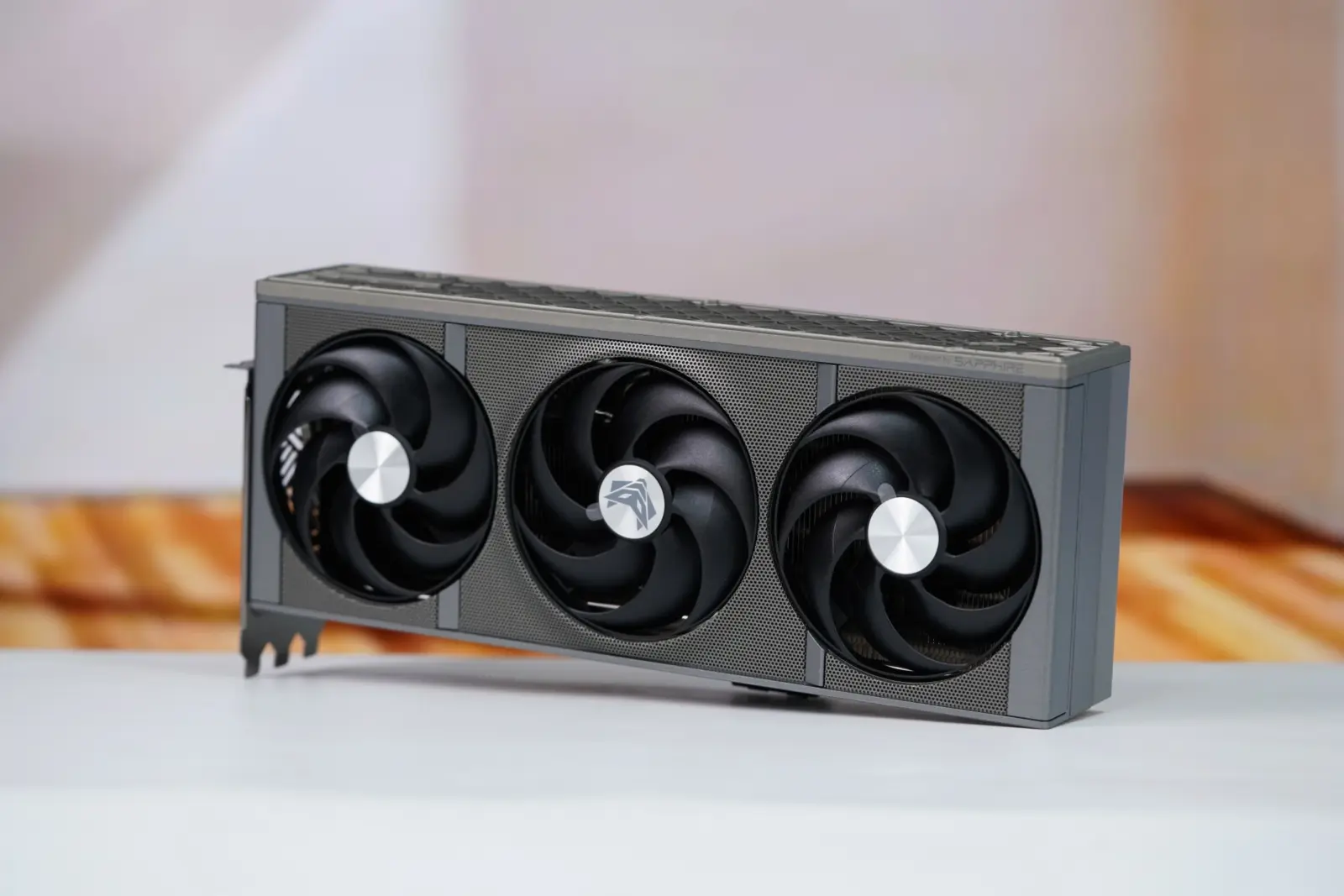
RDNA 4 architecture doubles AI accelerators per compute unit
The Radeon RX 9000 series serves as the consumer-facing line for this new RDNA 4 architecture, while the Radeon AI PRO R9700 targets workstation environments. AMD designed the consumer cards to balance high-end gaming performance with the compute power needed for generative AI tasks. The workstation variant prioritizes memory capacity to handle larger datasets, reflecting the different needs of creative professionals versus general users.
Spec comparison
| Spec | Radeon RX 9070 | Radeon AI PRO R9700 |
|---|---|---|
| VRAM | 16GB GDDR6 | 32GB |
| AI Compute | Up to 1557 TOPS | Up to 1557 TOPS |
| AI Accelerators | 2 per Compute Unit | 2 per Compute Unit |
| Supported Data Types | FP8, INT8, Sparse | FP8, INT8, Sparse |
AMD states that the RDNA 4 architecture delivers more than four times the AI computing power of the previous RDNA 3 generation. The top-end Radeon RX 9000 series reaches a peak of 1557 TOPS, a metric that measures trillions of operations per second for AI tasks. Each compute unit now includes two dedicated AI accelerators, which allows the chip to process data more efficiently than its predecessor.
The new architecture supports FP8 and INT8 data types, along with sparse acceleration, which are critical for modern machine learning models. Memory configurations vary by model, with the RX 9070 equipped with 16GB of GDDR6 VRAM and the workstation-focused Radeon AI PRO R9700 offering 32GB. AMD claims these hardware improvements directly improve the smoothness of local large model inference, reducing the stuttering that often occurs during AI generation.
We do not have a specific release date or pricing information for the Radeon RX 9000 series at this time. AMD has confirmed the technical capabilities and software ecosystem support, including optimizations for ROCm 6.0, PyTorch, and Stable Diffusion. The company is positioning these cards as tools that make running local AI models practical for everyday desktop use.
Discussion
0 comments
Log in to join the thread with a thoughtful take, question, or correction.