
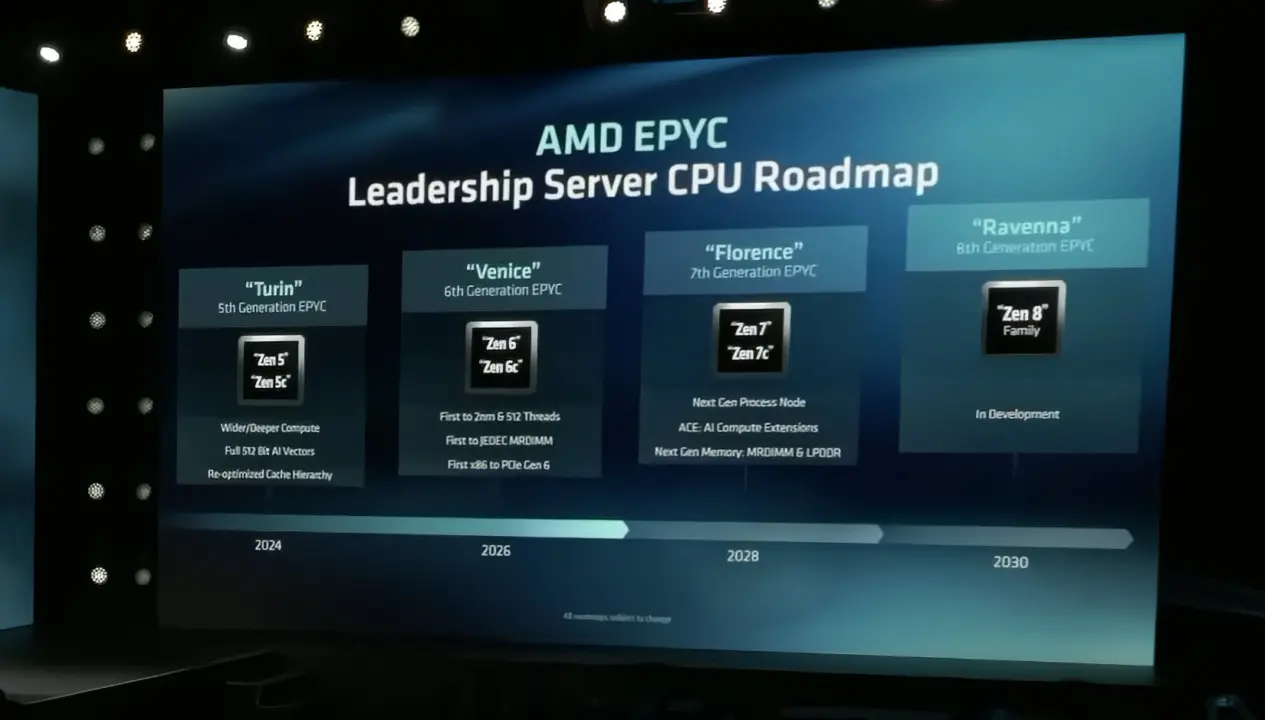
AMD has confirmed its roadmap for the next two generations of server processors, shifting the timeline for high-performance computing hardware into the late 2020s. This update matters because it defines the hardware baseline for data centers and AI workloads for the next decade, signaling a move away from current generation components toward sub-2nm manufacturing and specialized AI extensions. Buyers planning infrastructure upgrades for 2028 and beyond now have concrete architectural targets to align their procurement strategies with.
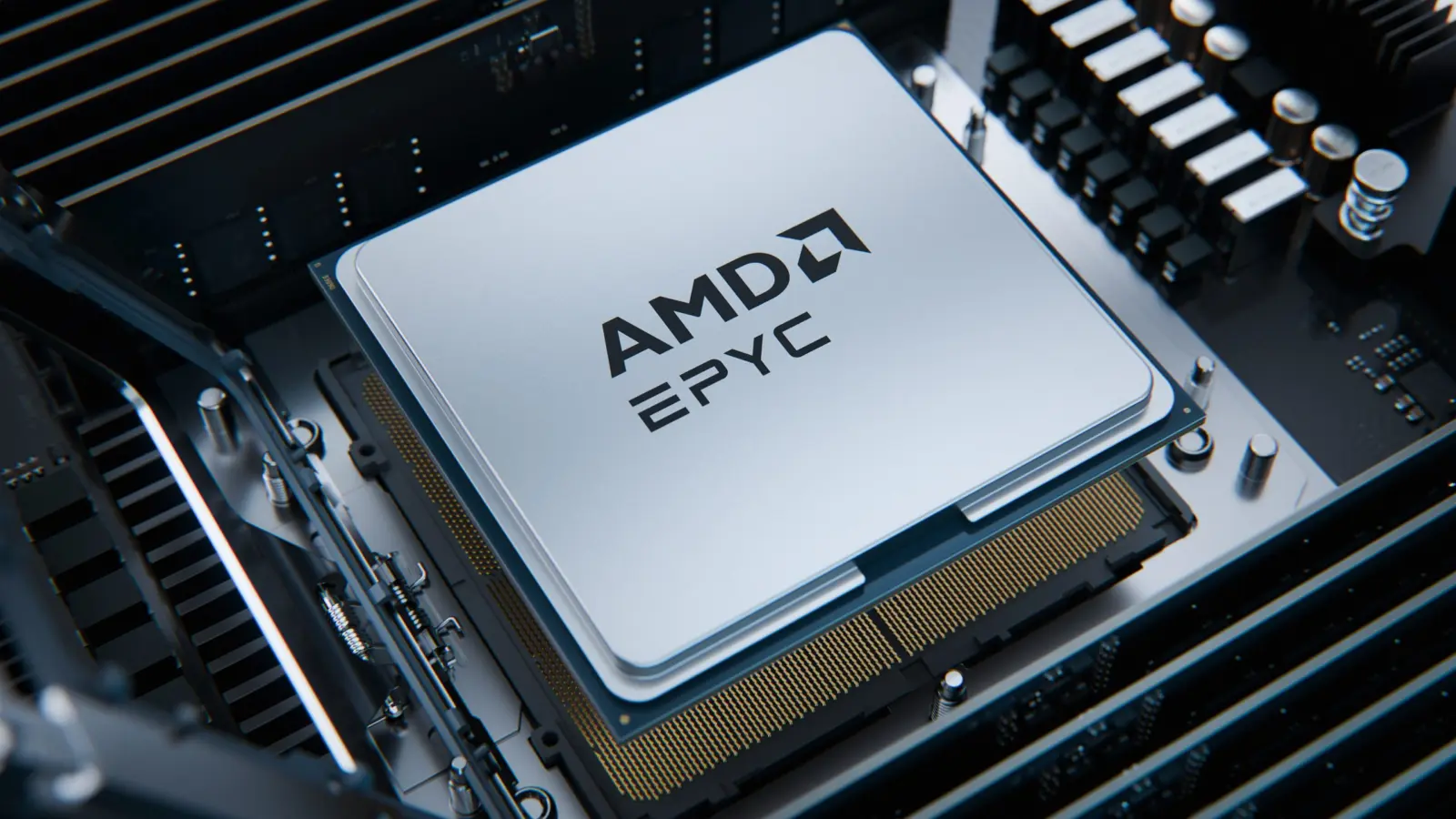
Server chips arrive 2028 with AI Compute Extensions and next-gen memory
The 7th Generation EPYC family, codenamed Florence, will arrive around 2028 and is built on the new Zen 7 architecture. This platform marks a significant shift as the first EPYC series to support ACE, or AI Compute Extensions, which are designed to accelerate machine learning tasks directly within the CPU. The subsequent 8th Generation EPYC family, codenamed Ravenna, will follow in 2030 using the Zen 8 architecture. AMD also plans to support these new chips on existing SP7 and SP8 server platforms, which should simplify migration for current users.
- Architecture: Zen 7
- Process Node: Next-gen (sub-2nm, e.g., TSMC A16 or A14)
- Memory Support: MRDIMM, LPDDR series, DDR6
- AI Extensions: ACE (AI Compute Extensions)
- Socket Compatibility: SP7 and SP8
Technical specifications for Florence include support for next-generation memory standards, specifically MRDIMM and the LPDDR series, with DDR6 cited as the most likely standard. The chips will be manufactured on a sub-2nm process node, with TSMC's A16 or A14 processes identified as the expected manufacturing partners. While the exact node name remains unconfirmed, the move to sub-2nm technology is intended to deliver higher performance per watt. AMD states that SP7 flavors will focus on leadership core counts and raw performance, while SP8 chips will prioritize optimized performance per dollar.
The roadmap extends beyond CPUs to include dedicated AI accelerators that will complement the new processor generations. The AMD Instinct MI500 GPU, based on the CDNA 6 architecture and equipped with HBM4e memory, is scheduled for release in 2027. This is followed by the MI600 GPU, which uses the CDNA-Next architecture and targets a 2028 release window. These components are designed to work in tandem with the Florence and Ravenna CPUs to handle increasingly complex AI workloads. The combination of ACE-enabled CPUs and next-gen GPUs establishes the foundation for AMD's server strategy through 2030.

Discussion
0 comments
Log in to join the thread with a thoughtful take, question, or correction.