
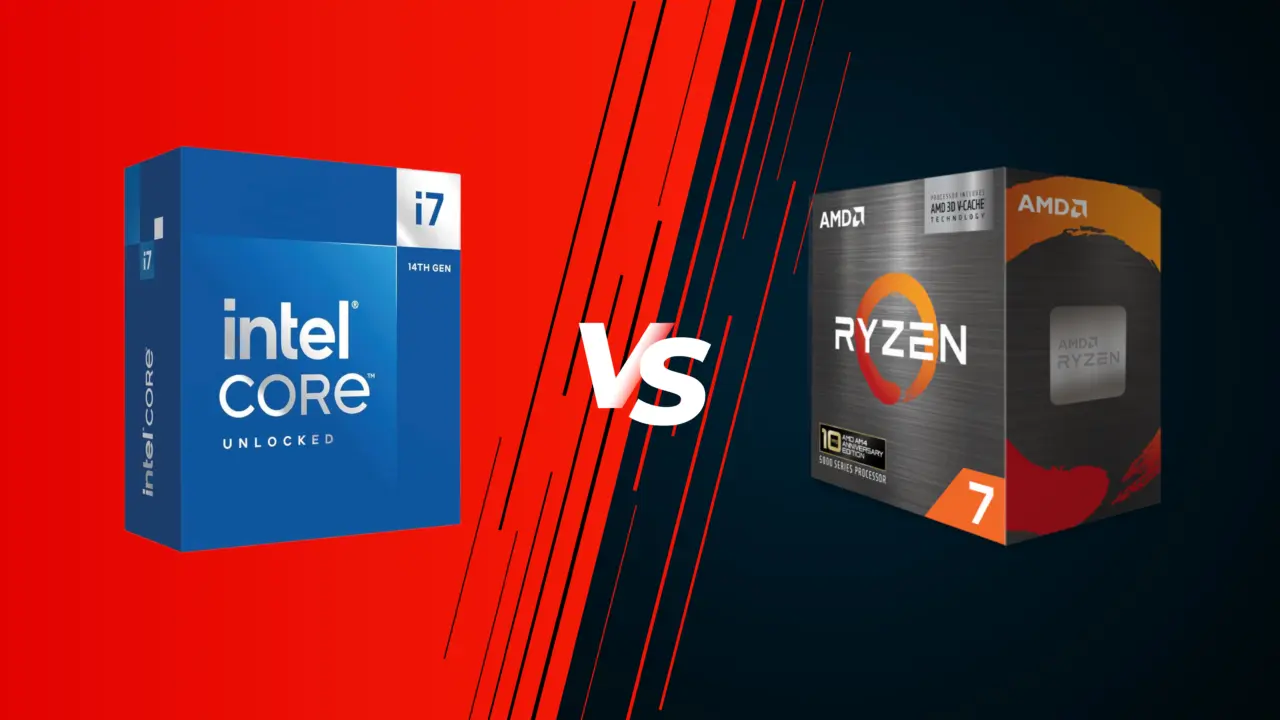
Buyers seeking a high-performance desktop processor in 2026 face a clear choice between two distinct engineering philosophies. The AMD Ryzen 7 5800X3D and the Intel Core i7-14700K offer different trade-offs between raw power and energy efficiency. Gamers and creators must decide whether to prioritize the massive cache of the older AMD architecture or the higher core count of Intel’s latest refresh. This decision directly impacts build costs, cooling requirements, and long-term upgrade paths on existing platforms.
Intel chip leads in performance while AMD offers better efficiency
The AMD Ryzen 7 5800X3D relies on the Zen 3 architecture built on TSMC’s 7nm process. It features eight cores and sixteen threads, supported by a substantial 100 MB of 3D V-Cache. This design targets gamers who benefit from large cache sizes to reduce latency in demanding titles. The processor operates with a 105W thermal design power and a peak power limit of 142W, making it a stable option for standard cooling solutions.
Spec comparison
| Spec | AMD Ryzen 7 5800X3D | Intel Core i7-14700K |
|---|---|---|
| Architecture | Zen 3 X3D (TSMC 7nm) | Raptor Lake Refresh (Intel 7) |
| Cores / Threads | 8 / 16 | 20 / 28 (8 + 12) |
| Cache | 100 MB | 61 MB |
| TDP / Peak Power | 105W / 142W | 125W / 253W |
Intel counters with the Core i7-14700K, which uses the Raptor Lake Refresh architecture on Intel 7 process. This chip provides twenty cores and twenty-eight threads, split between eight performance cores and twelve efficiency cores. It includes 61 MB of cache and draws significantly more power, with a 125W base power and a peak load of 253W. The higher core count and power envelope allow it to handle heavier workloads, but it requires robust cooling to maintain performance under sustained loads.
Performance testing reveals that the Intel Core i7-14700K dominates in both gaming and productivity metrics when paired with DDR5 memory. Tom’s Hardware reports an average gaming frame rate of 166.7 FPS for the Intel chip, compared to 145.6 FPS for the AMD Ryzen 7 5800X3D. In productivity tasks, the Intel processor scores 492 points against the AMD’s 227 points, showing a massive lead in multi-threaded workloads. However, the AMD chip remains more power efficient, consuming 77.5W during gaming versus 132.4W for the Intel counterpart.
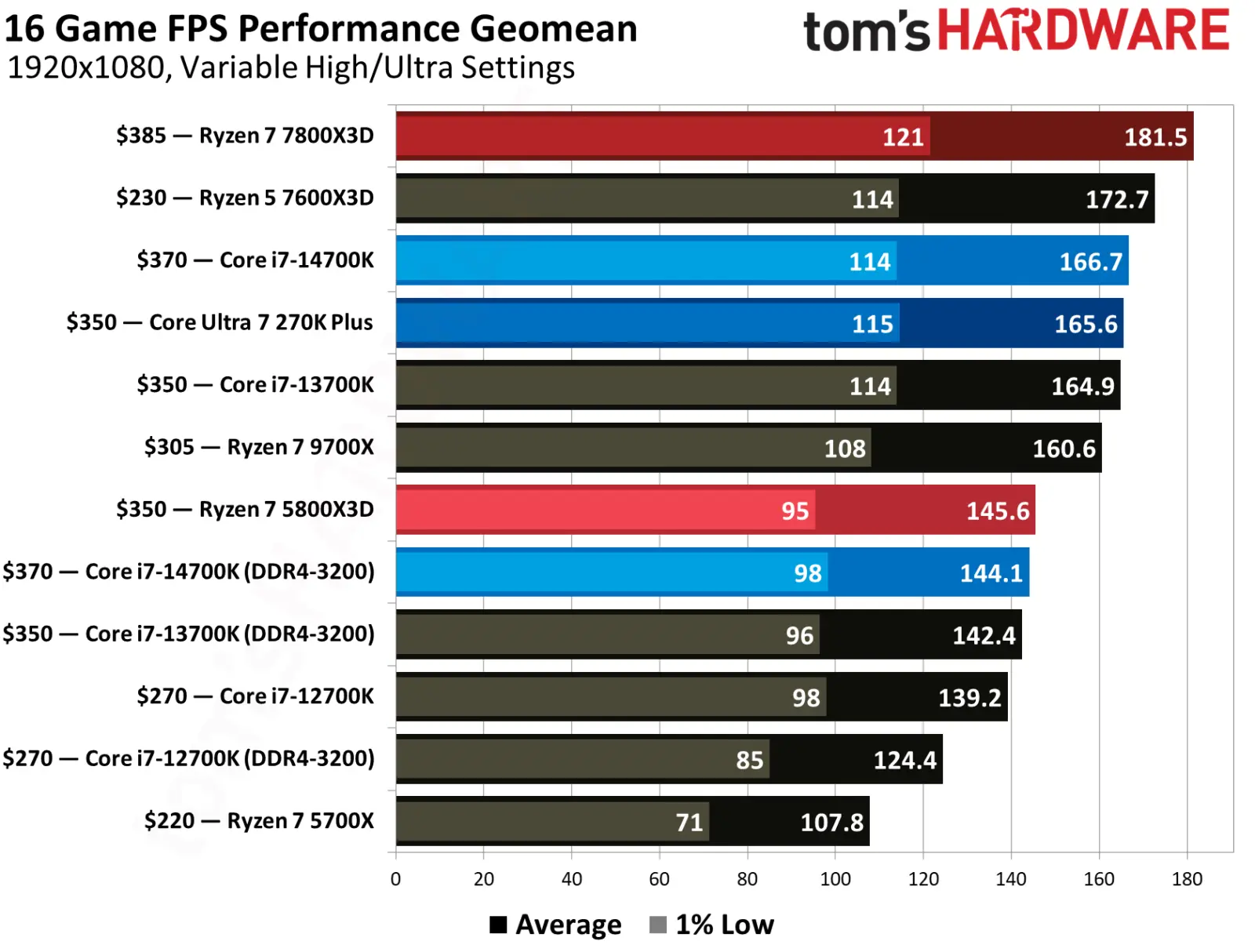
Pricing for these processors sits at $350 for the AMD Ryzen 7 5800X3D and $370 for the Intel Core i7-14700K. The small price difference makes the Intel option more attractive for users who need maximum performance across all tasks. The AMD option appeals to budget-conscious gamers who value efficiency and the ability to upgrade on the AM4 platform. We looked at Ryzen X3D Drives AMD to Historic earlier while tracking Amd, intel launches.

Discussion
0 comments
Log in to join the thread with a thoughtful take, question, or correction.