

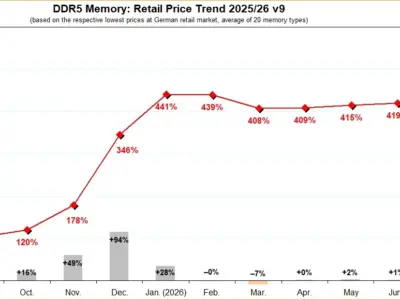
Buyers of desktops and laptops face higher costs as memory shortages drive daily price fluctuations across the market. Lenovo, HP, and ASUS systems are experiencing these increases due to rising component expenses and seasonal demand from students preparing for university entrance exams. This volatility forces consumers to pay more for standard configurations than they would have seen just months ago.
Distributors limit orders as memory shortages stall market stability
The supply chain response has shifted toward extreme caution. Distributors are avoiding large inventory holdings because of the unpredictable pricing environment. They now order only the minimum quantities allowed by manufacturers to limit their financial exposure.
Specific models have already felt the impact of these market pressures. Some popular PC configurations saw price increases of approximately 1,000 CNY (around $147), which equals around 230,000 KRW (around $150), in the last month. These jumps reflect the immediate cost of persistent memory shortages that have stalled market stability.
Looking ahead, the situation appears unlikely to improve soon. IDC predicts significant volatility in the global PC market during the second half of 2026. The research firm forecasts an 11.3% year-over-year decline in global shipments for the full year, with the fourth quarter potentially seeing a drop of up to 20%.
The root cause of this stagnation remains a lack of memory supply. Relief for buyers and distributors is not expected before the end of 2027. Until new inventory arrives, prices will likely continue to fluctuate based on daily market conditions.

Discussion
0 comments
Log in to join the thread with a thoughtful take, question, or correction.