
ASUS announced the ROG Astral RTX 5090 on April 30. The ROG Astral RTX 5090 is designed for users seeking extreme performance. The company modified the hardware for liquid nitrogen cooling. The card features a Kingpin ICON EXTREME V5 LN2 POT cooling solution. The modified cooling system enables the GPU to achieve high core frequencies.
The ASUS ROG Astral RTX 5090 achieves a core clock of 3.7 GHz. The card features a core clock speed of 3.7 GHz. The card utilizes 16 GDDR7 memory modules. These memory chips operate at a speed of 36 Gbps. The design includes a single 16-pin power connector for energy delivery.
Extreme overclocked GPU breaks world records in 3DMark benchmarks
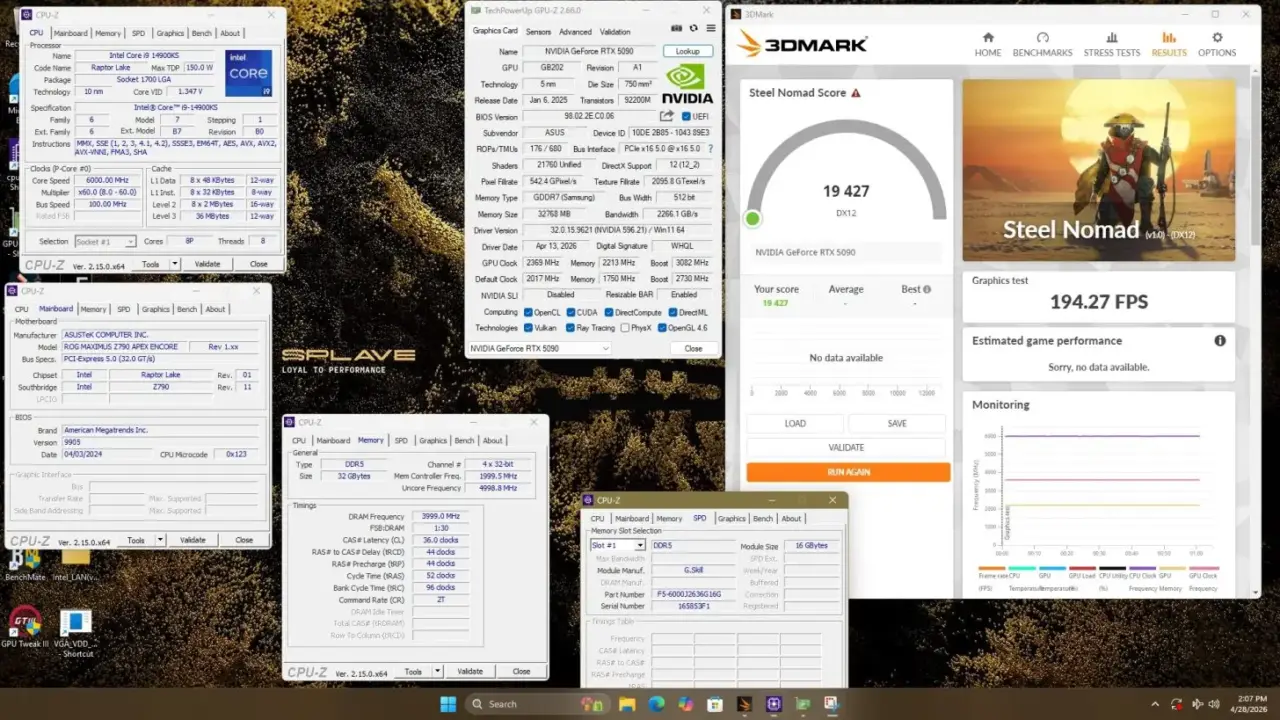
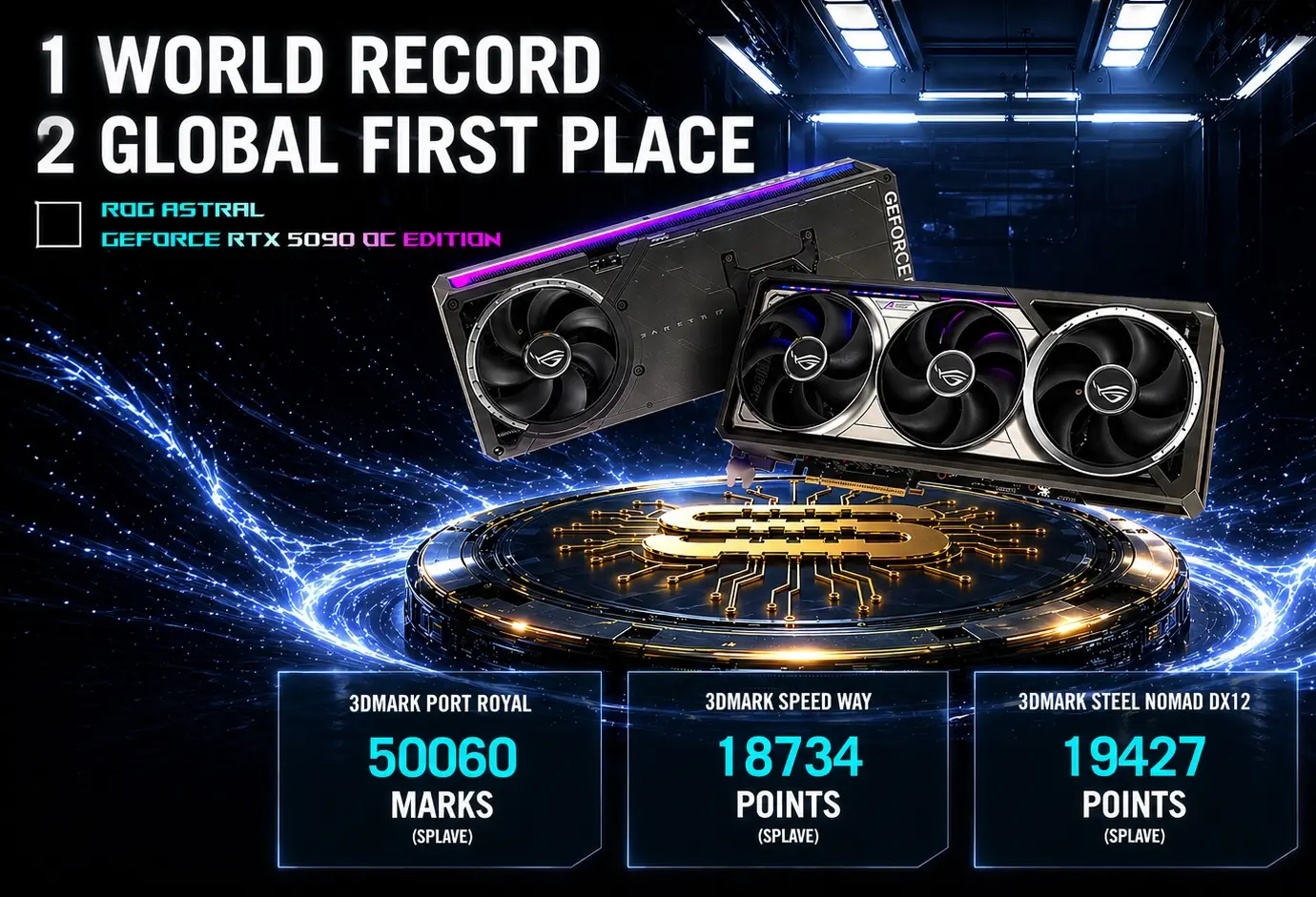
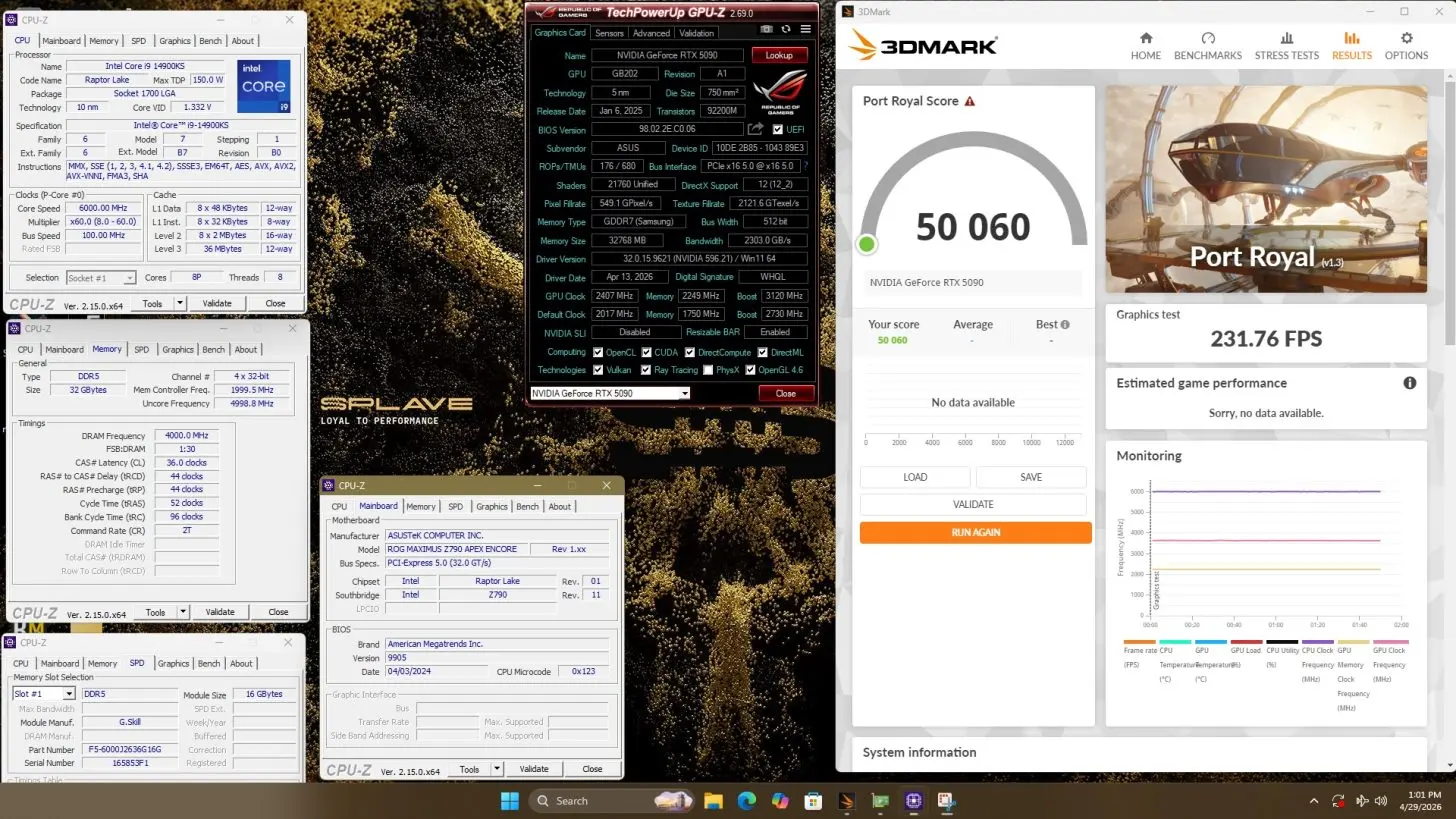
Benchmarks from Wccftech demonstrate the card's performance in 3DMark tests. Wccftech reported a score of 50060 points in 3DMark Port Royal. The card achieved 19427 points in the 3DMark Steel Nomad test. It also scored 18734 points in the 3DMark Speed Way benchmark. These results demonstrate the impact of the extreme overclocking.
Spec comparison
| Spec | RTX 5090 |
|---|---|
| Core Clock | 3.7 GHz |
| VRAM Speed | 36 Gbps |
| Power Connector | Single 16-pin |
The ROG Astral RTX 5090 serves as a technology demonstrator. It showcases the potential of next-generation GPU architecture. The card relies on specialized cooling to maintain stability. This configuration utilizes GDDR7 memory running at 36 Gbps. The announcement marks a milestone in hardware performance limits.


Discussion
0 comments
Log in to join the thread with a thoughtful take, question, or correction.