
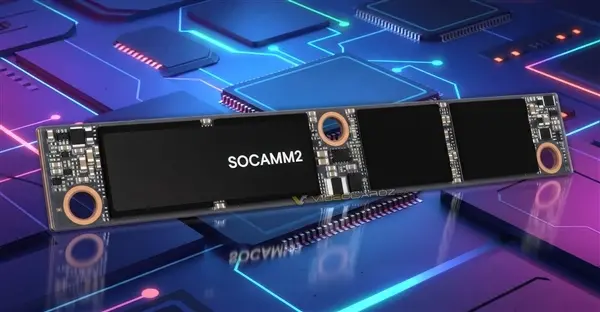
Longsys (Jiangbolong) has completed initial testing of its SOCAMM2 memory module. Internal data shows the part delivers higher bandwidth and lower power consumption than standard DDR5 RDIMMs. The company positions the new form factor for cloud AI workloads that demand tight integration with processors.
New Longsys module targets cloud AI workloads with near-CPU layout for better performance
SOCAMM2 targets high performance computing, general servers, AI cluster setups, and AI inference platforms. Longsys designed the module to sit closer to the CPU than traditional memory modules. This layout shortens signal paths to address bandwidth limits, latency spikes, and thermal issues common in standard RDIMMs.
The company reports that internal tests confirm SOCAMM2 outperforms conventional DDR5 RDIMMs in both speed and energy use. Longsys states the compact near-CPU arrangement tackles root causes of performance bottlenecks in older memory designs. Longsys (Jiangbolong) has not yet published independent benchmark figures or third-party validation data for the module.
SOCAMM2 remains in early development stages with no commercial shipments reported. Longsys says the product currently contributes zero revenue to company finances. The vendor plans to explore additional application scenarios as industry acceptance of this new form factor grows.
This new memory form factor supports the growing industry demand for specialized server hardware designed to enhance cloud AI performance. KLEVV recently showcased overclocked DDR5 parts at COMPUTEX 2026, highlighting ongoing competition in high-speed server memory. The design prioritizes a compact layout near the CPU to shorten signal paths, addressing bandwidth and latency bottlenecks inherent in traditional RDIMMs.
Discussion
0 comments
Log in to join the thread with a thoughtful take, question, or correction.