
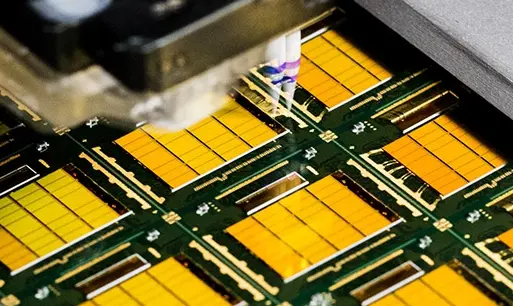
Guoxin Technology's self-developed GPNPU SoC AI PC chip has entered the tape-out verification phase, marking a key step toward domestic AI PC core chips. The chip integrates a reconfigurable CNN 300 NPU IP, delivering up to 8 TOPS per core and scaling to 32 TOPS with four cores.
Chip integrates CNN 300 NPU and RISC-V CPU
The GPNPU SoC is designed for AI PCs and general intelligent devices. It pairs the NPU with a 64-bit RISC-V dual-core CPU, enabling efficient local AI processing.
Specifications
- NPU architecture: CNN 300, reconfigurable programmable
- Single core computing power: 8 TOPS
- Quad-core computing power: 32 TOPS
- CPU: 64-bit RISC-V dual-core
- Interfaces: PCIe 5.0, LPDDR5X, UCIe
Key specs include PCIe 5.0, LPDDR5X memory, and a UCIe interconnect with up to 100 GBps bandwidth. The chip supports INT4, INT8, and FP16 precision, allowing flexible deployment of AI models.
Supports local deployment of Qwen, LLaMa, Deepseek
According to Guoxin Technology, the chip can seamlessly run mainstream large models like Qwen, LLaMa, and Deepseek locally. This capability positions it for on-device AI tasks without cloud dependency.
The chip is currently in tape-out, with no announced pricing or release date. Guoxin Technology also offers other products, including a domain control chip with AI and quantum security, an anti-quantum financial POS chip, and a cloud security chip.
The CNN 300 NPU IP was jointly developed with Longqing Kongtian and has achieved industrial implementation. The GPNPU SoC completes overall design and enters verification, signaling progress in domestic AI chip development.
Guoxin Technology's GPNPU SoC represents a concrete step toward self-sufficient AI PC hardware in China. The tape-out milestone confirms the design is ready for manufacturing validation.

Discussion
0 comments
Log in to join the thread with a thoughtful take, question, or correction.