
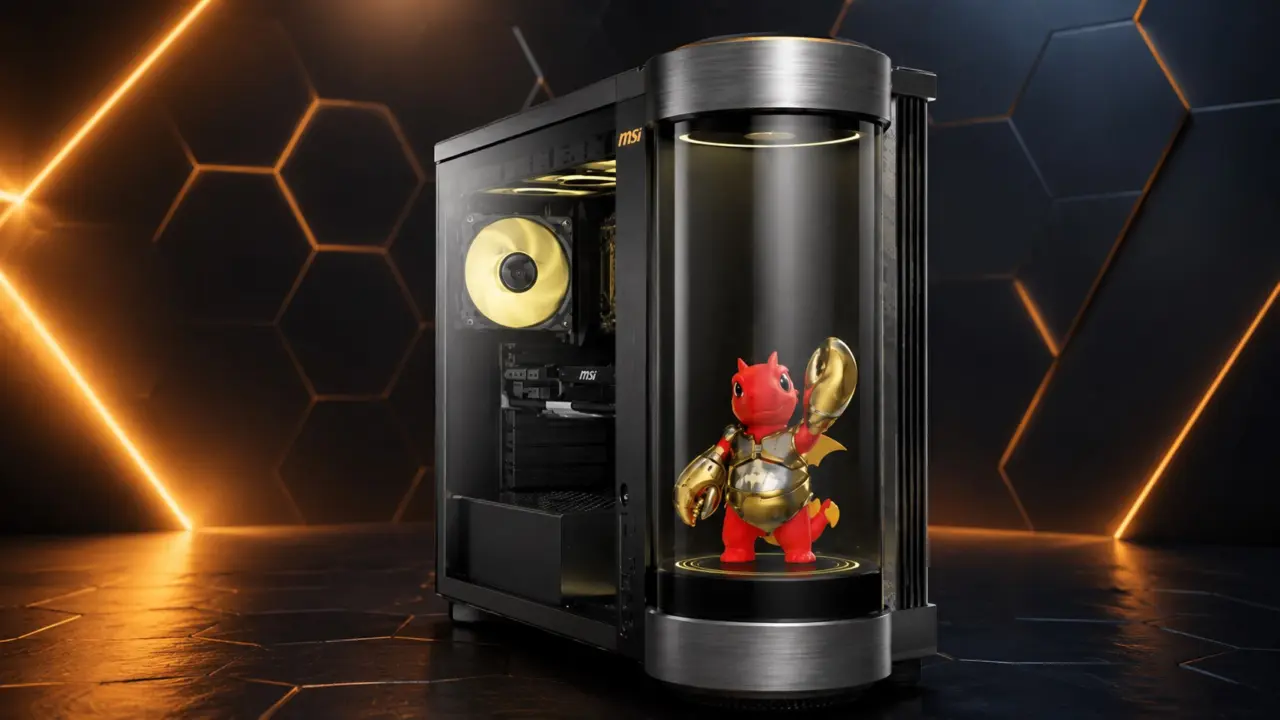
MSI has introduced the MEG Vision X2 AI+, a desktop PC that integrates an artificial intelligence assistant directly into its chassis. The system uses a cylindrical display called the 'AI Holostage' mounted on the front panel to project a holographic pet named LuckyClaw. This setup allows users to control RGB lighting patterns and adjust performance settings through voice commands or by interacting with the virtual character. The design shifts away from traditional software menus for basic adjustments, aiming to make system tweaks more intuitive.
New desktop PC integrates a holographic pet named LuckyClaw for voice-controlled RGB and performance adjustments.
The desktop operates as a standard gaming PC while embedding the AI agent within its physical structure. LuckyClaw responds to spoken requests and visual gestures without requiring users to open separate applications or navigate complex settings panels. This approach removes the need for manual configuration when changing lighting effects or tweaking thermal profiles. The integration targets users who prefer direct interaction over navigating through operating system interfaces.
The AI Holostage functions as a dedicated display module attached to the front of the desktop chassis. The display uses light field technology to render a three-dimensional image of the virtual companion that remains viewable from various perspectives. LuckyClaw serves as the interface for managing RGB lighting modes, allowing users to select colors and patterns through voice commands. It automatically adjusts cooling profiles and power consumption thresholds in response to voice commands or interface inputs.
Standard ports remain fully operational, and the projection module operates independently without interfering with primary system operations. Manual configuration remains available through conventional management utilities for users who wish to bypass the voice interface. This design prioritizes streamlining everyday settings while leaving advanced control mechanisms fully intact for experienced users.

Discussion
0 comments
Log in to join the thread with a thoughtful take, question, or correction.