
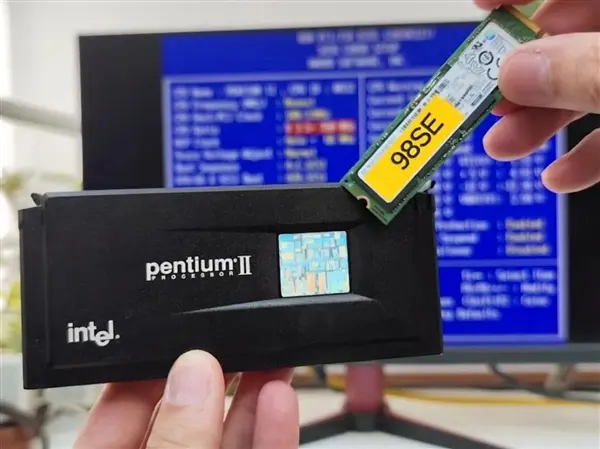
A hardware enthusiast named Omores has successfully installed a modern M.2 NVMe solid-state drive on a vintage Intel Pentium II platform. The experiment demonstrates that legacy 1997-era hardware can interface with contemporary storage technology, provided the correct translation hardware is used. This feat challenges the conventional wisdom that older systems are entirely incompatible with modern NVMe protocols.
Legacy hardware interfaces with modern storage via protocol translation bridge
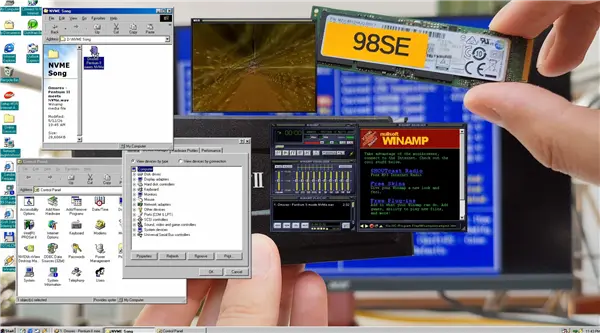
The setup relies on a PCI-to-PCIe adapter card featuring the PEX 8112 bridge chip to translate communication between the old PCI bus and the new NVMe standard. The builder selected a motherboard with the Intel 440BX chipset because its PCI slots provide the necessary 3.3V power, avoiding compatibility issues found on earlier 5V-only boards. Windows 98 Second Edition lacks native NVMe support, so the system required a third-party driver from the open-source community to recognize the drive.
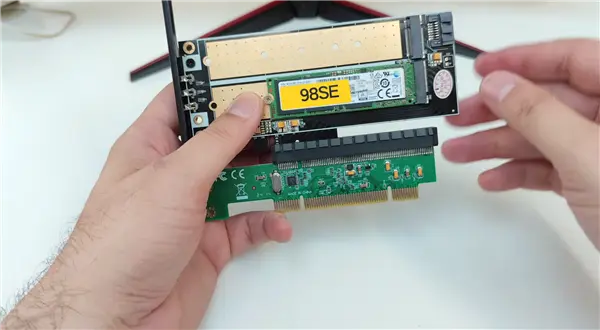
Performance testing revealed read speeds of approximately 100MB/s, which aligns with the theoretical bandwidth limits of the 133MB/s PCI bus. By overclocking the motherboard front-side bus from 33MHz to 36 or 37MHz, the builder increased read speeds to between 110MB/s and 115MB/s. The system boots from a standard SATA drive and loads the NVMe SSD only after entering the operating system, as the legacy architecture lacks a Legacy Option ROM for NVMe devices.
Omores noted that this performance represents less than 2% of the speed the same SSD achieves on modern PCIe 4.0 platforms, which exceed 7000MB/s. The experiment highlights the significant evolution in storage technology over the past few decades while proving that protocol translation bridges can extend the usability of classic computing hardware.

Discussion
0 comments
Log in to join the thread with a thoughtful take, question, or correction.