
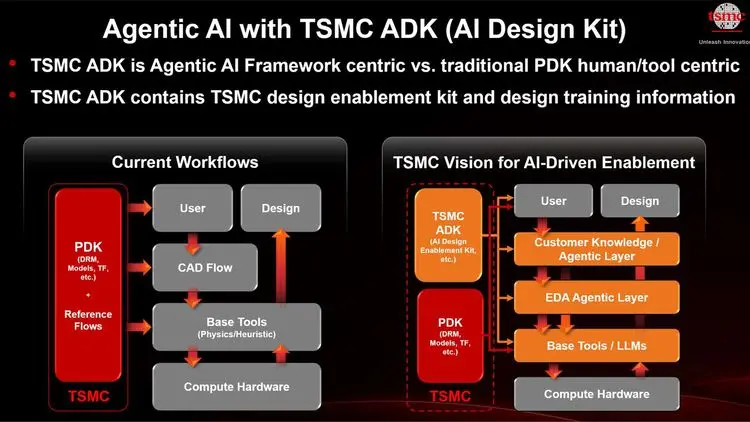
TSMC Unveils AI Design Kit to Speed Up Time-to-Market for New Chips. New chip designs are going to take a lot longer to get to market for certain kinds of designers. Currently, it can take 18 months for a new chip to get to market.
TSMC introduces AI-driven automation to streamline chip design workflows
With their AI Design Kit, TSMC plans to decrease this time-to-market for new chip designs down to 12 months. The kit will automate some of the repetitive work to save time. The new design kit is important because it saves time and effort getting new silicon to market.
- Supported Node: A14 NanoFlex Pro
- Rule Count Increase: 3.6x
- Library Cell Count Increase: 4.6x
The AI Design Kit works as a sort of software layer that will operate in addition to traditional Process Design Kits. It will deliver technical guidelines (specific to foundry) right into the Electronic Design Automation tools. AI Agents will be leveraged to help with some of the intricate design flows.
The complicated processes will be done without needing to be constantly monitored by humans. TSMC has this new toolkit available for their A14 NanoFlex Pro process node first.
A14 NanoFlex Pro significantly escalates design complexities. The design rules have increased by 3.6x when compared to previous generations. Additionally, the library of cell types available to use has increased by 4.6x. These increases mean it's getting harder and harder to manually prepare the design and it's taking a lot more time.
With the AI Design Kit, designers can just use simple natural language prompts to create Automatic Placement & Routing reference flows. No longer will it take weeks of time to manually prepare the scripts. According to TSMC, this enables continuous 24/7 design optimization with little human intervention. Power, performance and area gains aren't really shown from this approach yet.
There's no stated time that the AI Design Kit will be commercially available. TSMC showed off the tool during their 2026 Europe OIP Ecosystem Workshop in Munich. It's meant to supplement existing design methodologies, not fully replace them.



Discussion
0 comments
Join the thread with a thoughtful take, question, or correction.