
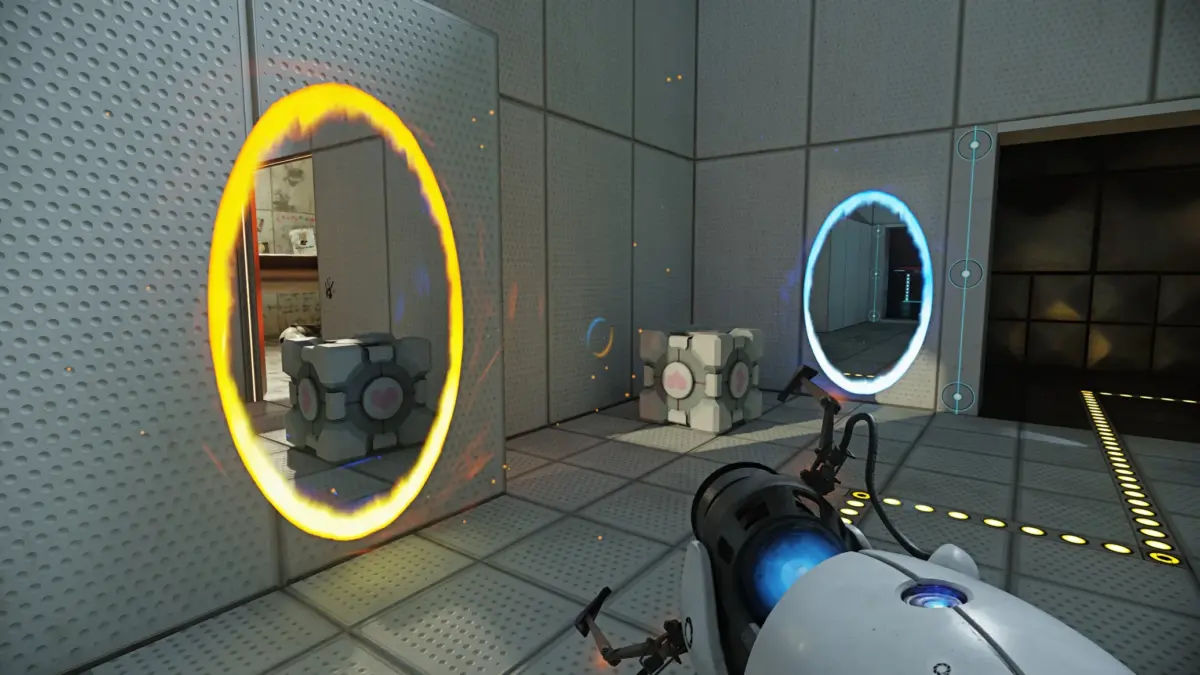
An artificial intelligence model recently finished the classic puzzle game Portal without any human help. This achievement shows that large language models can handle complex spatial reasoning tasks that usually require human intuition. The run highlights the gap between raw computational power and efficient gameplay, as the process cost over $500 in API fees.
AI model solves spatial puzzles using visual input and coordinate data
The experiment used OpenAI's GPT-6 Astra model to navigate the game's environment. A user named cozyblaze ran the test using a custom software harness that connected the AI to the game client. The AI relied on visual input and coordinate data to understand the level layout and solve physics-based puzzles.
The run required 3,336 tool calls to complete the entire game. The total duration was nearly 24 hours because the system paused frequently while the AI processed visual information and planned its next moves. These pauses were necessary for the model to reason through the spatial challenges presented by the game.
The experiment cost $571.18 in API fees, which reflects the high price of using advanced models for non-text tasks. This cost demonstrates the current economic inefficiency of using general-purpose AI for real-time gaming tasks. The run proves the technical capability of the model, but the financial and time costs remain prohibitive for practical use.
We looked at AI gaming experiments earlier while tracking the development of autonomous agents. The successful completion of Portal confirms that GPT-6 Astra can process visual and spatial data effectively. The experiment serves as a benchmark for how far AI has come in understanding interactive digital environments.



Discussion
0 comments
Log in to join the thread with a thoughtful take, question, or correction.