

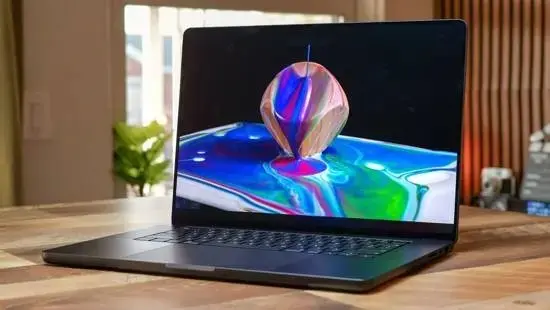
New OLED MacBook Pro by Apple is amazing in terms of visual accuracy but there is a major usability issue for text-related work due to the use of a stacked OLED screen. Based on the experience of early users, the new OLED screen is the cause of eye strain, vertigo and nausea due to its low PWM flicker rate of the screen for long text reading sessions. This is critical as it impacts usage of the new device for writers, developers or anyone who spends long hours reading codes or texts.
Low PWM frequency causes physical discomfort for text-heavy tasks
New Apple MacBook Pro has a stacked two layer OLED screen with the maximum HDR brightness of 2000 nits. This new screen is visually very impressive in terms of its display quality but it is based on a 240Hz PWM flicker rate for brightness control. This is a big difference compared to the older MacBook Pro devices where mini-LED technology was used with 15000Hz flicker rate. The significantly lower flicker rate is believed to be a major cause of this physical discomfort.
Specifications
- Screen Technology: Dual-layer stacked OLED
- HDR Peak Brightness: 2000 nits
- PWM Flicker Frequency: 240Hz
- Previous Gen Flicker Frequency: 15000Hz (mini-LED)
- Competitor Flicker Frequency: 960Hz (ASUS ProArt P14)
Based on the tests by Notebookcheck, the PWM flicker rate of the OLED screen (240Hz) is much lower than usual standard. In comparison, the ASUS ProArt P14 laptop uses an OLED screen with 960Hz of flicker rate which is 4 times higher than Apple’s offering. Some users even complain that it’s causing nausea.
A reporter says that they feel like throwing up while reading texts on the new screen. Someone else said that the screen is gorgeous but eyes are not able to focus. It feels weird while shaking your head quickly.
The eye discomfort issue may be more than just a flicker issue. Sources suggest that the subpixel layout of the new OLED screen may be another source of eye discomfort. We have been watching the updates on the MacBook Pro closely.
Refer to our earlier coverage of Apple Touch-Screen MacBook Pro Exposed for reference on the design progress of the device. This low PWM rate and possible subpixel layout issue make it a unique problem for display comfort on a high-end laptop.


240Hz PWM is brutal for text work. That mini-LED 15000Hz was practically invisible. Returning immediately.
Notebookcheck measured the 240Hz rate. The ASUS ProArt P14 sits at 960Hz. Apple dropped the ball on flicker control here.