
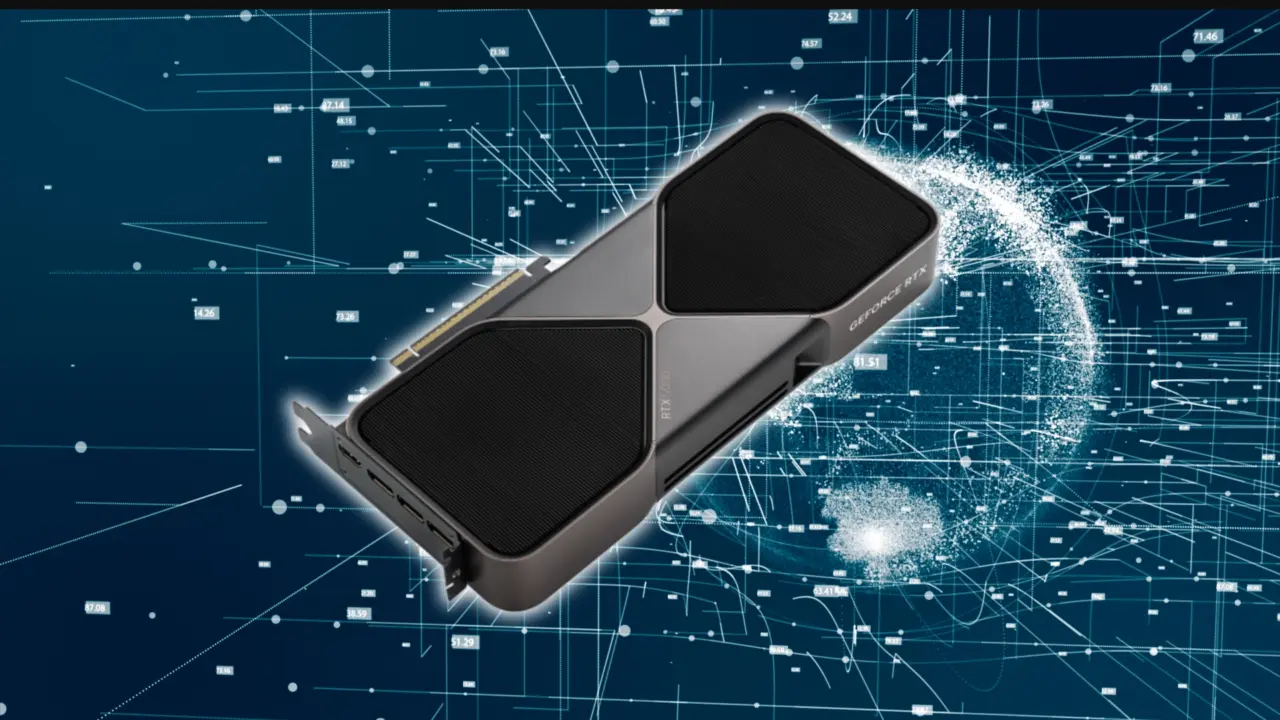
Nvidia has not released a consumer GPU successor to the GeForce RTX 5090 for over a year, leaving enthusiasts waiting for the next Blackwell generation. This long gap matters because it signals that physical and economic barriers are now stalling the traditional high-end gaming card roadmap. Buyers who expect a faster flagship in the near future should prepare for a significant wait or a shift in Nvidia's product strategy.
Physical limits and low adoption stall next-gen Blackwell cards
The current RTX 5090, built on the Blackwell architecture, stands as the most powerful consumer GPU Nvidia has shipped, yet it holds only a 0.41% share of Steam users' systems. In comparison, the much more modest RTX 4060 captures 3.46% of the market, highlighting how niche the ultra-high-end segment has become. Nvidia prioritizes its datacenter and AI chips over these consumer GeForce cards because those segments offer significantly higher profit margins.
AI analysis indicates that creating a successor faces hard physical limits on transistor size and severe power constraints. The RTX 5090 already draws 575 watts of power natively, which Gemini noted as a monster that pushes the boundaries of what is feasible on a single piece of silicon. Making a larger traditional gaming card right now is incredibly difficult without it requiring its own dedicated power outlet or becoming too expensive to manufacture.
There is little room for a higher-tier model like an RTX 5090 Ti or RTX 6090 in the same generation without breaking current design constraints. A successor would need to be noticeably faster, stable at reasonable power levels, and worth the extra cost to justify its existence. Rumors have circulated about an RTX 5090 SE or Super variant, but no 60-series flagship has been confirmed by the company.
We looked at RTX 5090 SE Rumored at earlier while tracking NVIDIA launches. Nvidia has not issued a formal statement confirming a halt in consumer GPU development, but the lack of new releases suggests the company is focusing on its most profitable platforms. Edge computing remains Nvidia's least profitable area compared to its datacenter and AI divisions.
The absence of a new flagship confirms that Nvidia is prioritizing AI infrastructure over consumer gaming hardware for the foreseeable future. The RTX 5090 remains the top of the line, and any future high-end cards will likely face steep physical and pricing hurdles. Gamers should expect the current generation to remain relevant longer than previous cycles due to these manufacturing and power realities.

Discussion
0 comments
Log in to join the thread with a thoughtful take, question, or correction.