

A developer has pushed NVIDIA's DLSS 5 technology into a web browser, challenging the assumption that this upscaling feature is locked to native desktop applications. This demonstration matters because it proves the underlying neural rendering kernel can operate within sandboxed web environments via WebGPU, opening doors for cloud-based visual tools. Buyers and developers should note that this capability shifts how we view the portability of high-end graphics AI.
WebGPU demo proves neural rendering kernel operates in sandboxed web environments
The project centers on a web-based demo built by developer MAAN, who showcased the technique on social platforms. The interface allows users to upload and preview custom 3D models while applying real-time rendering upscaling. This functionality moves beyond simple frame generation, offering a practical workspace for 3D content creators rather than just a gaming benchmark.
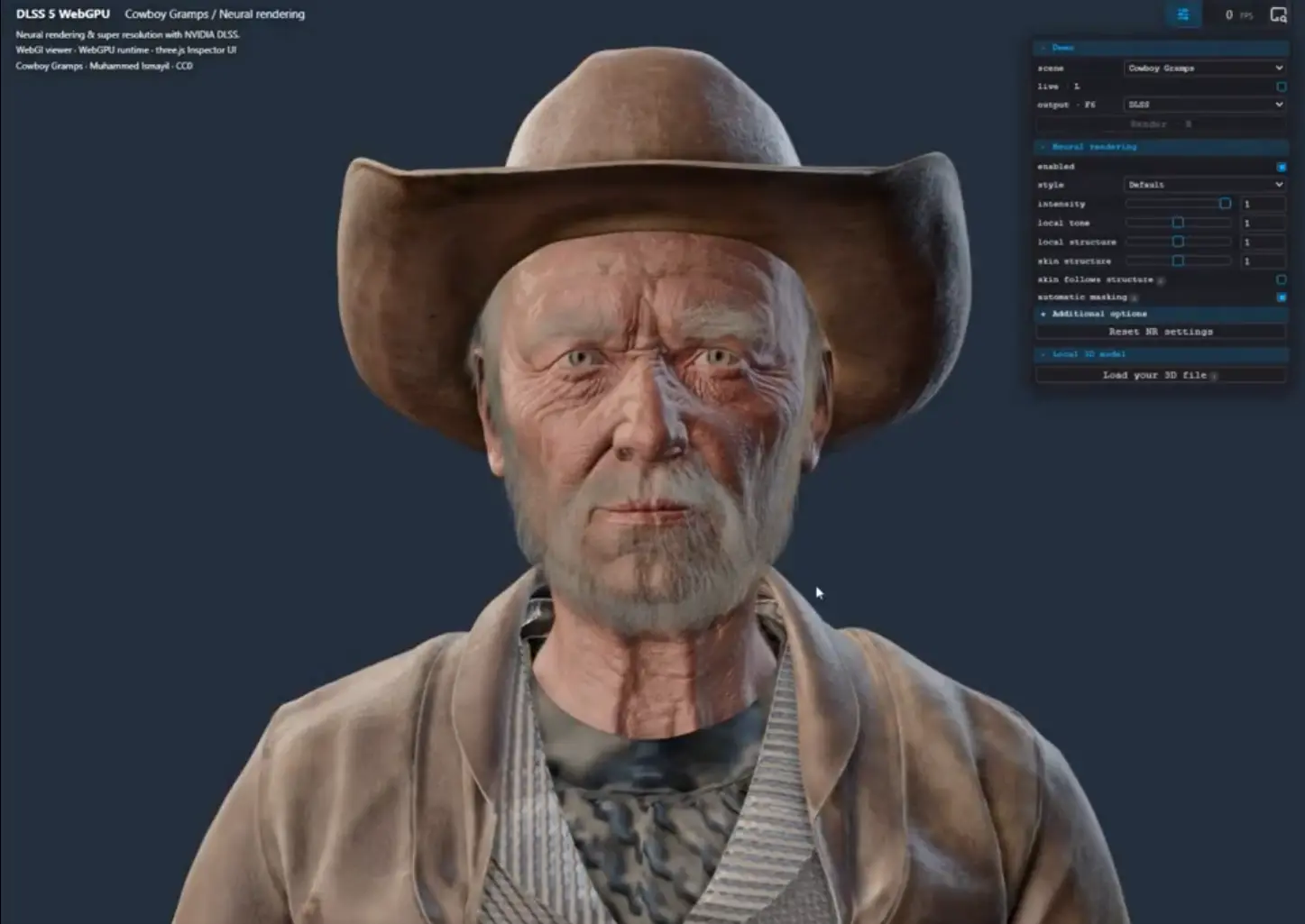
Technical constraints remain a central part of the story. NVIDIA official documentation does not list WebGPU as a supported interface for DLSS, which typically relies on DirectX or Vulkan. The specific method MAAN used to bridge the browser environment with NVIDIA's binary files remains unconfirmed, with speculation pointing to either native bridging or format translation.
Performance metrics from the demo highlight specific use cases. Loading the DLSS-NR model takes between one and two seconds on an RTX 4090, a latency that makes the tool better suited for architectural visualization than fast-paced online gaming. The demo runs on Windows PCs with NVIDIA GPUs and macOS devices with Apple Silicon, demonstrating broad hardware compatibility despite the browser limitations.
We looked at similar browser-based graphics experiments earlier while tracking NVIDIA software updates. Source code for this demonstration will be open-sourced on GitHub, allowing the community to examine the implementation details. This transparency will help clarify how the technology bypasses standard platform restrictions.



Discussion
0 comments
Log in to join the thread with a thoughtful take, question, or correction.