
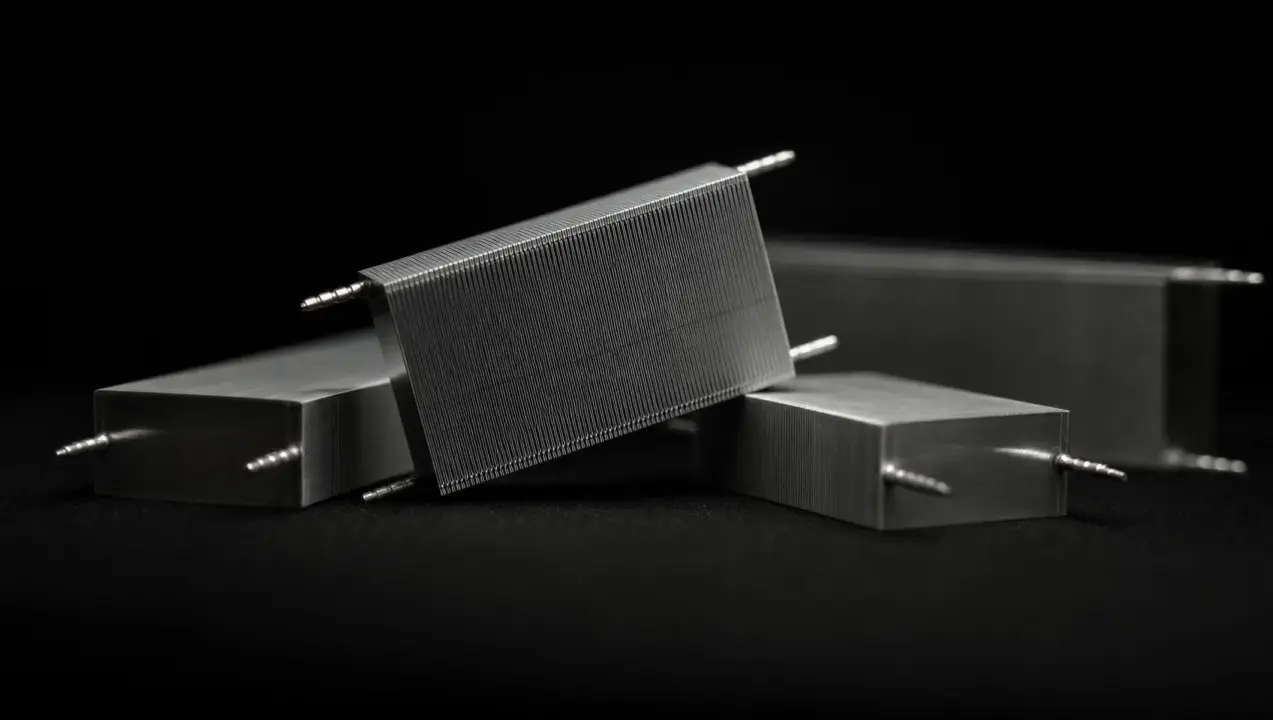
Noctua and Forced Physics DCT have joined forces to tackle a persistent problem in PC cooling: managing heat without generating disruptive noise. This partnership aims to bring advanced micro channel array technology to desktop systems, where traditional cooling methods often struggle to balance thermal performance with acoustic comfort. For builders and users who prioritize quiet operation, this collaboration signals a potential shift in how heat is managed within confined spaces.
Noctua and Forced Physics DCT announce joint research into JouleForce micro channel array technology
The core of this effort is the JouleForce Micro Channel Array, a cooling component developed by Forced Physics DCT. Unlike standard heatsinks that rely on turbulent airflow to dissipate heat, this technology uses geometric molecular collisions on channel walls to prevent the formation of a thermal boundary layer. This mechanism allows for more efficient heat transfer by keeping the coolant or air in direct contact with the heated surface, reducing the resistance that typically slows down cooling efficiency.
Implementing this technology in a desktop environment presents significant engineering hurdles, primarily due to airflow requirements. The current JouleForce arrays demand high static pressure levels that exceed the capabilities of standard PC axial fans. Noctua is bringing its expertise in quiet, high-pressure air movement to the table to address these constraints. The goal is to integrate the cooling array into systems that do not rely on industrial-grade equipment to move air.
Roland Mossig, CEO of Noctua, noted that the pressure levels required for the current implementation are supplied by equipment no one wants on or under their desk. This makes the project a difficult and long-term engineering challenge that the companies are eager to tackle. Scott Davis, Founder and CEO of Forced Physics DCT, highlighted that desktop systems face fundamentally different airflow issues than data center build environments. Noctua's expertise in quiet, high-pressure air movement makes it an ideal partner for solving these problems.

Discussion
0 comments
Log in to join the thread with a thoughtful take, question, or correction.