
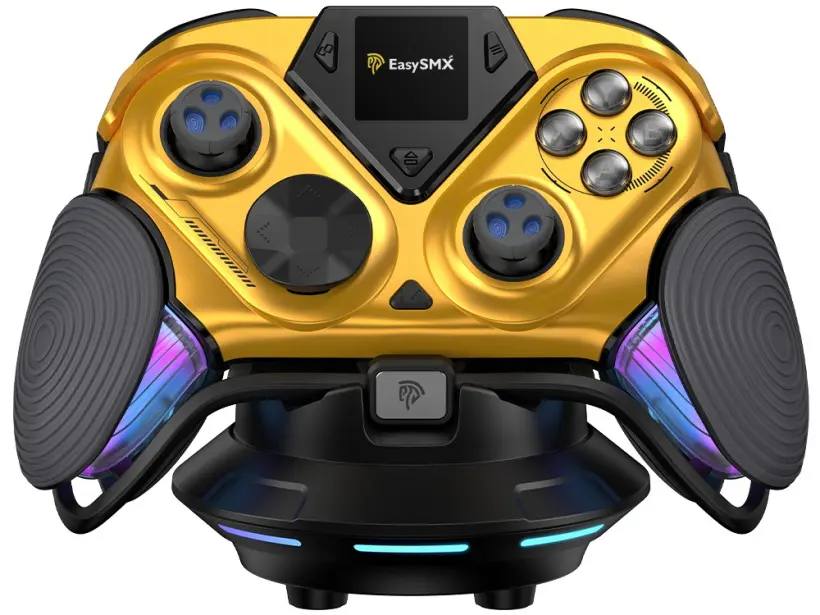
See how a budget-friendly brand is packing flagship specs like 8kHz polling and a built-in display into a new controller, and whether the 1.3-inch screen actually solves the hassle of software configuration. The product has just been announced with full spec sheets, offering fresh content on the evolving gaming peripheral landscape. The frustration of needing to open software to change controller settings is addressed by the integrated screen, while the 8kHz polling rate appeals to competitive gamers seeking every millisecond of advantage. This announcement introduces a direct competitor to high-end controllers that typically demand premium prices.
Budget brand targets PC gamers with high-speed connectivity and local settings
EasySMX released the Dune (D15) game controller as a new peripheral for PC gaming. The device targets players who want high-performance connectivity without the cost of established premium brands. It combines wireless freedom with wired precision through a tri-mode connection system. Users can switch between USB-C, 2.4GHz wireless, and Bluetooth depending on their setup needs.
Specifications
- Polling Rate: 8kHz
- Wired Latency: 0.25ms
- Joystick Type: TMR
- Trigger Type: Hall effect dual-cut triggers
- Button Type: Full mechanical buttons
The controller features an 8kHz polling rate for both USB-C and 2.4GHz wireless connections. This high frequency allows the device to report input to the computer 8,000 times per second. Wired latency drops as low as 0.25ms during these high-speed operations. The hardware includes TMR joysticks for magnetic resistance and Hall effect dual-cut triggers for analog input accuracy. Full mechanical buttons provide tactile feedback for all other inputs.
A 1.3-inch LCD screen sits in the center of the front face for configuration management. The device includes a built-in 1200mAh battery to power the display and wireless modules. A built-in six-axis gyroscope supports motion controls and additional sensor data. The design features a sand-gold and black color scheme with RGB lighting and a magnetic faceplate. The controller includes a 'mothership' charging dock and haptic feedback motors in triggers and grips.
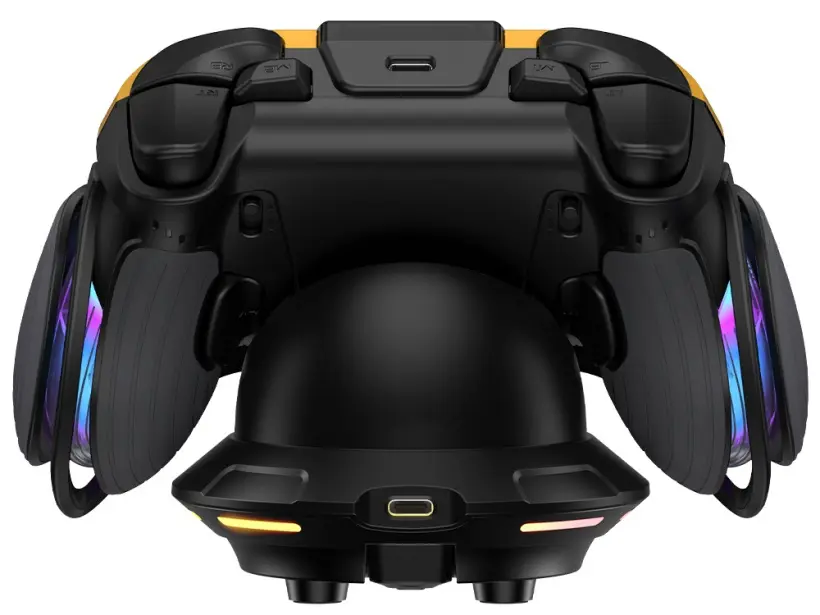
The Dune (D15) represents a shift in how budget peripherals can integrate complex hardware like screens and high-speed polling. Gamers can now manage settings locally without launching companion software on their computers. The 8kHz rate ensures that input delay remains negligible for fast-paced competitive titles. This combination of features positions the Dune as a serious option in the mid-range gaming market.
Discussion
0 comments
Log in to join the thread with a thoughtful take, question, or correction.