
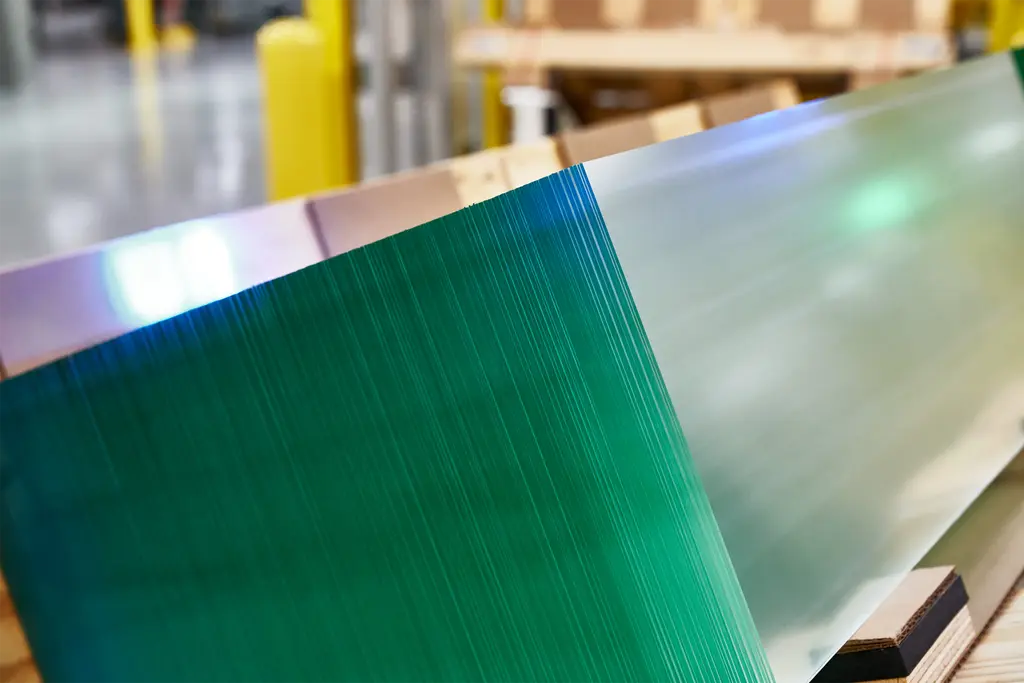
Co-packaged optics has officially crossed the mass production threshold, shifting the bottleneck in AI compute infrastructure from chip process nodes to materials and packaging. This change matters because it unlocks the high-bandwidth interconnects required for Nvidia's next-generation Blackwell Ultra and Rubin architectures. Buyers relying on dense AI clusters will see a new standard for data center efficiency as optical components move closer to the silicon.

Corning's glass bridge technology reduces optical insertion loss below 0.5dB per channel
Corning introduced its glass bridge technology to support this transition, specifically targeting Nvidia's Spectrum series switches and NVL72 rack configurations. The company claims its capacity covers approximately 70 percent of Nvidia's demand for 2026, though this figure comes from industry reports rather than a formal contract. Industry insiders note that Corning's material barriers are unlikely to be broken by competitors in the short term, cementing its role in the supply chain.
The technical specifications show a significant reduction in optical insertion loss, dropping from 1.5dB to below 0.5dB per channel. This improvement allows for better transmission quality and distance, which is critical for the dense wiring inside AI servers. The technology also widens the cost gap with traditional solutions by more than 30 percent, making the new approach more economically viable for large-scale deployments.
We looked at Samsung Raises 5nm and 4nm Wafer earlier while tracking Corning launches, as both stories highlight the intense pressure on hardware supply chains. The shift to co-packaged optics represents a fundamental change in how AI hardware scales, moving away from purely electronic interconnects. This transition requires precise material engineering to maintain signal integrity at scale.
Corning's glass bridge technology now serves as the primary enabler for Nvidia's upcoming hardware architectures. The company has secured a dominant position in the materials sector for these co-packaged optical systems. This development confirms that the industry is ready to deploy high-performance optical interconnects in production environments.

Discussion
0 comments
Log in to join the thread with a thoughtful take, question, or correction.