
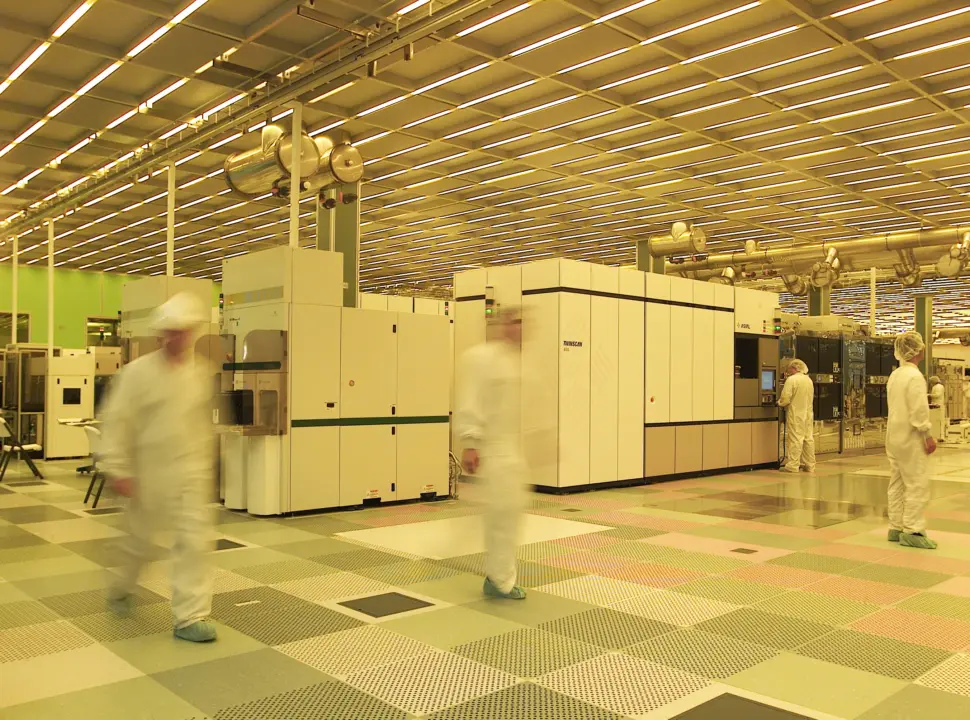
Researchers at the Chinese Academy of Sciences have demonstrated a new transistor design that could change how manufacturers build advanced chips. This development matters because it suggests that older, cheaper manufacturing equipment might still produce high-performance semiconductors. The breakthrough challenges the long-held assumption that only expensive extreme ultraviolet (EUV) machines can create the smallest, most efficient processors.
Researchers achieve 500000 switching ratio using older lithography tools
The team introduced a Gate-All-Around (GAA) transistor architecture that wraps the control gate around the current channel from all sides. This structure provides better control over electrical current compared to traditional FinFET designs, which only wrap the gate on three sides. By reducing current leakage, the new design allows for more efficient power usage and potentially faster switching speeds.
- Transistor Architecture: Gate-All-Around (GAA)
- Switching Ratio: Over 500,000
- Manufacturing Equipment: DUV Lithography
- Theoretical Performance: 3nm Equivalent
The researchers achieved a switching ratio of over 500,000 using only deep ultraviolet (DUV) lithography tools. They reached this performance by relaxing the spacing between transistors, a technique that bypasses the standard resolution limits of DUV equipment. This method theoretically unlocks performance equivalent to 3-nanometer chips without requiring EUV infrastructure.
Despite the front-end success, the technology faces significant hurdles in later manufacturing stages. The Chinese Academy of Sciences noted that middle-end metal interconnects and back-end wiring have not benefited from the new design. These unresolved bottlenecks mean the architecture remains theoretical and is not yet ready for commercial production.
This research highlights a potential pathway for maintaining chip performance growth using existing hardware. While the immediate practical application is limited by manufacturing constraints, the findings offer a technical alternative to the high costs of EUV adoption. The industry now watches to see if these theoretical gains can be translated into viable production processes.


Discussion
0 comments
Log in to join the thread with a thoughtful take, question, or correction.