
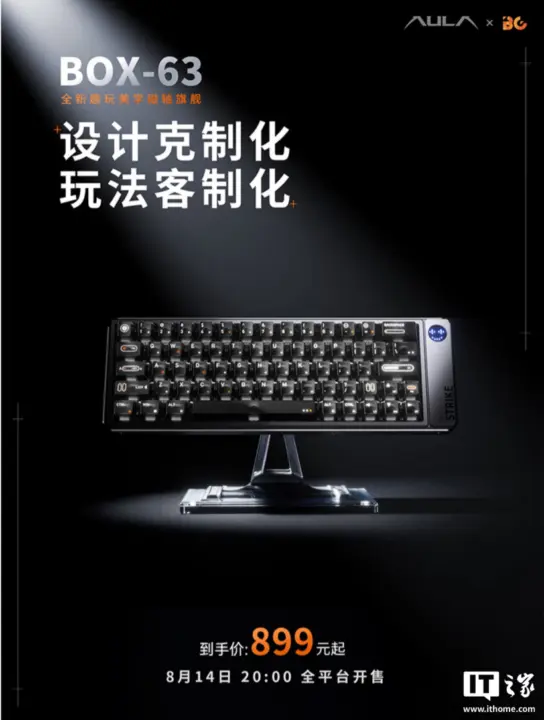
AULA introduced the BOX63 magnetic switch keyboard, a device designed for gamers who need precise input control. The release matters because it brings high-speed wireless performance to a compact form factor at a budget-friendly price point. Buyers looking for low-latency peripherals can now access professional-grade specs without spending hundreds of dollars.
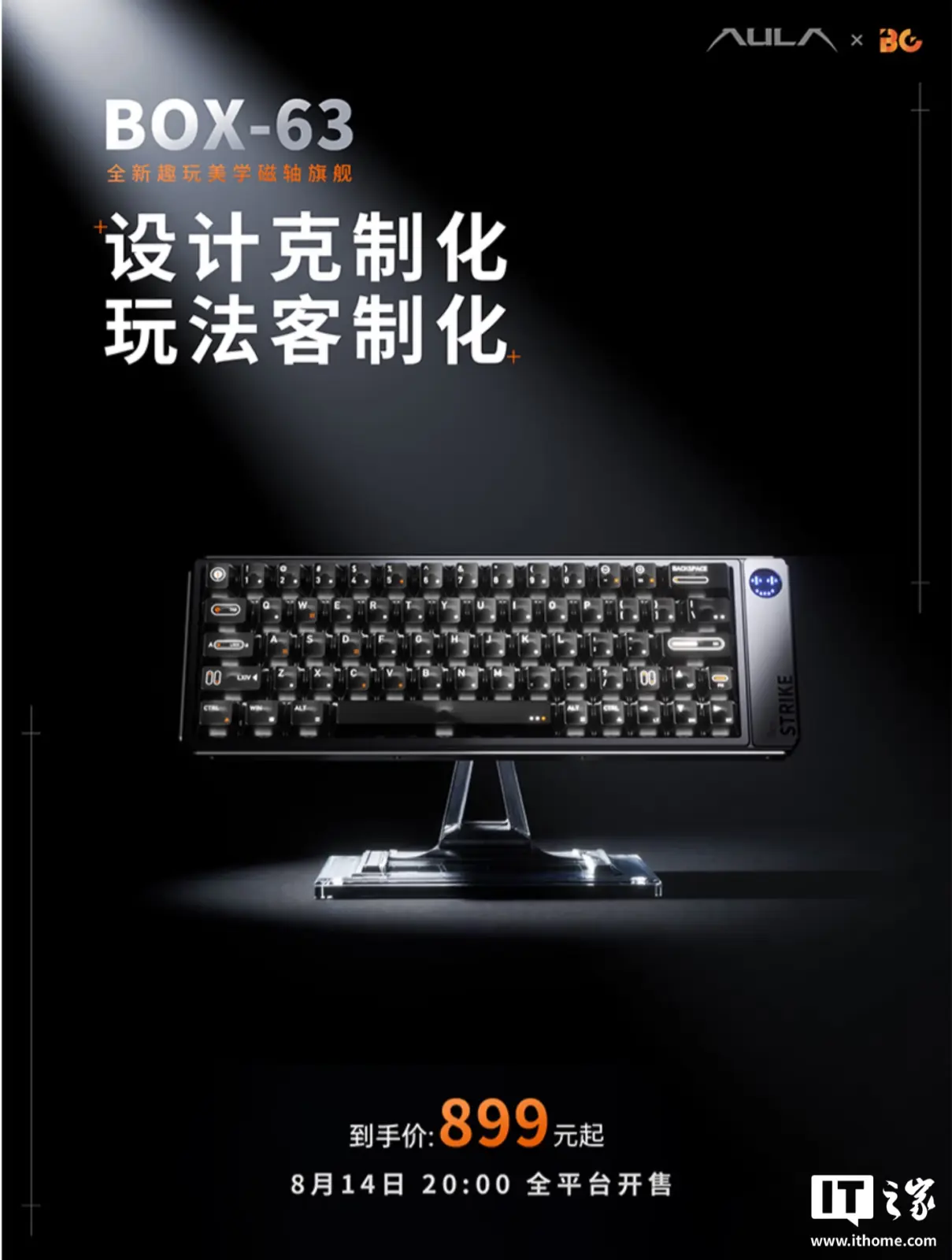
Two versions offer 8K polling and Hall sensors for competitive gaming
The keyboard comes in two distinct configurations: a Standard version and a Flagship version. Both models utilize a silicone bean soft gasket architecture to dampen sound and improve typing feel. The Flagship edition distinguishes itself by including a dedicated display screen for visual feedback.
Specifications
- Architecture: Silicone bean soft Gasket
- Polling Rate: 8K
- RT Precision: 0.001mm adjustable
- Standard Version Latency: 0.08ms
- Flagship Version Latency: 0.06ms
Technical performance centers on an 8K polling rate and adjustable response trigger (RT) precision down to 0.001mm. The Flagship model uses a NearLink Yuedong Galaxy 600 chip, which AULA claims reduces latency by 30% compared to previous generations. Standard and Flagship versions offer base latencies of 0.08ms and 0.06ms respectively.
Additional hardware features include a four-layer double-sided copper clad PCB and a carbon fiber position plate for structural rigidity. The device supports 102 ARGB LEDs with custom animation capabilities running at up to 15fps. It employs fourth-generation Hall sensors to ensure durability and consistent magnetic actuation.
Pricing starts at 899 CNY (around $133) for the Standard version with black star magnetic switches. The Flagship version with dual lighting positions is available for 999 CNY (around $148). The keyboard will launch in China on August 14, 2024, at 20:00 local time.
AULA reports that the new chip increases computing power by 297% while cutting power consumption by 90%. The company also states that response speed has improved by 200% and sensitivity by 50%. These metrics highlight a significant shift in wireless keyboard efficiency and responsiveness.

Discussion
0 comments
Log in to join the thread with a thoughtful take, question, or correction.