
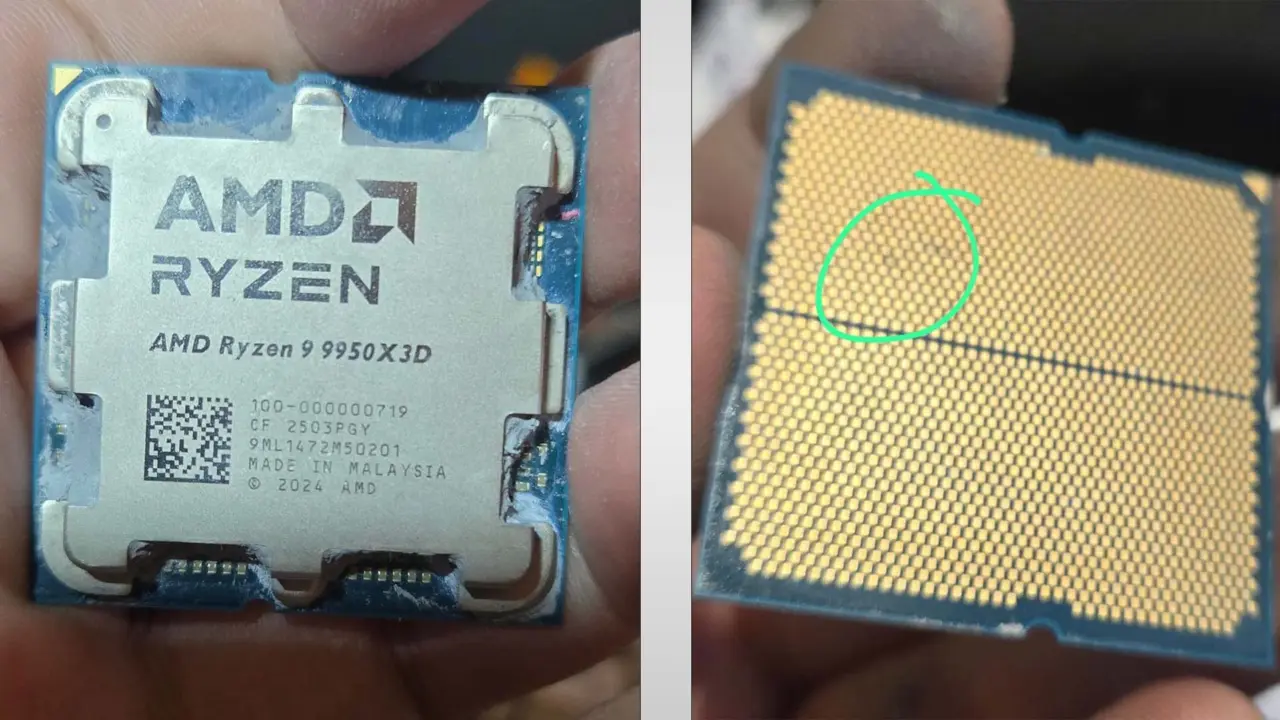
A Ryzen 9 9950X3D processor suffered a catastrophic failure after just one hour of operation on an ASUS CROSSHAIR X670E Hero motherboard. This incident matters to builders because it suggests that specific high-end X670E boards may have compatibility issues with AMD's latest 3D V-Cache CPUs. Users should verify their motherboard compatibility before relying on automatic BIOS memory presets.
User reports physical damage after selecting memory preset
The failure occurred when a user installed the new Ryzen 9 9950X3D and selected a RAM preset in the BIOS for SK Hynix 6,200MHz modules. The system did not require manual overclocking or voltage changes to trigger the issue. The user had previously swapped out an older Ryzen 5 8500G for the new high-performance chip.
Physical inspection of the processor revealed two distinct brown marks on the Ryzen 9 9950X3D die. The system displayed POST code '00' with the new CPU, indicating a successful boot attempt that quickly failed. When the user installed a backup Ryzen 5 8500G, the display showed error code '4D', pointing to a motherboard hardware fault.
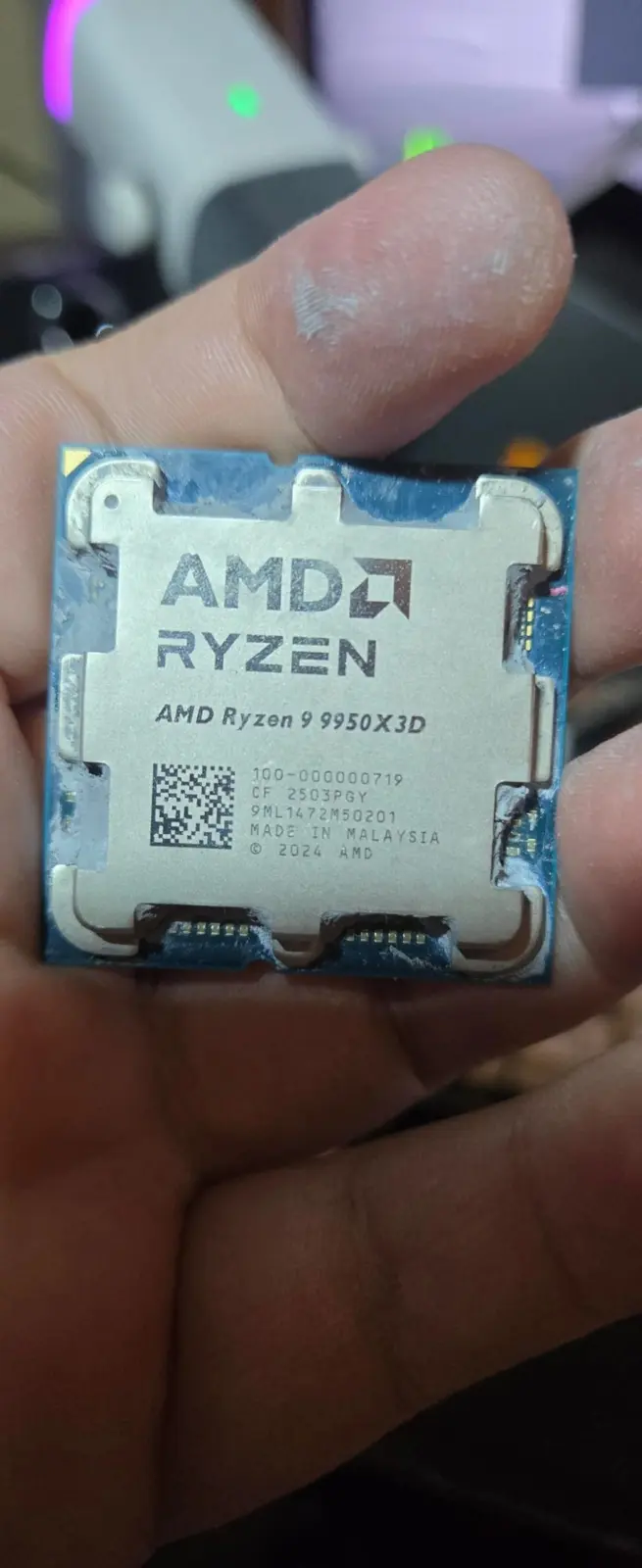
The same Ryzen 9 9950X3D model ran without issues on an ASRock X670E Taichi Carrara motherboard with similar memory settings. This contrast indicates the problem is likely specific to the ASUS board or its BIOS implementation rather than a defect in the CPU itself. The incident follows a pattern of reported hardware failures involving high-performance AMD processors on certain motherboards.
We looked at AMD Ryzen 7 7800X3D Bulging Incident in our earlier Amd coverage to track similar reliability trends. The current failure highlights the importance of checking for known compatibility issues before upgrading to new CPU generations. Builders should monitor official support lists for any updates regarding memory compatibility with the 9950X3D.

Discussion
0 comments
Log in to join the thread with a thoughtful take, question, or correction.