
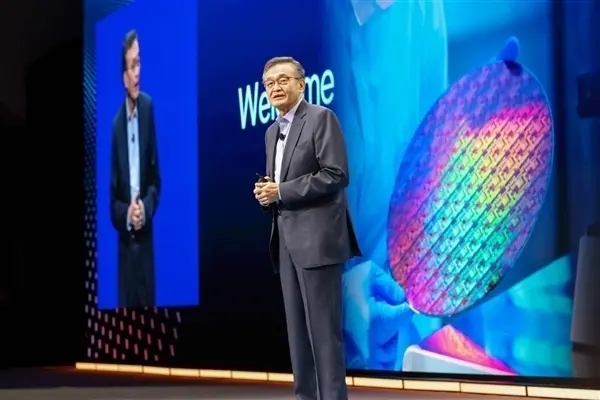
Intel has secured significant orders for its EMIB-M advanced packaging technology. The company reports that this packaging solution achieves yield rates exceeding 90%. This high yield allows Intel to maintain large-scale production without relying exclusively on advanced manufacturing processes. SK Hynix has also joined the business ecosystem to test the technology for high-bandwidth memory and system semiconductor integration.
SK Hynix joins the business ecosystem to test technology for high-bandwidth memory
The EMIB-M technology utilizes metal-insulator-metal capacitors to reduce noise. This integration improves power delivery signal integrity for connected components. Intel aims to achieve a yield rate of over 98% for its flip-chip ball grid array packages. The company uses these metrics to demonstrate a competitive advantage in the semiconductor market.
Specifications
- Yield Rate: >90%
- FCBGA Yield Target: >98%
- Technology Type: 2.5D Packaging with MIM Capacitors
Intel previously planned to supply packaging services to major technology firms including Google for tensor processing units, Nvidia for graphics processing units, and Meta for central processing units. The company currently holds a significantly lower revenue position in advanced process manufacturing compared to its primary competitor TSMC. This revenue gap remains a qualitative observation without specific financial figures provided in recent reports.
The semiconductor industry continues to face challenges from counterfeit components. Recent reports highlight fake DDR5 memory modules appearing in Asian markets. Scammers are replacing actual chips with hollow plastic replicas to deceive buyers. These counterfeit modules often feature fake part numbers and lack internal circuitry.


Discussion
0 comments
Log in to join the thread with a thoughtful take, question, or correction.